Print Story
X




The world marched for Charlie Hebdo but looked away from Gaza’s journalists
| I |
n January 2015, when gunmen attacked the offices of Charlie Hebdo in Paris, killing eight journalists, the world reacted instantly. World leaders walked the streets of Paris, locking arms in solidarity for freedom of expression. “Je suis Charlie” became the popular slogan. It was a declaration that killing journalists is an attack on democracy and free speech.
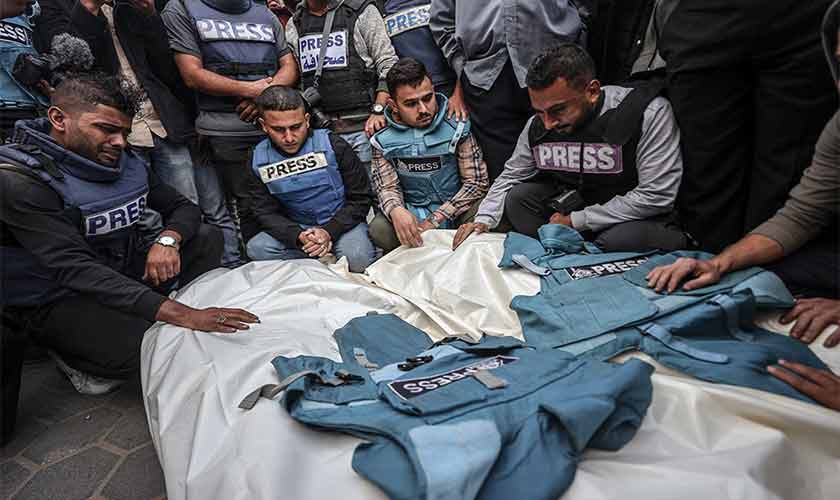
Since the start of Israel’s war on Gaza in October 2023, between 240 and 270 journalists and media workers have been killed. By any measure, the Israeli aggression is the deadliest for journalists in history.
There have been no global marches, no world leaders linking arms, no sustained campaign declaring solidarity with journalists in Gaza. Some international journalists’ organisations have even gone as far as to maintain that only those formally employed by major outlets can be classified as journalists. They suddenly became selective about who counts as a journalist and who does not.
Throughout the war, major Western outlets chose largely to cover Gaza from the outside, embedding reporters with Israeli forces or relying heavily on official Israeli military briefings. While access to Gaza was indeed restricted, these Western news organisations could have partnered with Palestinian journalists already on the ground—like they did to cover the war in Ukraine.
When Palestinian journalists are killed, allegations of militant affiliations surface quickly, with many Western reporters readily parroting the Israeli military’s narrative, effectively justifying the killing of their colleagues.
Anas al-Sharif, Al Jazeera’s reporter in Gaza, was assassinated by Israeli forces in August 2025. The Israeli narrative dominated coverage in several Western publications, either in headlines or in leading paragraphs. A Reuters headline read: “Israel kills Al Jazeera journalist it says was Hamas leader.”
In a larger context, Western media dehumanised Palestinians, portraying them as legitimate military targets. Passive voice used in headlines often obscured who killed, maimed and starved them. Palestinian women became “females,” children were “people under 18.” In many reports, they were not “killed”—they just “died.”
The Western media can no longer credibly claim neutrality or professionalism in teaching journalism or ethics of reporting to others. They have utterly failed.
The ethics of reporting and information verification were widely ignored during the Gaza war. A fabricated story about 40 beheaded Israeli babies was reported without any attempt at verification in a vivid display of the Western media’s complicity and bias. Soon after that, CNN’s top journalist repeated claims from an Israeli army spokesperson and, on camera, showed a simple calendar with the names of days in Arabic, saying it was a roster of Hamas fighters in a tunnel under al-Shifa Hospital.
These two stories were not unique. Similar systematic misrepresentations and reports that skipped the most basic fact-checking regularly appeared in Western media coverage of Gaza over the past two years.
The Western media can no longer credibly claim neutrality or professionalism in teaching journalism or ethics of reporting to others. They have utterly failed. It has been argued that the Western media should be treated like Netanyahu and his team: as partners in genocide.
Gaza’s journalists have done the impossible: they reported while being displaced, hungry, grieving, wounded and terrified; yet, they were expected to maintain balance in their reporting.
Maryam Abu Daqqa was a young Palestinian journalist who reported for the Independent Arabia and worked with international agencies, including the Associated Press. Her life carried extraordinary depth beyond her profession. She had donated a kidney to save her father’s life—she was someone who gave part of her body to save another human being. During the war, she sent her only son out of Gaza to the United Arab Emirates to give him a chance at safety and a future. She stayed behind to continue reporting on Israeli crimes in Gaza while the Western media continued to dehumanise Gazans and their journalists.
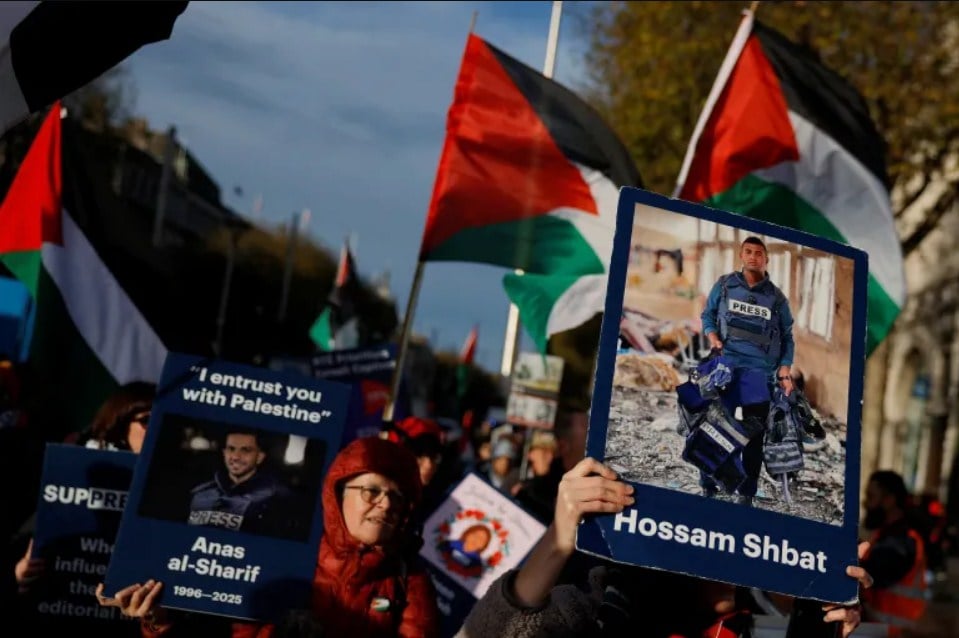
On August 25, 2025, Maryam was killed by Israeli tanks, while covering an attack on Nasser Hospital in Khan Younis. “Part of her is still alive in me and giving me a life,” her father said. Her sister has described the moment she saw her sister dead: “I went to look at her; her features had disappeared as a result of the strike, but I recognised her. She had risen as a martyr. I tried to awaken her, but there was no response.”
Maryam joins the hundreds of others who lived through the genocide as Gazans and covered it as journalists.
Their lives are no less important than those of the journalists killed in Paris or Ukraine. While many in the Western media have failed to recognise it, we should question whether Western journalism is indeed journalism, and whether “Je suis Charlie” has ever actually been about democracy or free speech—the war on Gaza bears witness that it has not.
The writer is a journalist from Palestine with more than 20 years of experience covering politics and conflict zones across Asia. He is widely regarded as an expert on militant groups and was the last journalist to interview Osama bin Laden before 9/11. He has been honoured by the UN and other media organisations, including MCF, with the Exceptional Courage in Journalism Award.