Print Story
X

The year 2025 has been eventful and unpredictable in various ways. As it draws to a close, we asked travel writers to reflect on how travelling, or not, helped them make sense of the year. These short pieces question what it truly means to see the world, and what travel signifies at the end of the day.
They tell stories of how heritage sites and landscapes reveal what societies actively choose to preserve or forget, what becomes part of culture and what lingers as collective regret. They also argue that it is only by remaining open to the unknown that we begin to face what we fear most — something that travel, or the desire to see the world, is eventually all about. It is safe to say that this openness to uncertainty has never been more important than it is now.

Chasing a rainbow
This year, I travelled a bit but did not go anywhere new, which was disappointing because the world is full of wonders and when travelling to foreign places you always find enchanting things. Staying in Karachi for most of 2025, I found myself reflecting on the idea of ‘seeing the world’ and what people typically mean when they say they have seen it all.
At a wedding, I sat at a table where I knew some people but did not know others. I was keenly listening to the conversation taking place on the other side of the table. A man in his fifties had recently returned from Oslo; his colleagues were impressed by his travels and asked where else he had been. He told them he had been all over and claimed that he had seen the world.
This was impressive! I interjected. I told him it had always been my dream to see the world; I was genuinely impressed to meet someone who had already done it. I asked him how he found Burkina.
He looked at me in astonishment. “Burkina?”
“Yes, Burkina Faso,” I clarified. “Was it easy to travel in that country?”
He paused, then recalled his geography. “Oh, Burkina Faso, close to Mali!” he said.
I pressed on. “Yes. Burkina Faso. How was it?”
“Who goes to Burkina Faso?” he asked.
I was a bit disappointed by this answer. Surely anyone who claimed to have seen the world would go to Burkina Faso. But out of politeness, I kept that thought to myself. Instead, I asked him which country he found to be most alien. He said he had enjoyed visiting Cuba.
If he found Cuba interesting, what did he think of the DPRK? No, he had never been to North Korea. From there, the conversation went south. Obviously infuriated, he said ‘seeing the world’ was just an expression and did not mean he had been to every single country. I learned that his ‘world’ comprised most of Europe and North America; Costa Rica alone in Central America; Argentina and Brazil in South America; most of East Asia, and a couple of places in Africa.
We got busy with dinner, but the conversation stayed with me and made me think about people’s desire to see the world. Does seeing the world mean visiting every sovereign state? But some countries are so big that there are vast differences between their various regions. Can someone claim to have seen China if they visit only a couple of major Chinese cities? Going by the count of regions with distinct cultures and languages, the ‘world’ to be seen would keep expanding. Add to this the constant transformation of places. The South Africa I saw in 2023 was quite different from the one I saw in 1992.
Perhaps the desire to ‘see the world’ is nothing more than chasing a rainbow. Nobody ever saw the world, and nobody ever will.
– AH Cemendtaur, social commentator and traveller

Where belonging learns to breathe
The question of belonging often comes to my mind as I observe mixed communities and wonder where each group originated. Who comes to a place by choice, who by compulsion, and at what point does a foreign land turn into home? Given time, forced migrations often settle into rootedness. The longing to return fades within a generation or two, until a disruptive voice emerges to question a migrant’s claim to the land. By then, migrants no longer think of themselves as such.
These thoughts hovered quietly as I travelled to Suriname, a country of pristine rainforests in the northern part of South America. My route to the capital, Paramaribo, was by land and water, passing through towns and villages of Guyana and Suriname, where descendants of Indian indentured labourers form a substantial part of the population. The villages were dotted with mosques and mandirs of distinctly Caribbean design.
Paramaribo exudes calm and charm, its leafy avenues lined with wooden Dutch colonial buildings. Suriname is renowned as one of the most ethnically and culturally diverse countries in the world. This diversity is reflected in the everyday ease with which communities coexist, even though politics has not always been immune to ethnic divisions.
The five-pointed star on the Surinamese flag represents its major ethnic groups: Hindustani, Amerindian, Creole, Maroon and Javanese. All arrived from elsewhere; none can claim an uncontested origin. In a central square of Paramaribo, a mosque and a synagogue famously stand side by side, often cited as an emblem of the country’s religious tolerance. Nearby rises the impressive wooden St Peter and Paul Basilica. The Arya Dewaker Mandir, built in an eccentric tropical style that brings cake pastry to mind, sits a short distance away.
Suriname is the only country in the Caribbean where descendants of Indian indentured labourers have preserved their language into the present generation. Known today as Sarnami Hindustani, it survived here in contrast to neighbouring Guyana and Trinidad and Tobago, where English eventually eclipsed other languages.
Outside the capital, I visited a Maroon village – communities formed by descendants of enslaved Africans who escaped and sought refuge in dense rainforests. What began as flight became a settlement; what was once refuge turned into home.
Walking Paramaribo’s quiet streets, I reflected on how Suriname acknowledges the violence and displacement in its past but refuses to rank belonging. Here, no one appears more Surinamese than another. A lesson learned far from home, that I wish more nations were willing to study.
– Shueyb Gandapur, a chartered accountant by profession and an avid traveller and photographer by passion, has travelled to 85 countries on his Pakistani passport. He shares picture stories from his travels on his Instagram handle @ShueybGandapur
The vanishing lakes of Soon Valley
This November, I found myself standing near Sarrki village, deep in the heart of the Soon Valley, witnessing our own ‘Grand Canyons’, though set within a greener, more refreshing landscape. The roads from Lahore to Khushab and on to the Soon Valley felt like newly laid, plush carpets, making the drive into this valley, seemingly frozen in the nineteenth century, a pleasure.
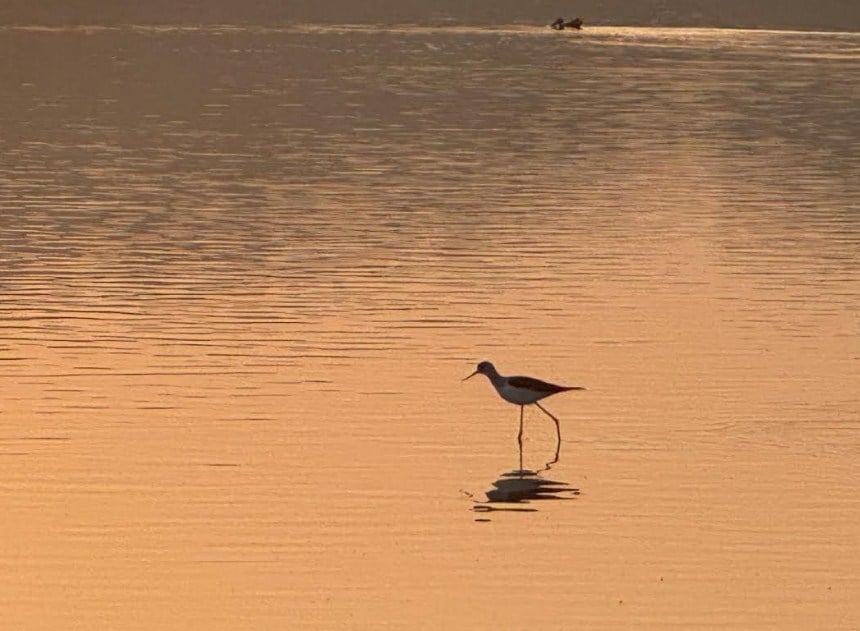
I was on my way to Jahlar Lake, one of the few designated Ramsar sites in this region. Jahlar, along with Ucchali and Kabheki lakes, forms part of the Ucchali Complex. As the sun set over Jahlar Lake, I was reminded of my last visit in November 2001, some twenty-five years ago, with a different set of friends. The lake has since shrunk in size, although our Siberian guests were still present in large numbers. I am no bird expert, but these elegant creatures moved gracefully along the lake’s shores.
The next day, I visited Ucchali Lake and was dismayed to find it reduced to nearly one-third of its original size. The boardwalk, which once had water on both sides for most of its length, now stands dry except at its far end. People have even begun cultivating crops on land once covered by the lake.
I witnessed the same story at Kabheki Lake, where I had spent a freezing winter night in February 2000, rising early the next morning to watch thousands of flamingos strolling as though the lake belonged to them. Today, Kabheki Lake is little more than a remnant of its former glory. Such is the impact of climate change. If no action is taken, the next generation may not even know these beautiful lakes of the Soon Valley — and the flamingos, along with our other Siberian visitors, may eventually stop coming here in winter.
Dr Omar Mukhtar Khan, international development professional

Material culture on tombstones
My research on the iconography of tombstones in Pakistan has uncovered fascinating insights into stonemasons' selection of signs and symbols for their artistic repertoire. Stonemasons in Sindh, the Punjab, Balochistan and Khyber Pakhtunkhwa have added modern signs and symbols to tombstones, reflecting changes in their sign and meaning systems within the mason community. The journey I started into the cultural landscape of Sindh in 1998 later expanded into other provinces of Pakistan that same year. I was interested in studying the material culture depicted on tombstones. It was quite challenging to travel from one place in Sindh to another location in another province. During the initial years - 1998, 1999 and 2000 - I faced difficulties accessing the sites and later obtaining information about the mason community that made these tombstones.
I found several cemeteries in Pothohar, Punjab, and in Haripur's Ghazi tehsil. I visited Nikku village in Rawalpindi's Taxila in 2022, and noted a graveyard with remarkable schist tombstones that reflect the most intriguing material culture. This cemetery is unique in showcasing how material symbols contribute to the identity of those interred in the graves. This cemetery contained several tombstones, a few of which featured distinctive symbols that caught my attention for their unique characteristics and craftsmanship.
One of the tombstones at Nikku cemetery bears the name Fazaldin Gujjar and depicts a teapot, cups and saucers, a prayer rug and a rosary. It also depicts a carpet, a comb and water pots. The interred person was known for his hospitality.
Following this initial observation at the Nikku cemetery, I decided to visit other cemeteries throughout the Rawalpindi, Jhelum, Chakwal, Talagang and Attock districts, identifying similar symbols on other tombs. I have been researching similar tombstones in Haripur's Ghazi tehsil since 2021.
Religious symbols were recurring motifs on most of the tombstones that I visited in 2024 and 2025. These included depictions of mosques, ewers, rosaries and prayer rugs. During my field visits to cemeteries in Chakwal, Talagang, Attock and Haripur districts, I learned that these symbols are engraved on almost every tombstone.
The material culture on the tombstones in Pothohar fascinated me so much that I continued to explore cemeteries in Talagang in 2025. In 2025, I visited Markhal, Phathar and Mirjan, Kot Sarang, Chinji, Misrial, Nurpur, Multan Khurd, Jabbi Shah Dilawar. In all these villages, some tombstones represent both religious symbols, floral designs and geometric motifs. Although Markhal and Phathar villages are far from Talagang town, both have retained their old tombstones, which have become the identity of both villages. My research continues to unfold the material culture depicted on tombstones across Pakistan.
– Zulfiqar Ali Kalhoro, anthropologist and author of 17 books on the cultural heritage and anthropology of Pakistan

Something borrowed, something forgotten
Places that I’ve been to across Pakistan in the past forty years of travelling have left their mark on me. In December 1987, I was at the shrine of Sufi Shah Inayat at Jhok (Thatta) with a friend from Badin. I have to admit I am not a shrine worshipper, but in those far-off days, the shrine in its original form had a powerful aura. I believe that it was mainly because of its ruinous and forlorn condition.
As we sat sunning ourselves in the early morning light, my friend told me the story of this remarkable man. A landowner himself, his slogan of whoever ploughs has the first right on the harvest drew landless peasants to his banner. Parcelling out his own ancestral holding to poor peasants, Shah Inayat showed that he was not just talk. He could walk the walk as well.
This grew into a sort of uprising against landlords and the ruling class. Late in 1717, Farrukhseyar, the Mughal emperor, ordered the governor of Thatta to join forces with the Kalhoro ruler of Sindh and move against the Sufis. Before the battle could begin, there was subterfuge. Shah Inayat was invited for parleys and arrested. He was executed in January 1718.
Karl Marx was born a hundred years later, and though there is no possibility that he knew of Shah Inayat from remote Sindh, he propounded a theory that went on to change the world. As my friend and I sat by the bare stone walls of the shrine, my thoughts about how we look at our heroes began to change. Some socialists in Pakistan celebrate Marx, but Shah Inayat, who practised it, is forgotten.
That was a turning point for me. I began to look into whether we of the subcontinent had other heroes similarly eclipsed by outsiders. Prithvi Raj Chauhan against Ghori was one. And there was Chanakya Kautilya, advisor to Emperor Chandragupta Maurya and author of the outstanding work Arthshastra, against the much later Italian Machiavelli, who guided the chief of the tiny principality of Florence. My view of how we look at history changed on that December morning in Jhok.
– Salman Rashid, author of several travel books, is a fellow at the Royal Geographical Society.

Memories of a town
In 1876, SS Thorburn, a Scottish civil servant, wrote that Bannu had an evil reputation as a distant, wild and lawless place. This is partly true. Yet there is a rhythm to the city that makes you feel alive, provided you enjoy strolling through its narrow alleys. That rhythm, however, is fading faster than anticipated. Bannu has lost much of its colonial footprint.
The city was carefully planned by Herbert Edwardes after the First Sikh War in 1848. It once featured the serene Jamun (Java plum) Avenue linking the walled town to the cantonment, now gone. There was a handsome building with sloping roofs that housed the Regal cinema, and a grand Gothic-style railway station. The Gokhale Art Academy, established in 1868 in a fine haveli near Das Chowk, has also vanished without a trace. In recent decades, these landmarks were demolished and replaced by markets of little architectural merit. The city wall, with its nine majestic gates, was removed in the name of beautification. The gates survive only in name.
The last iconic building to be pulled down, in 2025, by what can only be described as mindless officialdom, was the Sanatan Dharam High School near Katchery Gate. Renamed Government High School No 2 in 1973, its classrooms had been built through donations from enlightened citizens. Fixed outside each room were marble plaques etched with the names of generous Hindu donors who had contributed in memory of lost loved ones. These tablets were destroyed by the contractor. In the ensuing mayhem the story of the lawyer Seth Chotu Ram was lost. In 1936, he filed a civil suit for the recovery of a young girl, Ram Kori, who had eloped with a Muslim boy, an episode that enraged the Fakir of Ippi and contributed to his declaration of holy war against the colonial regime.
Bannu still has much to offer the casual traveller: the much-restored Nicholson House, the English Record Room, St George’s Church built in 1852, the dilapidated Queen Victoria Memorial Library and Dr Pannell’s High School alongside his mud-built hospital. The traditional ritual of zhan-rahey brings the spirit of Bannu alive each evening. At Chowk Bazaar, in the heart of the city, grooms and their friends, garlands dangling from their necks, perform the attan dance to the rhythm of the shehnai and the drums: echoes of what was once a jovial city.
– Dr Raheal Ahmad Siddiqui (Tamgha-i-Imtiaz), retired civil servant, conservationist, animal rights activist and writer on cultural and heritage issues.

At the edge of the Red Sea
After an extended and involuntary break from travel due to illness, 2025 was a lucky year for me. I was once again able to travel and visit places and fortunate to explore the wonders and diversity of our world.
Many moments stood out - experiencing for the first time the rugged beauty of Sicily, the wonders of Cairo, the mountains of Kyrgyzstan and the remote mystery of Armenia.
The experience that left the deepest impression on me was my visit to Massawa, Eritrea.
Since childhood, I have been fascinated by the story of Najashi, the King of Abyssinia, who offered protection and asylum to Muslims fleeing persecution in Makkah, and by the praise he subsequently received from our Holy Prophet (peace be upon him).
I read about a mosque whose foundations were laid by those very — the sahaba (with whom Allah was pleased) — who had come from Makkah. This may have been the first mosque of Islam (615 AD, seven years before migration to Madina). I was never sure how accurate this story was, but it had remained etched in my mind.
This year, I finally found my way to Eritrea and drove more than four hours to the port city of Massawa. There, I set my eyes on this small but incredible structure — the first mosque of Islam, built not in Arabia, but in Africa, just metres from the shore of the Red Sea.
In my mind’s eye, I could imagine the sahaba setting foot on land after an arduous and dangerous journey from what is today Saudi Arabia. One of their first acts of devotion was to build a mosque — perhaps at the instruction of the Holy Prophet (peace be upon him). What faith, what resilience! Standing there, I felt utterly humbled.
It is a tiny structure, but a momentous edifice in Islamic history. This was not just a highlight of my 2025 travels; it is one of the greatest highlights of my travels. Period.
I wish Eritrea were accessible to more people, so they, too, could witness this incredible masterpiece of Islamic history and feel the same sense of humility and awe I did.
– Ali Abbas Syed, finance professional based in Dubai

Walking into clarity
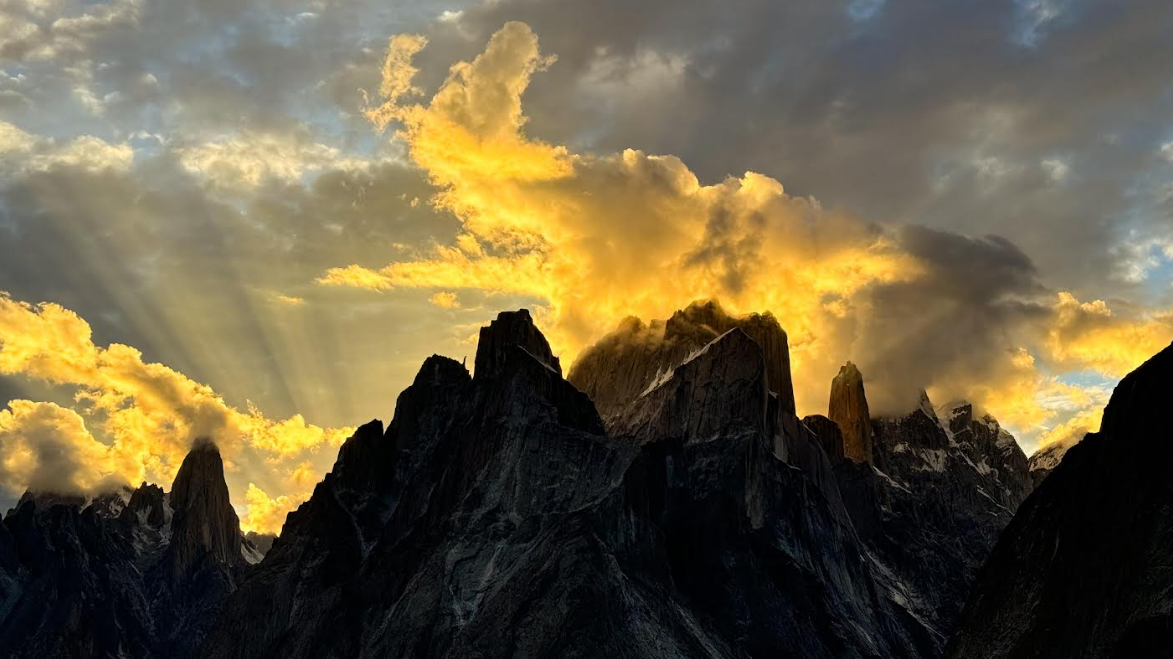
2025 had been a year of uncertainty and quiet challenges. When I set out for K2 Base Camp, I was not looking for escape; I was looking for perspective. The 14-day circuit through the Karakoram, including the crossing of Gondogoro Pass at around 5,700 metres, gave me that.
The trek was demanding — glaciers, loose moraine, thin air and long, silent days. I moved through it all with unexpected ease; not because it was easy, but because I stopped resisting it. I walked, rested and listened. My body adapted. My mind softened. Every step felt deliberate, every breath grounding.
Crossing Gondogoro Pass was my first experience at that altitude. There was no rush of triumph, only a hush broken by the wind and the sharp sparkle of sunlight on ice. In that quiet, small epiphanies arrived: how much strength I carry; how rarely I acknowledge it; and how often I underestimate myself away from the mountains. I realised that challenge does not always have to feel like a struggle; it can feel expansive, even kind.
The Karakoram revealed itself without spectacle. The mountains do not perform or seek admiration; they exist with raw honesty. Watching the porters move steadily across terrain that felt overwhelming at times reshaped my understanding of resilience; their quiet strength was a reminder that endurance does not need to announce itself.
By the time I reached K2 Base Camp, I was no longer searching for meaning. I felt grounded, present and clear. That sense of capability did not stay behind in the mountains; it followed me home, later inspiring me to sign up for a mountaineering certification course — not to chase summits, but to honour the strength the Karakoram helped me recognise within myself.
Some journeys do not change your life dramatically. They simply adjust your inner compass, and that can be enough.
Huma Tarik, founder of MyEffinTours