Print Story
X




Ramazan brings Pakistan a unique opportunity for economic reform
| E |
very year, as the crescent moon signals the arrival of Ramazan, Pakistani households brace themselves for a predicted prices rise.
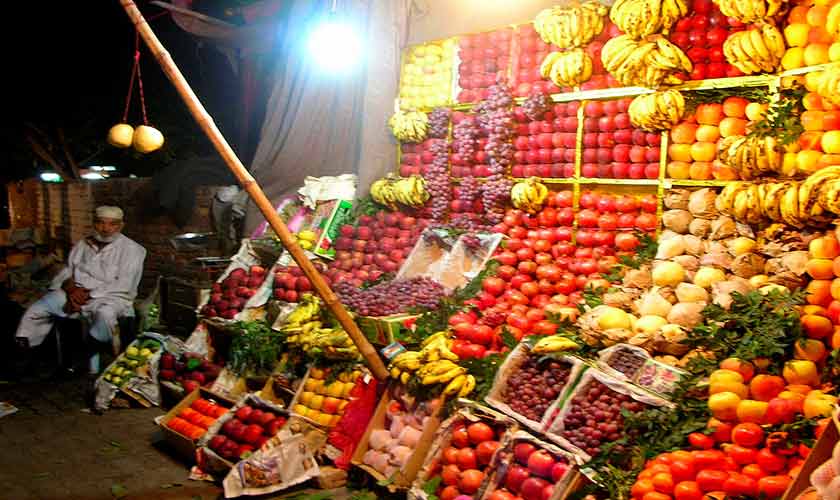
The holy month preaches restraint, empathy and charity, yet arrives with a surge in the cost of essentials—fruits, vegetables, meat, sugar, flour and cooking oil. For millions of Pakistanis, fasting is not merely a spiritual obligation; it also becomes an economic burden.
This phenomenon is not accidental. It is rooted in Pakistan’s structural economic weaknesses, cartelised markets, weak governance and social behaviour. Ramazan inflation is, in many ways, a mirror reflecting the moral, institutional and economic contradictions of Pakistani society.
Ramazan fundamentally alters consumption patterns. Households add pre-dawn and sunset meals, mosques and charities organise communal iftars and families host guests with elaborate spreads. Fruits, dates, beverages, fried snacks, poultry and desserts become staples. Instead of reducing consumption, Ramazan often spurs it.
In economic terms, this represents a classic seasonal demand shock. When demand spikes suddenly and supply chains are rigid, prices rise. But in Pakistan, the demand shock interacts with deeper structural failures that amplify price hikes far beyond what normal market dynamics would justify.
Pakistan’s agricultural and food supply chains are notoriously inefficient. The country lacks modern cold storage, warehousing and logistics networks. Multiple intermediaries—from farmers to commission agents to wholesalers to retailers—extract margins at each stage.
Ramazan adds a speculative dimension. Traders anticipate demand and hoard commodities, releasing them gradually at higher prices. Artificial scarcity becomes a business strategy. Sugar, wheat flour, poultry and vegetables frequently become targets of speculative stocking.
Hoarding is illegal, but enforcement is sporadic. Market committees announce price lists, but enforcement mechanisms are weak, fines are trivial and political patronage shields influential traders. Ramazan thus becomes a predictable profit season rather than a test of ethical commerce.
Perhaps the most important factor behind Ramazan inflation is cartelisation. Pakistan’s poultry industry, flour mills and sugar mills, even wholesale vegetable markets, are dominated by organised groups that coordinate prices. Competition authorities exist on paper, but enforcement is timid.
When demand rises during Ramazan, the cartels act swiftly. Poultry prices often double; sugar and flour fluctuate mysteriously despite sufficient stocks. The state’s inability to dismantle these cartels has turned essential commodities into tools of rent-seeking.
In developed economies, anti-trust laws aggressively dismantle price-fixing arrangements. In Pakistan, political economy realities—industrialists doubling as legislators and political donors—make such enforcement politically risky.
Every year, governments announce Ramazan price control measures. Magistrates conduct token raids and subsidies are advertised. Yet markets remain largely unchecked. Municipal institutions lack capacity and independence. Price control laws are outdated and penalties are negligible. Political leader avoid confrontation with powerful trader associations.Corruption undermines enforcement at local levels.The result is a ritualistic governance cycle: public outrage, symbolic action and eventual resignation to market realities.
Beyond economics, social behaviour plays a crucial role. In Pakistan, Ramazan has increasingly become a consumption festival. Television channels promote lavish cooking shows; restaurants offer extravagant buffets; brands launch Ramazan-themed marketing campaigns.There is intense social pressure to host elaborate iftars. Middle-class households stretch budgets to meet social expectations. Charities and NGOs purchase large quantities of food for mass feeding, adding to demand pressures.
This commercialisation of spirituality is not unique to Pakistan, but its impact is magnified by poverty and inequality. For the poor, the month of compassion becomes a month of anxiety. Food constitutes a disproportionately large share of expenditure for low-income households—often over 50 percent. When food prices rise, the poor have no buffer. They cut protein intake, reduce fruit consumption and compromise on nutrition.
Ramazan inflation thus deepens inequality. While affluent households indulge in lavish spreads, poorer families struggle to afford basic staples. The religious promise of empathy and social solidarity is contradicted by market realities.
Paradoxically, Ramazan diets often become less healthy. Increased consumption of sugar, oil and fried foods contributes to obesity and diabetes, while protein becomes less affordable for the poor. The fasting month, intended for physical and spiritual discipline, ends up straining public health.
Seasonal price variations are not unique to Pakistan. In the United States and Europe, certain goods become expensive before Christmas, Easter or Thanksgiving. Turkeys, chocolates, toys and decorations see demand-driven price movements.
However, essential food items rarely experience cartel-driven inflation. Retail competition often leads to discounts rather than hoarding. Consumer protection laws prohibit price gouging during emergencies. Supply chains are efficient, and imports provide buffers.
Christian fasting periods such as Lent do not trigger inflation; in fact, reduced meat consumption can depress prices. The difference lies not in religion but in institutional strength and market governance.
Pakistan is not alone. Egypt, Indonesia, Turkey and several Middle Eastern countries experience Ramazan inflation. Yet the severity varies. Countries with stronger institutions and social safety nets manage price volatility better. Pakistan’s chronic inflation and weak governance make the problem acute.
Ramazan inflation occurs against a backdrop of persistent macroeconomic instability. Currency depreciation raises import costs; energy tariffs increase production and transport expenses; fiscal deficits fuel inflation expectations. Ramazan acts as an inflationary amplifier, not the root cause. Traders anticipate higher costs and adjust prices preemptively, creating a self-fulfilling prophecy.
Islam explicitly condemns hoarding, profiteering and exploitation during hardship. The Prophet Muhammad (peace be upon him) warned against price manipulation and unjust trade practices. Classical Islamic jurisprudence developed concepts of fair pricing and market supervision (hisbah).
Ramazan inflation therefore represents not only an economic failure but also a moral economy failure. Here a deeply religious society struggles to translate religious ethics into market behaviour.
Tackling Ramazan inflation requires structural reforms. The government should maintain and release strategic reserves of wheat, sugar and pulses during Ramazan to stabilise prices.The Competition Commission must be empowered politically and legally to dismantle price-fixing cartels.Investment in cold storage, warehousing and logistics can smooth seasonal fluctuations. Expanding the BISP and other cash transfer programmes during Ramazan can protect vulnerable households. Real-time price dashboards and citizen reporting apps can improve transparency. Religious scholars and media should emphasise that price exploitation is morally and religiously unacceptable.
Ramazan inflation is not merely about prices; it is also about governance, social values and economic institutions. It reveals how weak enforcement, cartelised markets and consumer culture can distort even the period held most sacred.
The month that should remind society of humility and solidarity ends up exposing inequality and market power. The poor fast not only from food but also from dignity; the affluent fast from sunrise to sunset but feast at night.
The persistence of Ramazan inflation in Pakistan is a symptom of deep institutional weaknesses. Unless cartelisation, informal markets, weak regulation and social consumption pressures are tackled, the cycle will repeat every year.
Ramasan brings Pakistan a unique opportunity—not only for spiritual renewal but also for economic reform. A society that can align its markets with its moral values can not only stabilise prices but also restore faith in institutions. Until then, the crescent moon will continue to signal not just the start of fasting, but also the beginning of a familiar economic ordeal for millions.
The writer is a senior economic reporter