Print Story
X




AI and digital learning, when integrated responsibly, can reduce rather than increase screen-related harm
| I |
n recent years, concerns about excessive screen time have grown louder across Pakistan. Parents worry about children glued to their mobile phones, teachers observe declining attention spans in classrooms and health experts warn of rising psychological, physical, and mental health problems among young people. At the same time, education systems are rapidly embracing artificial intelligence, digital learning platforms and online assessment. This contradiction raises an important question: are we moving towards a future that solves educational problems or creates new ones?
Medical professionals increasingly link excessive screen use to anxiety, sleep disorders, eye strain, poor posture and reduced physical activity among children. Psychologists also point to social isolation, irritability and weakened emotional regulation. In Pakistan, where many families already struggle with limited outdoor spaces and academic pressure, uncontrolled screen exposure has become a serious concern. Schools frequently advise parents to limit mobile phone use, yet education itself is becoming more screen-dependent than ever.
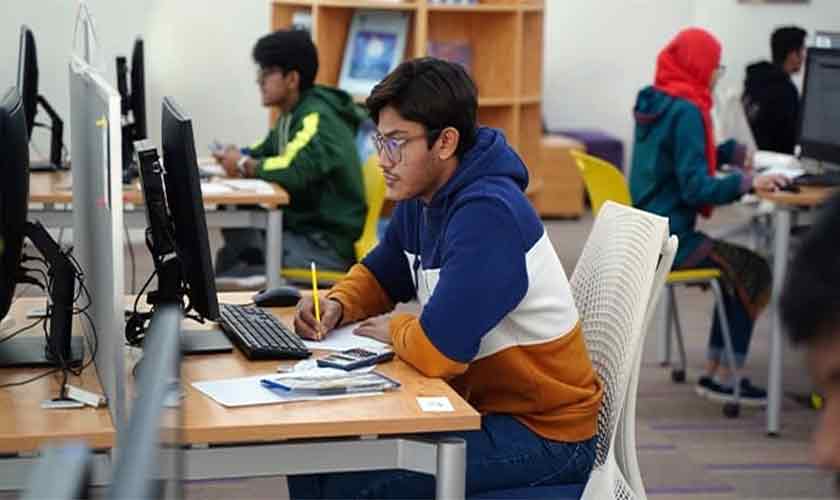
Despite these concerns, the push towards digital learning continues. AI-based tools promise personalised education, faster assessments and support for overburdened teachers. For Pakistan, a country facing overcrowded classrooms, teacher shortages and unequal access to quality education, technology appears to offer practical solutions. Digital platforms can reach remote areas, provide standardised content and assist teachers in managing large classes more efficiently.
The problem lies not in technology itself but in how it is used. There is a critical difference between excessive, unregulated screen time and purposeful, guided educational use. Mindless scrolling, gaming and social media consumption are not the same as structured digital learning under teacher supervision. Unfortunately, this distinction is often ignored in public debate, leading to confusion and resistance rather than meaningful reform.
Pakistan does not need to reject AI or digital learning. Nor should it ignore the risk of excessive screen use. What is needed is thoughtful regulation, informed decision-making and a balanced approach that places students’ mental and physical health at the centre of educational reform.
AI and digital learning, when integrated responsibly, can reduce rather than increase screen-related harm. Blended learning models—where technology complements face-to-face teaching—allow students to benefit from digital tools without prolonged screen exposure. AI can assist teachers in lesson planning, tracking student progress and identifying learning gaps, freeing them to focus on human interaction and emotional support. This approach is particularly relevant in Pakistan, where teachers play a vital role beyond academics.
Policymakers, schools and parents must work together to ensure balance. Clear guidelines on age-appropriate screen limits, digital well-being education, and teacher training are essential. Schools should prioritise physical activity, social interaction and offline learning alongside technology. Parents must also recognise their role in modelling healthy digital habits at home.
The future of education should not be framed as a choice between technology and well-being. Pakistan does not need to reject AI or digital learning, nor should it ignore the genuine risks of excessive screen use. What is needed is thoughtful regulation, informed decision-making and a balanced approach that places students’ mental and physical health at the centre of educational reform.
If managed wisely, technology can support learning without overwhelming young minds. The challenge before Pakistan is not whether to adopt digital education, but how to do so responsibly—ensuring that screens remain tools for learning, not sources of harm.
The author is an educationist and a concerned citizen