Print Story
X




Whether batting first or chasing, Pakistani openers often find it difficult to exploit field restrictions heightening the pressure on the middle-order
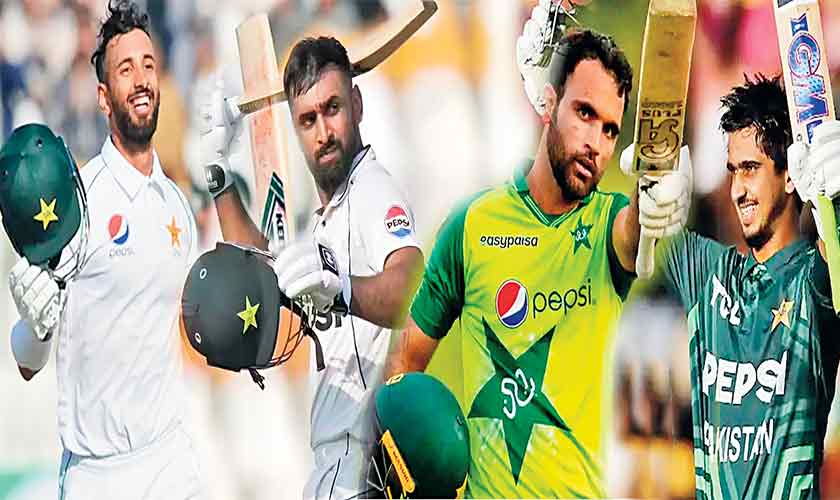
In the fast-paced world of limited overs cricket, the openers’ position is undeniably one of the most pivotal role on the team. Openers not only have the opportunity to bat for the most overs but also take full advantage of the initial power-play overs.
Legendary cricketer Sanath Jayasuriya exemplified this role by consistently capitalising on the power-play advantage, known for his aggressive batting from the very start. Few have utilised the Power-plays as effectively as Jayasuriya.
A strong opening partnership is crucial for a team’s success. When openers provide a solid start with a healthy strike-rate, it empowers the middle-order to either set a challenging total or successfully chase down targets. Conversely, when openers fall cheaply, it forces the middle-order to regroup instead of playing with the aggression required for quick scoring.
The importance of openers in cricket cannot be emphasized enough. They establish the tone for the innings, tackle the new ball, and lay the groundwork for the rest of the batting lineup.
In recent years, several cricketing nations have thrived through stable and dependable opening partnerships. However, Pakistan continues to struggle with a recurring challenge: a reliable set of openers.
Whether batting first or chasing down scores, Pakistani openers often find it difficult to exploit field restrictions for boundaries, heightening the pressure on the middle order - especially when faced with targets around 200 runs in the shortest format of the game.
Pakistan has had occasional world-class openers. Like Saeed Anwar averaged 45.52 in Tests with 11 centuries over 55 matches - among the finest Pakistani opening records. Similarly some pairs like Mohsin Khan, Mudassar Nazar in the 1980s scored over 2,000 Test runs together, with 54 innings and a respectable per-innings average.
But such successes are patchy, and relatively few Pakistani opening pairs - across all eras - can claim long-term dominance.
In a span of 54 Tests, Pakistan used 27 different opening pairs - roughly a new pair every two matches on average.
This instability deprives any pair of the time needed to build understanding, trust, and synergy - elements often crucial for consistent performance.
The consequences of that instability are visible in recent data. According to a report, as of 2024, openers across international Test cricket struggled - but Pakistani openers were among the worst hit.
In that year, many openers globally averaged under 30, but Pakistan’s top-order performances were especially dire.
Even more alarming is since 2023, Pakistan recorded the second-lowest average for the opening wicket among all Test-playing teams - only marginally above one of the weakest sides, Ireland cricket team.
In T20Is and ODIs too, the lack of a stable, high-performing opening pair has repeatedly hurt the team.
A long-term opener - one who consistently gives a solid start - helps set up competitive totals or chase platforms; lacking that, the middle order often bears undue burden.
The domestic cricket system in Pakistan - meant to serve as a grooming ground for future international batsmen - has been repeatedly criticized for poor pitches, insufficient competition, and a shortage of quality bowlers, particularly quality pace and bounce.
As a result, many openers make the jump to international cricket without being thoroughly battle-tested against strong bowling attacks. This lack of preparation makes them vulnerable at the top of the order - especially on challenging overseas pitches.
Because openers are often changed after failures - sometimes even after just one poor outing - players may adopt overly cautious or shell-shocked approaches, playing with the fear of being dropped.
Also, inconsistent role allocation (e.g. in Tests, ODIs, and T20s) - with different openers tried in different formats - means many batters never get time to specialize or fully develop at the top.
Allow openers to take calculated risks without threat of immediate dropping after one failure. Encourage them to express themselves, build innings, and learn from mistakes.
Successful openers today are not just technically competent, but also aggressive, adaptable - capable of exploiting power-plays in limited overs and setting a fast tempo. Many Pakistani openers still bat with a relatively traditional or conservative mindset.
Fixing this long-standing problem requires both structural reforms and a shift in philosophy for how openers are developed, selected and supported. Here are some recommendations: Improve domestic pitches to prepare batsmen for diverse conditions - including pace-friendly tracks, variable bounce, seam movement and challenging scenarios. Also encourage domestic competitions that feature quality bowling - so top-order players are battle-tested before making international jump.
Invest in coaches specialising in power-hitting, modern footwork against pace/spin, handling short balls - the kind of contemporary batting skills demanded at international level.
Whether in Tests they should aim for solidity and build phase; in ODIs/T20s they should exploit power-plays and provide brisk starts. Coaching and batting plans should be tailored to these roles.
International cricket - especially at the top of the innings - is as much mental as technical. Provide psychological conditioning, mentorship for dealing with pressure, and game-scenario training so openers learn to navigate difficult situations (early swing, pressure chases, overseas conditions).
Batting against high-quality pace bowling repeatedly - both domestically and in practice - will build temperament and confidence.
Identify talented youngsters (in schools, clubs, domestic circuits), give them opportunities as openers, and support them through age-group cricket, first-class cricket, A-team tours. This gives more time for technique refinement, experience building, and gradual elevation, rather than thrusting young players directly into intense international spotlight.
Pakistan cricket team’s opening conundrum has been a constant issue, plaguing the team’s performance in international cricket.
At least one opener should be aggressive. If you don’t have an attacking opener and a couple of good finishers then that is the problem of the coaching staff and the think tank.
As always Pakistan’s batting strike-rate is the weakest link going into the world cup. Strike-rate has always been the issue from the top 4 batsmen, who play out till 10th over and then ask the middle-order to go all out. They need to get going from the first over to build pressure on the opposition. Pakistan needs to learn the art of posting scores over 200. The formula of preserving wickets till 15 overs and scoring in the last 5 overs is not going to allow them to post huge totals.
Given the rapid evolution of cricket worldwide (faster scoring rates, aggressive opening play, power-play emphasis), staying stuck with outdated approaches risks leaving Pakistan permanently behind.
The narrative that “Pakistani openers are inconsistent” is not just anecdotal - it is supported by hard statistics: frequent changes in opening pairs, poor recent averages, low opening-wicket yields, and limited success in building stable partnerships.
But this doesn’t have to be a permanent state. With stable selection policies, improved domestic structures, modern coaching emphasis, mental conditioning, and a long-term youth pipeline - Pakistan can rebuild a top-order foundation that delivers across formats, rather than perpetually hunting for quick fixes.
Ultimately, what’s needed is vision and patience. Instead of reacting to every failure with a new experiment, the cricketing authorities must commit over seasons - giving opening pairs time to settle, bonds to form, and resilience to build.
If Pakistan embraces that path, its next “golden era” of batting need not depend solely on middle-order heroes - but also on consistent, confident batsmen at the top, laying strong foundations from the very first over.