Print Story
X




The performances set the stage for an even more competitive 2026

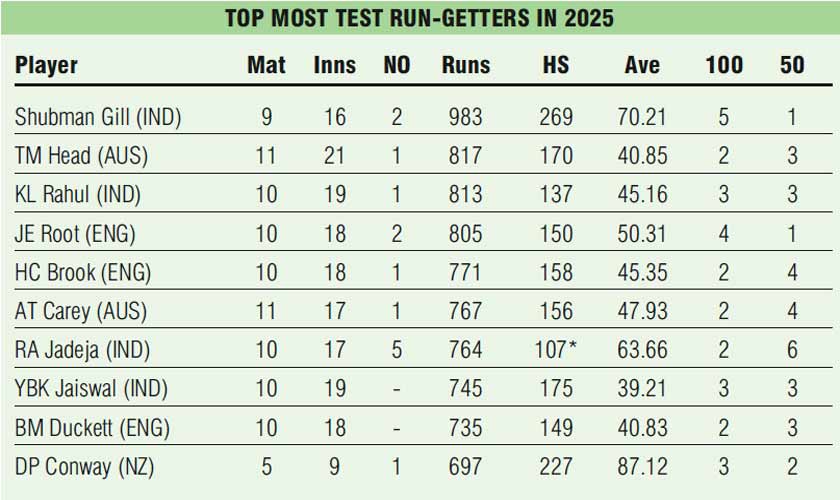
The year 2025 proved to be a competitive and transitional phase for international cricket, with major teams displaying mixed performances across formats. Traditional powerhouses such as India, Australia, and England continued to assert their dominance, particularly in bilateral series and ICC tournaments, though consistency remained a challenge in certain conditions.
India’s depth in batting and spin bowling kept them competitive across formats, while Australia relied on pace strength and tactical discipline to maintain their edge, especially in Test cricket.
England’s aggressive white-ball approach delivered notable successes, but their red-ball form fluctuated overseas. Pakistan and South Africa showed flashes of brilliance, producing memorable individual performances, yet struggled with stability and injuries, which affected overall results. New Zealand remained competitive despite a limited player pool, maintaining their reputation as a well-drilled and resilient side.
In the subcontinent, spin-friendly conditions continued to influence outcomes, while overseas tours tested teams’ adaptability. Emerging teams such as Afghanistan and Bangladesh made incremental progress, particularly in limited-overs cricket, signaling a gradual narrowing of the gap with established nations.
Overall, 2025 highlighted the evolving nature of international cricket, where squad rotation, workload management, and adaptability played decisive roles. The performances set the stage for an even more competitive 2026, with teams focusing on rebuilding, refining strategies and preparing for major global events ahead.
The Pakistan men’s cricket team experienced a year of distinct contrasts in 2025, marked by inspiring white-ball victories, persistent red-ball challenges, and promising signs from emerging talent. As the calendar year closes, both statistical data and match results underline a blend of achievement and areas requiring strategic improvement across formats.
T20 International
success and depth
In the Twenty20 International (T20I) arena, Pakistan demonstrated competitive strength throughout 2025. The team contested 34 T20Is, securing 21 victories and recording a 62 percent win rate, including winning three of five series played. Batting contributions were broad, with Sahibzada Farhan leading the run charts with 771 runs at a 133 strike rate and significant contributions from Saim Ayub, Hasan Nawaz and Fakhar Zaman. On the bowling front, Shaheen Shah Afridi, Haris Rauf and Salman Mirza led the wicket-taking charts, reflecting a potent pace unit across conditions. Pakistan also concluded the year by winning the home T20I Tri-Nation Series against Sri Lanka and Zimbabwe, with Mohammad Nawaz emerging as Player of the Series.
Moreover, Pakistan set a record for most T20I wins in a calendar year, an achievement that underscores their growing adaptability and consistency in the shortest format. These results suggest that Pakistan is evolving into a formidable T20 side, improved under new tactical frameworks and benefiting from a deeper batting order than in recent seasons.
One Day Internationals: Progress with
inconsistency
In the ODI format, Pakistan compiled a mixed but reasonably stable record in 2025. Across 17 ODIs, Pakistan won seven and lost ten, reflecting intermittent performance but notable breakthroughs. A highlight was the home ODI series victory against Sri Lanka, sealed emphatically with an eight-wicket win in Rawalpindi, propelled by a century from captain Babar Azam - his first in over two years and his 20th ODI hundred, equalling a national record.
Pakistan also secured an earlier ODI Tri-Nation Series win against New Zealand and South Africa, with Salman Ali Agha leading with consistent runs and Shaheen Afridi topping the wickets. Although these results reflect pockets of success, the overall ODI performance highlighted ongoing challenges in maintaining continuity, particularly away from home.
Test Cricket: Structural challenges persist
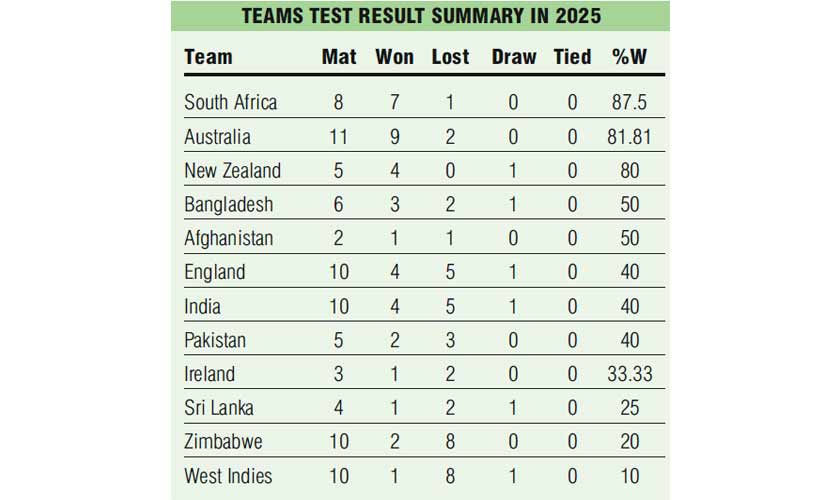
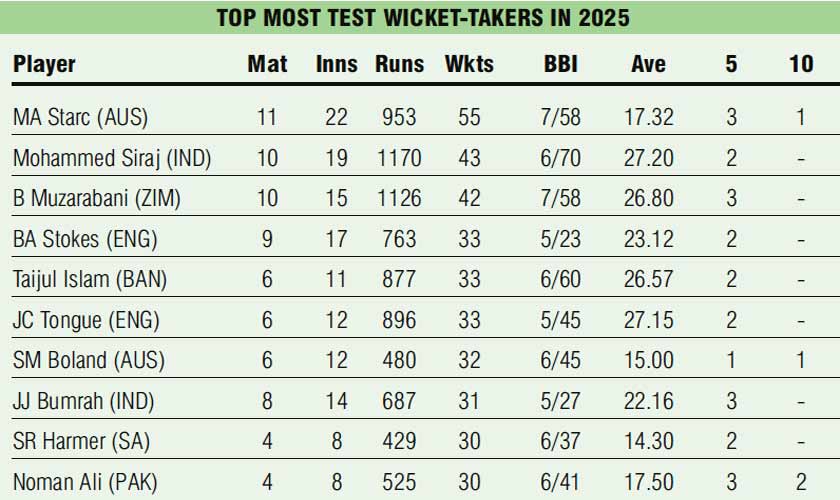
The red-ball calendar was more testing for Pakistan. During 2025, Pakistan played five Test matches, winning two but losing three, indicative of structural inconsistencies in traditional format cricket. Batting collapses especially in the first innings against strong bowling attacks overseas exposed technical and mental fragilities. Pakistan’s inability to string together decisive Test victories contributed to underwhelming positioning in the ICC World Test Championship cycle, where solid performance remains elusive.
Despite these outcomes, there were individual glimpses of quality, with Shan Masood and Salman Ali Agha offering resistance with significant run tallies and fightback efforts in select matches. However, Pakistan’s Test cricket future hinges on sustained batting improvements and stronger spin options to contend in Asian and South African conditions.
An often overlooked success in 2025 was Pakistan’s impressive performances at junior and development levels. The Pakistan Under-19 team captured the U-19 Asia Cup title with a dominant final over arch-rival India, and Pakistan Shaheens lifted the inaugural Men’s Asia Cup Rising Stars trophy. These achievements suggest a deepening pipeline of talent that could fortify the senior team in coming years.
Pakistan team
expectations for 2026
Looking ahead to 2026, expectations are cautiously optimistic. With the Men’s T20 World Cup on the horizon, Pakistan will aim to convert its strong T20 form into a title challenge. However, injury concerns for key players, including Shaheen Afridi, remind selectors of the need for prudent rotation and depth planning.
In ODI and Test formats, Pakistan must prioritise consistency and adaptability - particularly overseas - to improve rankings and compete for major ICC titles. A clear captaincy and coaching structure, coupled with strategic emphasis on middle-order resilience and spin bowling, will be critical for success across formats.
In summary, 2025 was a year of measurable progress in limited-overs cricket for Pakistan, tempered by ongoing Test cricket refinement. The balance of experienced leaders and emerging talent sets a platform from which Pakistan can build a more robust, competitive team as it enters a pivotal 2026 calendar.