Print Story
X




The regional and class disparities in 1971 were outcomes of enduring colonial state structures
| T |
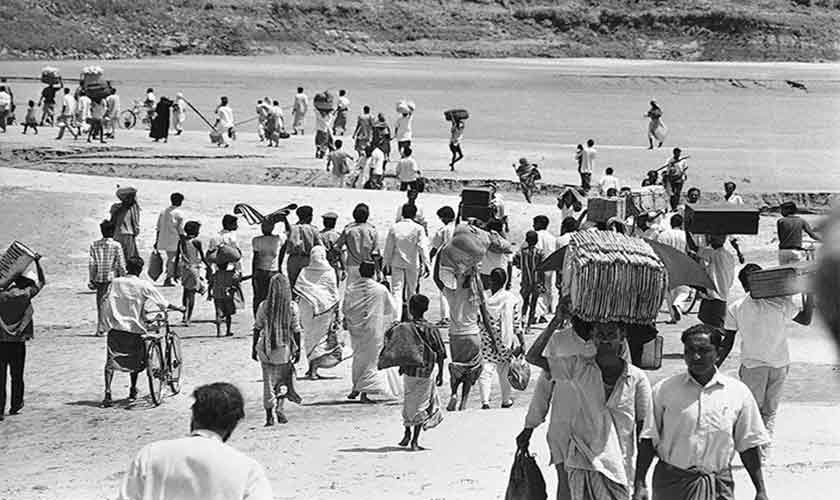
he secession of East Pakistan took place in 1971 but the roots of that break up lie in regional and class disparities that began soon after 1947—the year of independence. The idea of Pakistan was based on a negation of religious majoritarianism and affirmation of the Muslim people’s right to a separate state to preserve their cultural, political and economic identity.
The insecurity of South Asian Muslims during the Sultanate and Mughal periods was being negotiated as rulers of India but was exacerbated during the colonial era. The sharpening of religious identities took place in the colonial milieu and in the context of modernisation, which took place under the British Raj. After independence, while the state continued to glue its people together with Islam and the Urdu language, the society incessantly yearned for cultural, political and economic rights.
At the core of East Pakistan’s disappointments were economic disparities. Despite making up more than half of the population, its people were economically marginalised. Most of the state investment in industry, infrastructure and defence establishment went to West Pakistan as East Pakistan remained mostly agrarian. The country’s major industries, banks, insurance companies and corporate headquarters were located in Karachi or Lahore, not in Dhaka.
Resultantly, although East Pakistan contributed most of the country’s export revenue (70-80 percent), it did not receive proportionate benefits. The proceeds of jute exports (the international prices and demand of the crop had increased multifold in the wake of the Korean War) were controlled by business and state elite and invested mostly in West Pakistan.
The ruling class in Pakistan comprised the civil and military bureaucracy, landed elite and the industrial capitalists. Most of these hailed from the Punjab and Mohajir backgrounds. The Mohajirs—other than the Punjabis, who were uprooted from the Eastern and settled in the Western parts of the Punjab—were rehabilitated mostly in Karachi and Hyderabad. Being at the frontlines of the Independence movement, these mostly Urdu speaking Mohajirs were over represented in the country’s bureaucracy and business.
The capital, Karachi, became a crowded city with their influx. Having left behind their electoral constituencies, the Mohajir leadership saw no incentives in electoral politics but tried to retain power in its hands. As a result, East Pakistanis were doubly marginalised and underrepresented in decision-making despite being a numerical majority.
While East Pakistan had the demographic majority, it was heavily marginalised in political power and business. This explains the delay in framing a constitution (1947-1956), the parity in legislatures was meant to deny its majority. The centralisation of federal powers limited provincial autonomy. The limited and engineered democracy was structurally constrained to prevent the Bengalis’ political participation.
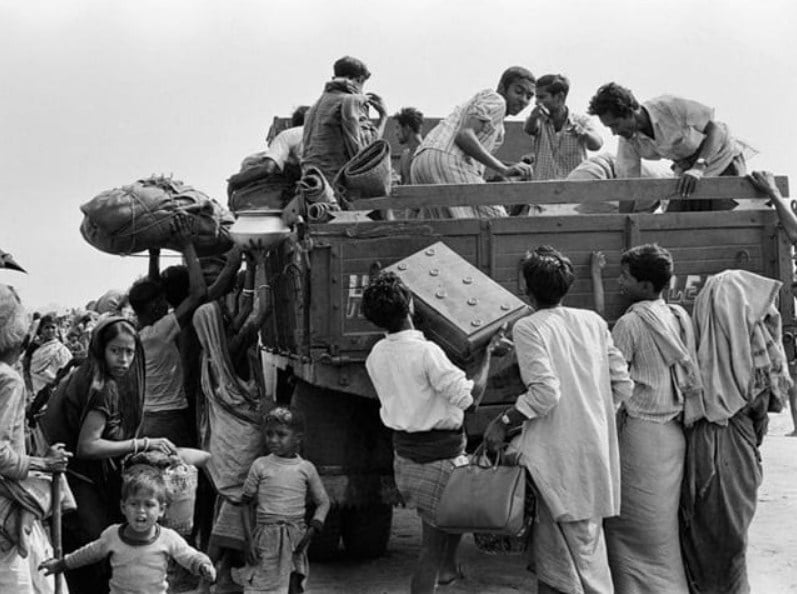
Compounding political and economic exclusion, the state insisted on making Urdu the sole national language. This led to the Bengali language movement in 1952 in a region where almost the entire population spoke Bengali. It transformed cultural dominance of West Pakistan into regional discrimination against the Eastern wing.
The recruitment in armed forces favoured West Pakistanis as Bengalis were stereotyped as a non-martial race, deepening the sense of class disparity and racialising exclusion. Moreover, the Bengalis were culturally dubbed as “Hindu-influenced” and, hence, “less Islamic” than West Pakistanis. There was regional inequality in disaster response, too. Poor and delayed response to the disastrous cyclone of 1970, very close to the national elections, intensified the alienation as the state appeared distant and uncaring.
Mohammad Waseem, the political scientist, argues that separatism was not inevitable. He holds that the Bengali nationalism radicalised in the wake of repeated denial of electoral mandate and the use of authoritarian rule to manage and control diversity. Waseem reiterates that institutional manipulation delayed constitution-making, devised the One-Unit scheme and introduced the Parity formula to prevent East Pakistan’s demographic majority from translating into political power while preserving West Pakistani elite dominance.
Shahid Javed Burki explains Pakistan’s regional crisis through the intersection of class structure, state policy and uneven development paradigm. Burki argues that regional inequality was deliberately orchestrated. He says the state prioritised large-scale capital and industrialisation in the West Pakistan. Hence, regional disparity was not a by-product but built into the development model.
The regional and class disparities that led to the separation of East Pakistan were not anomalous. These were outcomes of the enduring state structures. Elite domination, uneven development, centralised authority, and most important of all, weak political institutions continue to shape Pakistan’s governance. While conditions markedly differ today from 1971, the persistence of peripheral alienation suggests that while Pakistan has managed diversity, it has been unable to resolve structural inequalities at its core.
Without inclusive political parties and participatory federalism, disparities harden. The 18th Amendment helped in making federalism robust. However, its implementation remains selective, half-hearted and contested. Amidst constitutional engineering and institutional manipulation, it continues to be managed rather than allowed its proportional representation and cultural celebration. Class disparities frequently overlap regional ones so that regional grievances become class grievances wearing a territorial mask. Resource extraction without commensurate reinvestment produces internal peripheries such as Pashtun grievances, Baloch nationalism and Sindhi concerns that allege and contest federal overreach.
The writer has a PhD in history from Quaid-i-Azam University, Islamabad. He heads the History Department at University of Sargodha. He has worked as a research fellow at Royal Holloway College, University of London. He can be reached at [email protected]. His X handle: @AbrarZahoor1.