Print Story
X




Has disregard for the public mandate been a recurring theme in the national history?
| P |
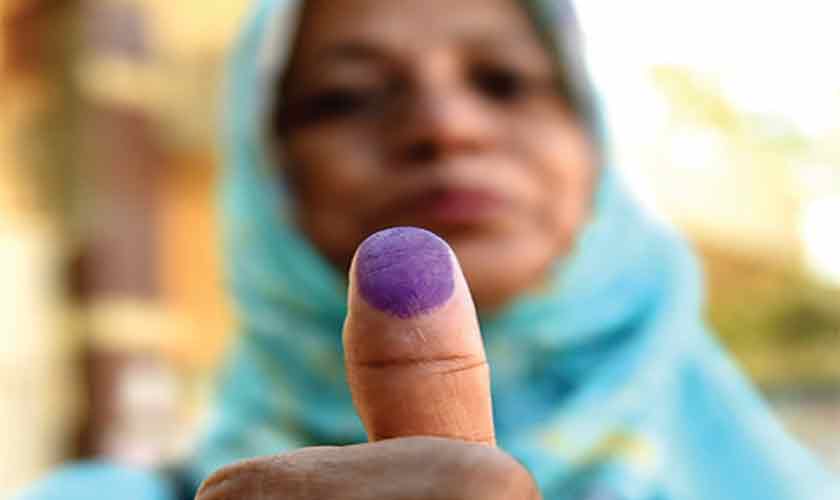
akistan’s electoral history is marked by fragmentation and turbulence, marred by controversies and some extremely unfortunate events. Reflecting on these challenges can deepen our understanding of the importance of electoral integrity for democratic stability. For example, disregard of the public mandate in the first general elections in Pakistan (December, 1970) led to the disintegration of Pakistan; disrespect of the public’s vote in the 1977 elections set the stage for a military coup that year.
Has Pakistan learned from its electoral history?
How well was the public mandate, integral to democracy, respected? The first two Constituent Assemblies (1947 and 1955) were chosen indirectly—by provincial assemblies. Provincial elections under universal franchise took place from 1951 to 1954, (in the Punjab and Sindh in March and December 1951, respectively; in Khyber Pakhtunkhwa, then the North-West Frontier Province, in March 1953; and in East Pakistan in March, 1954).
The alleged rigging in provincial assembly elections in the Punjab, Sindh, and the then NWFP contributed to the decline of the Pakistan Muslim League (formerly, the All-India Muslim League), and its rout in East Pakistan’s provincial assembly elections. This paved the way for the establishment of the dictatorial regime of Gen Ayub Khan, who came to power in October, 1958 via a military coup against a fragile civilian government.
In 1962, Ayub Khan enacted a presidential constitution that introduced indirect elections for the National and Provincial Assemblies. The electoral college consisted of members—who had been directly elected in 1959 and 1964—of local bodies called Basic Democracies. In 1962 and 1965, 80,000 (40,000 in each province of East and West Pakistan) Basic Democrats elected the National and Provincial Assemblies. The same electoral college trusted Ayub Khan as president and chief martial law administrator through a referendum in February, 1960. In January 1965, he was re-elected for a second term—also by Basic Democrats.
From 1947 to 1970, there were no direct general elections at the federal level. Thus, for 23 years, the people were denied the right to make their choices through elections.
The first direct general elections for the National Assembly took place on December 7, 1970. Of the 313 seats—comprising 300 general seats and 13 reserved seats for women—the Awami League won 167 seats, including 160 general seats and seven reserved seats. The Pakistan Peoples Party became the second-largest party with 86 seats. The Awami League received 39.2 percent of the polled votes, while the PPP garnered 18.6 percent.
According to electoral and democratic principles, Sheikh Mujib-ur Rahman’s Awami League had the right to form a government after securing a simple majority in the National Assembly. Nevertheless, the PPP, led by Zulfikar Ali Bhutto, in collusion with Gen Yahya Khan—who was reluctant to transfer power to the Mujib-led Awami League—disregarded the public’s mandate and disallowed the Awami League to form the government.
Instead of allowing Mujib to form the government, Bhutto and Yahya insisted that he review and revise the Six-Point Formula, which he had first presented in Lahore on February 5, 1966. Mujib refused to comply with their demand. As a result, Mujib, Bhutto and Yahya failed to agree on a framework for constitutional and political arrangements. Yahya then postponed the National Assembly’s session, prompting massive and violent street protests by the Awami League. Subsequently, the military government launched Operation Searchlight on March 25, 1971, a major crackdown on Awami League’s leaders and supporters. In this connection, the military-led government decided to hold by-elections for 78 National Assembly seats—76 members had been disqualified and two had died. After 63 candidates were elected uncontested, polling for the remaining 15 was postponed in view of the poor security situation. In the end, this led to the dismemberment of Pakistan on December 16, 1971.
Instead of learning lessons from this chapter, the Pakistani leadership made another mistake in 1977 by refusing to accept the people’s vote. The PPP claimed a landslide victory in the National Assembly elections while the Pakistan National Alliance—a coalition of nine parties—accused it of widespread rigging. The PPP dismissed these allegations, saying they reflected the PNA’s unwillingness to accept defeat, leading the PNA to organise a nationwide protest on March 11, 1977.
Initially, the PNA’s movement was a protest against alleged electoral rigging by the PPP. However, within two weeks, religious parties had taken control of the movement. The PPP government responded by using state force—deploying the army and imposing Martial Law in Karachi, Hyderabad and Lahore—to suppress the protests. These measures failed, and the PPP lost political advantage to the military.
This situation led to a series of dialogues facilitated by the army under Gen Zia-ul Haq. The PPP and the PNA agreed to fresh elections, but differences arose over how to ensure transparent voting. These tensions between the PNA and the PPP ultimately led to another Martial Law on July 5, 1977.
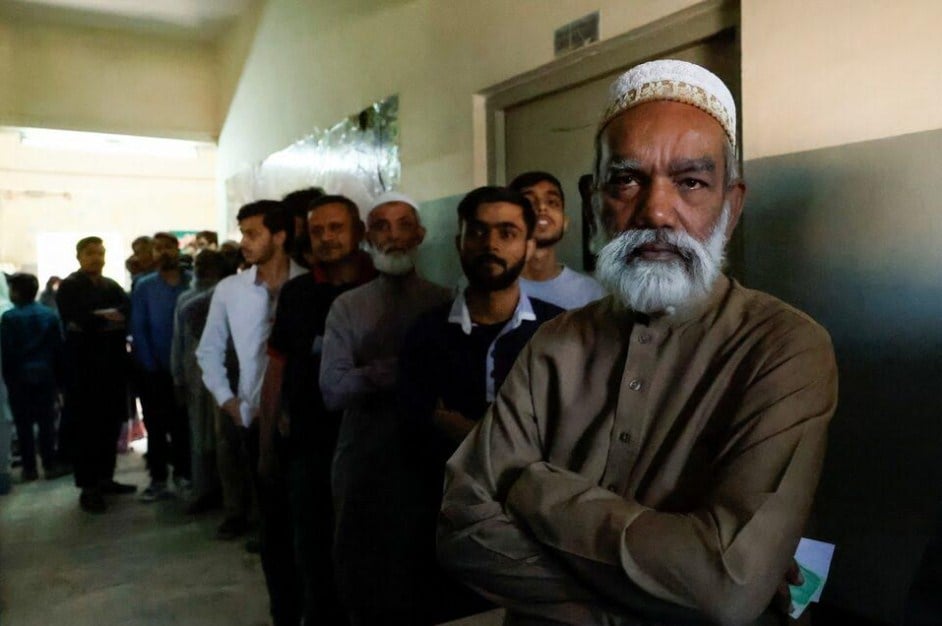
There were lessons for the country in the first two general elections. But it continued to repeat the same mistakes. Many commentators have called the three most recent general elections—2013, 2018 and 2024—as fraudulent, accusing the authorities of usurping the people’s vote. This has undermined the legitimacy of governments, fostered distrust between rulers and citizens and opened the door for non-representative forces to enter the political arena and occupy it.
For Pakistan, history has tended to repeat itself because its lessons have not been learnt. Stealing the public mandate and disrespecting the popular vote has been a recurring theme. This has damaged the parliament’s reputation and widened the disconnect between the establishment and the people. The country and its electorate can no longer afford a repetition of the past.
The writer, author of The Aftermath of the Bangladesh Liberation War of 1971: Enduring Impact (Routledge, 2024), has a PhD in history from Shanghai University. He is a lecturer at GCU, Faisalabad, and a research fellow at PIDE, Islamabad. He can be reached at [email protected]. His X-handle is @MazharGondal87.