Print Story
X




A prolonged legal battle may follow if the PTI is banned. This will potentially place the Judiciary at the centre of a high-stakes political confrontation
| T |
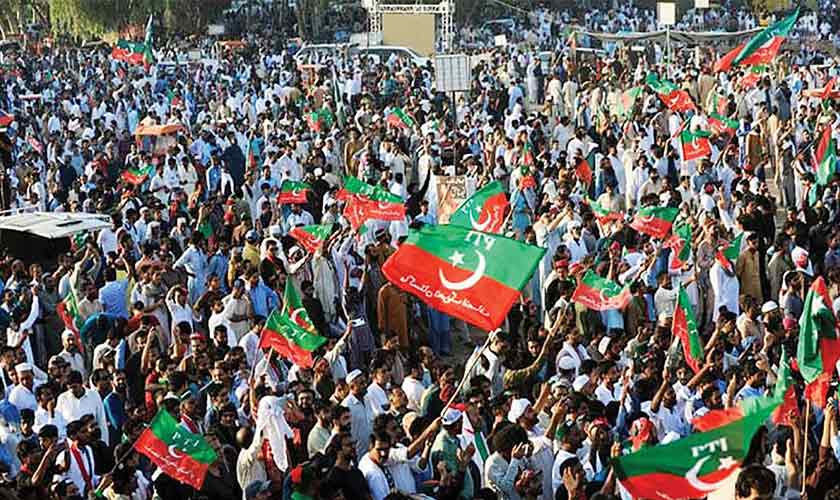
he government is currently reviewing its legal options to deal with former prime minister Imran Khan and his Pakistan Tehreek-i-Insaf party. The PTI and Khan are continuing with their politics of resistance. A group of old PTI ideologues no longer owned by the party is, however, trying to douse the flames and ease the tensions between the PTI and the powerful quarters. That banning the PTI will have major consequences, was never in doubt. The question is: what purpose will it serve?
Recent statements by some government officials, including Information Minister Atta Tarar and Senator Rana Sanaullah, about banning the PTI and Imran Khan from politics, along with a resolution adopted by the Punjab Assembly seeking a ban on the party and its incarcerated founder, point to a decision that will have legal as well as political implications.
The ministers say such an action will follow constitutional provisions and court approval. They argue that the PTI’s conduct is a threat to state institutions and public order. The PTI denies the allegations, calling them politically motivated accusations aimed at ousting the country’s most popular party.
Highly informed sources, privy to discussions within the federal cabinet, tell The News on Sunday that “Several ministers and wise men in the PML-N have advised the prime minister to avoid such an extreme step.”
An insider said, “Once a precedent [of banning a major political party] is set, it will have consequences in the coming years. It will pose the same threat to other parties, including the PML-N.”
Under the constitution, political parties can only be banned if the federal government establishes that they are acting against the sovereignty or security of the state. The decision must then be referred to the Supreme Court.
Legal experts say such cases are rare and difficult to sustain. A prolonged legal battle is expected if a ban is pursued, potentially placing the Judiciary at the centre of a high-stakes political confrontation.
The court will be under intense pressure to demonstrate independence. A perception of weak legal foundation will raise serious questions about due process.
Politically speaking, the PTI remains a dominant force in urban centres and among younger voters despite Imran Khan being jailed and the party facing restrictions. A ban could fracture the opposition but is unlikely to erase the PTI’s influence.
Some lawmakers could defect or regroup under new banners in a replay of past episodes of party fragmentation in Pakistan. Others may contest elections as independents, complicating parliamentary arithmetic and governance. Ousting the PTI from formal politics risks creating a parliament that many voters will see as unrepresentative.
Past actions against the PTI have triggered street protests and clashes with security forces. A formal ban could prompt fresh demonstrations, particularly in major cities, at a time when Pakistan is struggling with economic fragility and seeking investor confidence.
PTI supporters portray him as a victim of political persecution. A ban could reinforce the narrative.
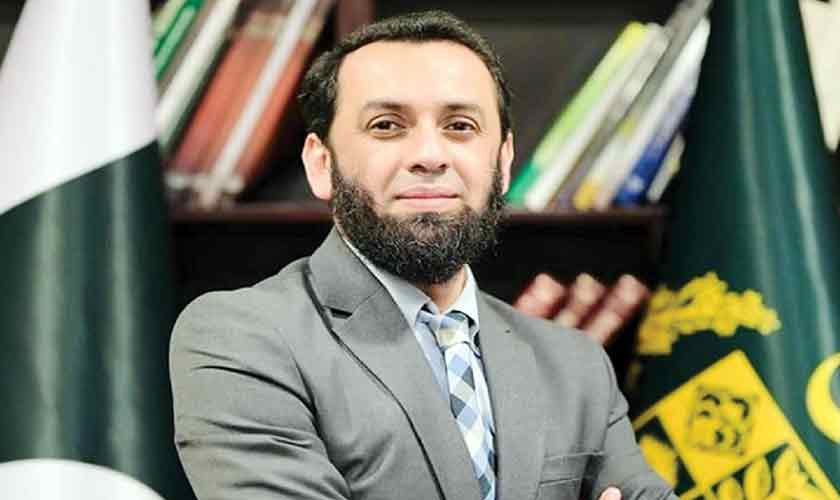
Recent statements by some government officials, including Information Minister Atta Tarar and Senator Rana Sanaullah, about banning the PTI and Imran Khan from politics, along with a resolution adopted by the Punjab Assembly seeking a ban on the party and its incarcerated founder, point to a decision that will have legal and political implications.
A ban could also result in a tightening of restrictions on the media and digital platforms seen as sympathetic to the PTI. This may deepen self-censorship and shrink space for dissent, adding to concerns already voiced by international watchdogs.
A ban on the PTI could invite international censure. Western governments and human rights organisations are likely to closely scrutinise such a move, particularly in the context of future elections. While governments of friendly nations such as China and the Gulf states are expected to prioritise stability, heightened political risk could complicate Pakistan’s engagement with other lenders and donors.
If the government opts for a ban, it may neutralise its strongest rival in the short term; however, this could deepen polarisation and set a precedent with long-term consequences. Popular political movements in Pakistan have historically proven difficult to suppress through legal bans alone. The risk is that exclusion from formal politics pushes conflict onto the streets.
As the government weighs its next steps, Pakistan faces a familiar dilemma: balancing control against stability in a deeply divided political landscape.
On the other hand, a quieter but consequential development is under way: the emergence of a second line of political resistance. PTI leaders like Fawad Chaudhry and Imran Ismail are trying to keep the political oxygen flowing — not through mass mobilisation, but through back-channel negotiations, legal manoeuvring and media engagement.
This is not the PTI of container politics or jalsas. It is a PTI adapting to an environment where visibility itself is an act of defiance.
Fawad Chaudhry has positioned himself as the party’s most persistent legal and media combatant, though the PTI does not formally own him or endorse his actions. Through court petitions, press briefings and calculated appearances, he is trying to shift the battle from the streets to the courtroom — framing the PTI crackdown as a constitutional issue rather than a law-and-order problem. This is a deliberate strategy: to force the relevant institutions to argue law, not loyalty.
Imran Ismail, meanwhile, represents another strand of survival politics. He is engaging quietly with political actors, maintaining lines of communication within Sindh and avoiding overt confrontation. He believes that the party’s future depends on staying electorally relevant, even if that means operating under severe constraints. This is not an ideological retreat; it is tactical patience.
These players are trying to persuade Khan and the powerful quarters to move toward a truce through talks.
This approach has its limits. Without Khan’s direct endorsement, every PTI leader risks being labelled either expendable or compromised. The party’s support base, emotionally invested in a singular leadership figure, remains deeply suspicious of any alternative.
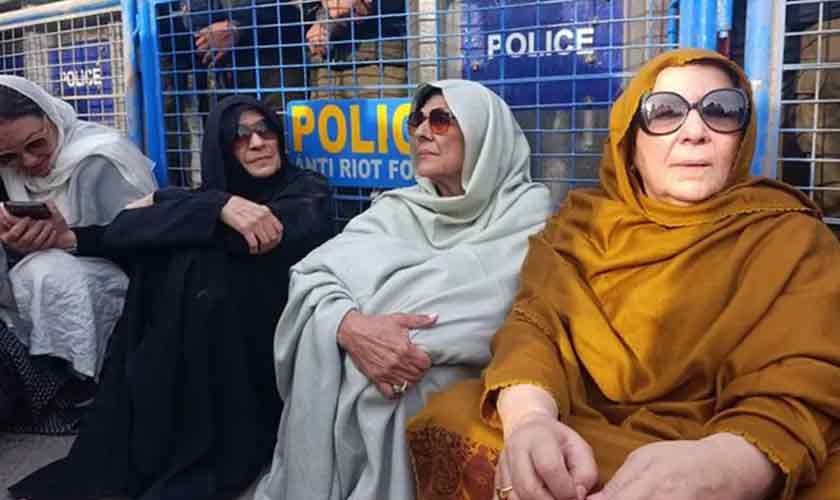
Survival politics is often mistaken for surrender. Still, dismissing these efforts as irrelevant will be a mistake. They serve three critical purposes. First, they prevent the political erasure of the PTI. Second, they create legal record that may matter when political winds shift, as they often do. Third, they are trying to secure the release of people like PTI vice chairman Shah Mahmood Qureshi to lead the party’s re-organisation and negotiations with the power.
Whether the second rank can evolve into a coherent leadership structure remains uncertain. Pakistan’s political history suggests that popular movements without their central figure either collapse or have to wait for their return.
For now, Fawad Chaudhry, Imran Ismail and others are not trying to replace Imran Khan. They are trying to ensure that when the moment comes — whether through courts, elections or some compromise — there is still a party left for him to return to.
The existence of a party and the presence of a leader, even behind bars, constitute a form of resistance. Splinters of major parties may enjoy momentary power and establishment support, but they tend to shrink back to their original size or vanish altogether. The PML-Q, a splinter of the PML-N, and breakaway factions of the PPP — including the Millat Party, Pakistan Peoples’ Party-Patriots and Pakistan Party (Shaheed Bhutto) — are examples of the short-term politics of splinter groups.
The writer is a journalist, teacher of journalism, writer and analyst. He tweets at @BukhariMubasher.