Print Story
X




Authorities claim investment in the healthcare system but systemic failures to reform it undermine the goal of equitable healthcare
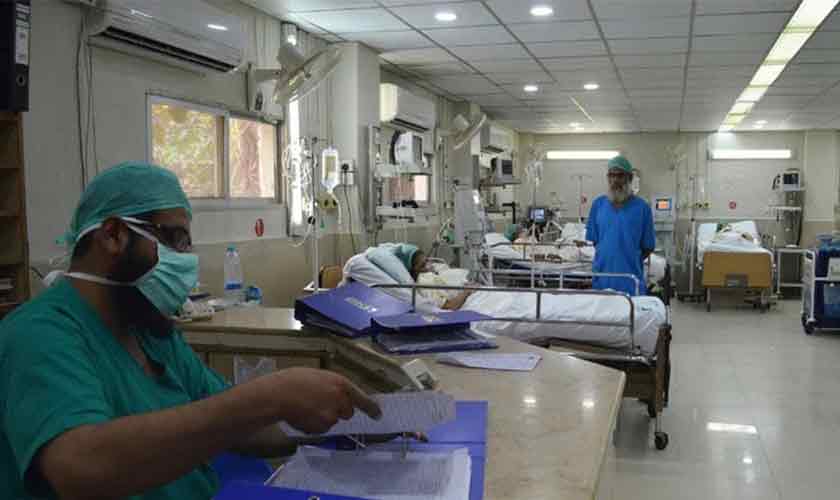
Despite tall government claims regarding health coverage, the health services available to a majority of Pakistan’s population remain meagre as medical facilities, doctor-patient ratios and accessibility continue to fall far short of actual needs.
This year’s Universal Health Coverage Day theme—Unaffordable health costs? We’re sick of it—underscores how financial barriers deepen these systemic gaps. The global campaign draws attention to the human cost as millions sacrifice food and education to manage illness.
According to Dr Salman Haseeb, Young Doctors’ Association Punjab’s patron-in-chief, the country faces a human resource crisis that makes universal coverage almost unattainable.
“We have a doctor for 6,000 patients; the WHO suggests at least one per 1,000,” he says. “This alone shows how hard it is to deliver quality care across the board.”
The distribution of specialists and services is even more worrying. 70 to 80 percent of basic cardiac facilities are missing at the district level; no district hospital, for instance, has angiography services.
“Neurosurgery and oncology facilities at district hospitals are often poor. Some of the dialysis units lack nephrologists. Lacking specialists, district authorities are unable to serve the population,” says Dr Haseeb, adding that many a patient has to be referred from district to divisional headquarters for such treatment.
Even some teaching hospitals fall short of global benchmarks, offering less than half the required ICU and CCU beds. These units should have 10 percent of total hospital capacity.
Withdrawal of some services under the Sehat Sahulat Card has further impoverished care. “Patients in gynae, cancer and other high-risk specialties have lost vital coverage,” he says. “In public hospitals, a number of medicines are missing, services are cut and patients are suffering.”
He proposes strengthening BHUs and RHCs, while establishing cardiac units, oncology wards, burn units, mother and child centres, paediatric surgery, urology, neurology, neurosurgery units, ICUs and CCUs at district headquarters hospitals to build a functional healthcare backbone.
At the policy level, officials maintain that the Punjab is making progress toward achieving universal health coverage. Dr Ali Razzaque, the Punjab Health Initiative Management Company CEO, says the government is aggressively expanding free high-cost treatments.
“We are launching free congenital heart surgery, CABG, bone marrow, corneal transplants and cochlear implants across empaneled hospitals,” he says. “The goal is to ensure that no one is denied life-saving treatment due to financial hardship.”
Chief Minister’s Children Heart Surgery Programme has enrolled 13,648 patients, performing 8,764 procedures across 18 hospitals (six public and 12 private) benefitting families from the Punjab as well as other provinces.
“The insurance-based system is essentially privatising healthcare. Without proper budgets for hospitals, services crumble and UHC becomes mere eyewash,” says Dr Salman Kazmi, PMA-Lahore’s joint secretary.
The Chief Minister Special Initiative for Transplant Programme covers permanent residents of the Punjab, delivering 949 transplants and implants, including kidney, liver, bone marrow, corneal and cochlear procedures. The Dialysis Programme has enrolled 30,070 patients, conducting over 1,068,130 dialysis sessions across 212 hospitals.
Catastrophic costs
A Lahore family was devastated when it received a Rs 3 million bill for a brain tumour surgery at a private hospital. “The PHIMC refused support and said cancer wasn't covered,” her husband says, “we were left stranded.”
Senior experts argue that insurance-based healthcare is no substitute for a robust public health system.
Dr Salman Kazmi, the PMA-Lahore joint secretary, says, “Universal coverage means preventive, primary, secondary and tertiary care—not just selective insurance payouts.”
“The insurance-based system is essentially privatising healthcare. Without proper budgets for hospitals, services crumble and UHC becomes mere eyewash.”
He stresses the need for large-scale public health programmes. “We must prevent diseases instead of reacting to them. Prevention will relieve enormous pressure from our hospitals.”
Family medicine experts point to another critical shortfall: the collapse of primary care integration. Dr Arshad Humayun, a leading family physician and chair of PMA-Lahore’s anti-quackery committee, notes, “Family physicians provide 80 to 90 percent of basic health services. UHC cannot succeed unless primary care is aligned with international standards.”
He says preventive care must be prioritised to reduce disease burden, including continuous treatment for chronic conditions such as diabetes, hypertension, hepatitis and other lifelong ailments.
He also cautions about corruption in the insurance framework. “Fake invoices from both patients and doctors can drain the system. The misuse has already forced authorities to reduce coverage in critical specialties.”
Khawaja Salman Rafique, the Punjab’s health minister, says that the government is strengthening the universal health insurance programme in addition to upgrading existing hospitals and establishing new ones. District-level cath labs are being set up at a cost of Rs 3 billion. The government is also supplying medicines worth Rs 79.5 billion to hospitals to be provided to patients free of charge.
The government has rolled out a universal health insurance programme worth Rs 25 billion, besides launching Rs 54 billion Nawaz Sharif Medical City, Lahore, which includes a children’s hospital, an orthopaedic institute, a 1,000-bed cardiac institute, diagnostic labs, a medical university and a nursing centre. The government is establishing Lahore’s largest 915-bed Institute of Cancer Treatment and Research as well as Institutes of Cardiology in Lahore and Sargodha. The government is also setting up new medical colleges in Narowal, Okara and Layyah districts, burn units in Bahawalpur and Rahim Yar Khan, teaching hospital in Sialkot and children’s hospital in Rawalpindi.
“These projects will bring advanced treatment within the reach of millions,” he says. “The government’s priority is to ensure that every citizen receives quality care, free of cost, wherever they live.”
Universal Health Coverage emphasises health as a human right by highlighting the need to cut out-of-pocket spending and establish a holistic healthcare structure to ensure essential services for everyone, especially the most vulnerable. The public health system is still struggling to provide even the most fundamental care.
The writer is an investigative journalist associated with The News International. An EWC and GIJN fellow, he contributes to various international media outlets. His X handle: @AmerMalik3.