Print Story
X




Better health outcomes in Pakistan require wise spending and a collective will to implement the existing roadmap to UHC
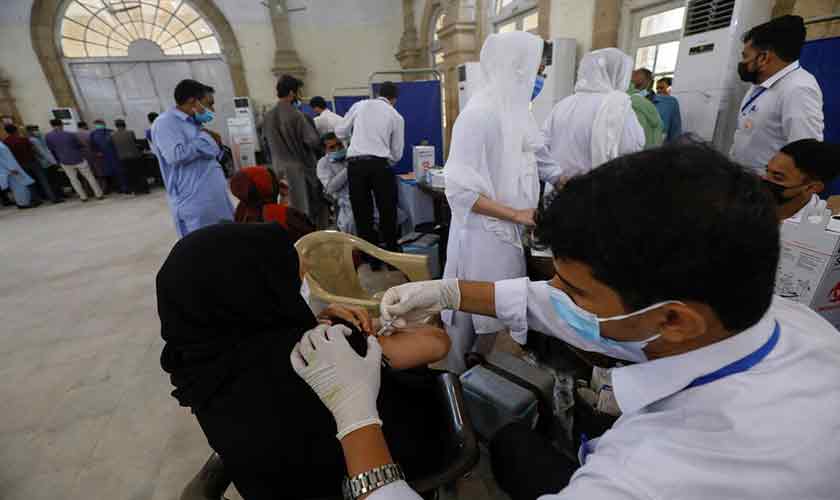
For decades, Pakistan’s struggle with poor health outcomes has been framed as a problem of insufficient money. But international and domestic evidence increasingly tells a different story: better health is not only about how much is spent, but also how it is spent.
In 2023, Pakistan, in collaboration with the WHO and the London School of Hygiene and Tropical Medicine, developed an evidence-based country specific report providing a roadmap toward affordable universal health coverage under the rubric of Disease Control Priorities, third edition (DCP3)—an international initiative originally launched by the World Bank and currently funded by the Bill and Melinda Gates Foundation.
UHC refers to ensuring that all individuals have access to essential health services—including preventive, diagnostic and therapeutic care—without suffering financial hardship. It constitutes one of the core targets of the United Nations Sustainable Development Goals. In 2018, Pakistan formally endorsed this agenda and became the first country to fully adopt the DCP3 as the framework for developing its national health benefits package.
The context is stark: Pakistan’s population now exceeds 230 million and is projected to reach approximately 400 million by 2050. The country spends only about $38 per capita on health, annually—among the lowest levels for low- and middle-income nations. By contrast, Thailand allocates roughly $370 per capita, while the United States spends more than $12,500. Despite this vast disparity in health expenditure, population health outcomes in countries such as Thailand and Costa Rica rival those of substantially wealthier nations.
Pakistan’s health profile reflects longstanding underinvestment and systemic inefficiencies. Infant and under-five mortality rates—approximately 54 and 64 per 1,000 live births, respectively—remain well above regional averages. The country’s UHC Service Coverage Index stands at 53.9 out of 100, indicating that only about half of the population receives the essential health services they require. Out-of-pocket payments account for more than 54 percent of current health expenditure, driving millions of households every year into financial hardship.
Lessons from global success
Global lessons are compelling. In the 1980s, Thailand redirected its health investment away from urban mega-hospitals toward strengthening rural primary healthcare infrastructure, ultimately achieving universal health coverage and substantial improvements in maternal and child health. Rwanda, despite a GDP per capita of just $750, implemented a community insurance scheme that has covered over 90 percent of its population since early 2010. Costa Rica created neighbourhood medical teams covering 4,000-5,000 residents each, raising primary healthcare coverage from 25 percent to 93 percent over a decade, contributing to major gains in population health.
The common thread underlying these success stories is robust primary healthcare rather than costly tertiary healthcare facilities.
Essential services package
Pakistan’s response to its pressing health challenges has been the development of the Essential Package of Health Services under the National Health Vision 2016-2025. Working with the London School of Hygiene and Tropical Medicine and DCP3, Pakistani experts systematically assessed disease burden, cost-effectiveness, equity, feasibility and budget impact to identify priority interventions.
The resulting framework comprises a two-tier plan.
One, a full district package: 117 interventions, costing about $29.7 per capita, projected to avert nearly 47 million disability-adjusted life years (DALYs). Two, an immediate implementation package (IIP): a scaled package of 88 high-priority interventions, costing $12.98 per capita, yet capable of delivering approximately 86 percent of the total health gains of the full package—around 40 million DALYs.
Evidence emphasises that the greatest health gains are achieved through the lowest-cost interventions delivered at the primary-care and community levels. Within the IIP, roughly 50 percent of additional spending is allocated to primary healthcare and approximately 18 percent to community health services, consistent with DCP3’s value-for-money recommendations.
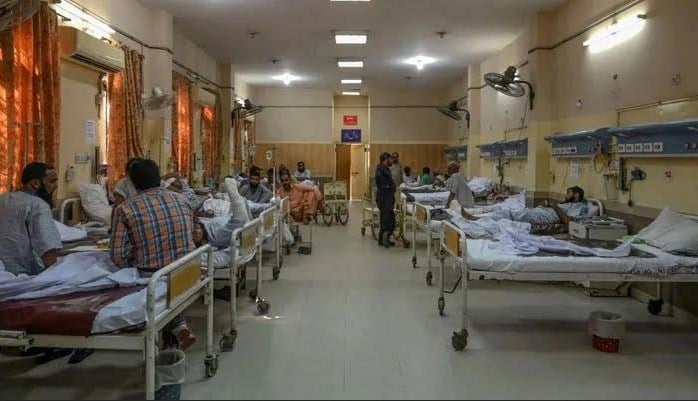
The country’s UHC Service Coverage Index stands at 53.9 out of 100, indicating that only about half of the population receives the essential health services they require.
A majority of expected benefits come from interventions addressing: reproductive, maternal, newborn, child and adolescent health (RMNCAH)—accounting for nearly half of all interventions; communicable diseases, including TB and hepatitis; non-communicable diseases, particularly hypertension and diabetes; and core health service access such as emergency referrals and diagnostics.
Provincial adaptation
Pakistan’s devolved health system necessitated provincial customisation of the EPHS. Six province-level packages were developed, reflecting local disease patterns, costs and implementation feasibility. The Punjab’s district package includes 103 interventions, costing approximately $13.5 per capita, while Balochistan’s package costs rose to $21.5 per person due to geographic and logistical challenges.
Despite these variations, all provinces adhered to a common principle: build health services upward from community clinics and basic health units rather than focusing primarily on urban tertiary care hospitals.
The Sehat Card dilemma
Pakistan’s flagship health reform initiative has been the Sehat Sahulat Programme (Sehat Card), a single-payer insurance scheme providing hospital coverage in both public and private facilities. By 2022, over 27 million families had been registered under the programme.
However, economic reality looms large if five percent of the eligible households were to fully exhaust the card’s coverage ceiling, projected costs would reach Rs 1.8 trillion ($6.3 billion)—vastly exceeding the entire national health budget of roughly Rs 800 billion ($2.8 billion).
This creates an imbalance: substantial subsidies are directed toward tertiary care while primary and preventive services remain underfunded, potentially undermining health equity and long-term population health. International evidence indicates that hospital-centric financing is generally the least efficient route to improved health outcomes.
In addition, the programme carries operational risks, including mispricing of service packages, provision of unnecessary procedures (‘upcoding’) and distortions in hospital billing. Such challenges have been observed in similar insurance-based systems globally and have already been flagged in some provincial implementations of the Sehat Card in Pakistan.
Affordable solutions
Pakistan’s roadmap highlights strategies that are both evidence-based and fiscally feasible:
· Shift resources toward primary care: primary healthcare delivers the largest health impact per dollar spent.
· Control costs through a defined benefits package: the EPHS prevents open-ended spending by limiting payments to proven, cost-effective services.
· Mobilise new revenues: innovative financing mechanisms, such as earmarked taxes on tobacco and sugar-sweetened beverages, can provide sustainable additional resources.
· Reprioritising government spending: to contextualise, annual losses at Pakistan International Airlines (approximately Rs 40 billion) or the cumulative losses of Pakistan Steel Mills (over Rs 600 billion) are roughly equivalent to the budgets allocated to core provincial health services.
Beyond financing
The greatest barriers to progress remain political and social. As a health policy analyst notes, “Those who need to be heard most on healthcare don’t have a voice.” Demand must be cultivated through media advocacy, civic activism and community mobilisation, elevating health from the margins of budget debates to the centre of national politics.
The Covid-19 response demonstrated that Pakistan can mobilise effectively under pressure. What is needed is the same urgency applied to the everyday health crises that claim tens of thousands of lives each year—quietly, and largely invisibly.
A chance that must not be missed
Pakistan today possesses something it never had before: a fully costed, internationally endorsed and locally adapted blueprint for achieving UHC within its economic constraints. The core message is simple but powerful: Pakistan does not need to spend like a high-income country to achieve better health outcomes; it only needs to spend wisely.
The question is no longer whether the roadmap exists. It does. The question is whether Pakistan has the collective will to implement it.
Dr Athar Ahmed Saeed is a consultant gastroenterologist at Gateshead NHS Trust in the UK, an executive member of the King Edward Medical College Alumni Association of the UK, and the founder of the annual Universal Healthcare symposium by KEMCA UK and King Edward Medical University. He can be reached at [email protected].
Dr Zainab Hafeez is a consultant primary care physician who splits her time working in primary care between England and Pakistan.