Print Story
X




Looking at universal health coverage for Pakistan’s urban poor
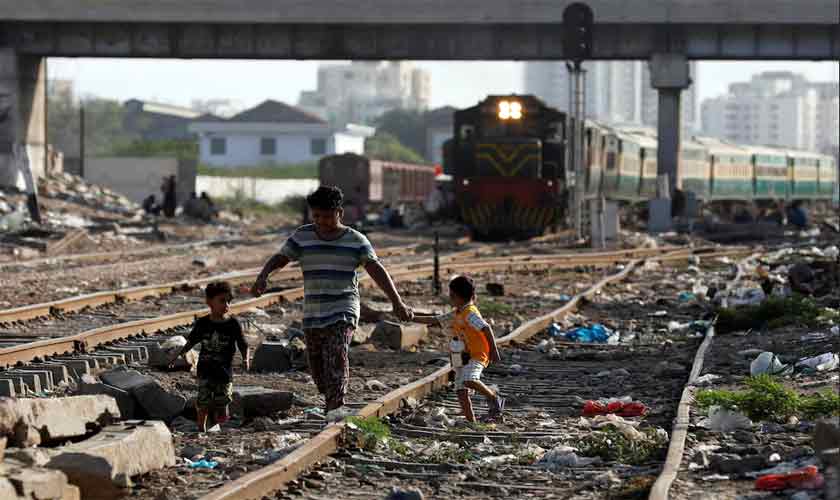
Pakistan’s constitution does not explicitly list health as a fundamental right but it establishes multiple binding obligations on the state to guarantee the right to health for all citizens. Universal health coverage is a global benchmark for health equity—the promise that access (and affordability) of essential healthcare will not push people into poverty or debt; the promise that everyone, regardless of income or geography, can access essential healthcare without falling into debt. With more than 30-40 percent of our 240 million people living in varying degrees of poverty, and millions concentrated in rapidly growing informal settlements, UHC is not a luxury—it is a national necessity.
The UHC debate in Pakistan tends to orbit around a rigid interpretation of it, mirroring the resources of high-income countries or WHO’s full-service ideal. In Pakistan’s limited resources reality and fragmented (and overstretched) health system, UHC’s comprehensive package cannot be deployed or devised in one go. Pakistan needs a smarter, more targeted path tailored to the provincial resources and one that prioritises the urban poor, essential services and measurable improvements in primary care.
Why UHC matters most for urban poor
Urban poverty is often invisible. Slum residents live close to clinics/ hospitals yet far from care. Over half of Pakistan’s total health spending comes from out-of-pocket payments, leaving many families one illness away from financial ruin. According to Pakistan’s recent UHC review, the UHC Service Coverage Index is just 45, with catastrophic health spending widespread.
Meanwhile, preventable (primary health) illnesses dominate Pakistan’s landscape: soaring neonatal mortality, widespread childhood stunting, high maternal mortality, uncontrolled diabetes and hypertension and chronic infections such as hepatitis and tuberculosis—all disproportionately affect low-income urban poor households.
Properly designed UHC would shift the balance from crisis-driven hospital care to prevention and early management. This is exactly what Pakistan’s urban poor need most: screening, vaccination, maternal care, family planning, infectious disease control and chronic disease management; all delivered at or in near private and public primary health clinic (PHCs).
A case for prioritising services
Pakistan has already initiated an important reform: the development of an Essential Package of Health Services based on Disease Control Priorities (DCP3) evidence. This is critical because no country, especially not a lower- or middle-income economy, can offer everything to everyone at once. The EPHS process showed that an evidence-informed, affordable set of services can cover the majority of Pakistan’s disease burden if implemented well. It also highlighted health system gaps: lack of PHC readiness, staffing and coordination, exclusion of the private sector health providers (doctors and non-doctor health providers) and lack of data-driven prioritisation.
If the goal is fairness, then Pakistan must resist politically tempting but costly universal insurance schemes that subsidise the wealthy and middle class before the poor.
In short, before UHC deployment we need to conceptually rationalise our wish list to prioritisation. Designing an ambitious list of services that PHC clinics cannot deliver reliably is meaningless. This requires prioritisation (based on provincial data) of the 20-25 immediate need services that cause the highest premature mortality, morbidity and suffering amongst the poorest populations. These include maternal-child care, family planning, immunisation, nutrition, screening of hypertension, hepatitis, diabetes and mental health etc along with emergency referrals.
If these core services reach even 70-80 percent of urban poor households, Pakistan’s health indicators will transform dramatically.
Strengthening PHC, sustaining UHC
Every country that has made progress on UHC has done it through strong primary care, not insurance-led shortcuts. A review of UHC in Africa shows that countries that built PHC systems not just “social safety net insurance” schemes made faster, more equitable progress
Reaching the marginalised first
One of WHO’s three UHC principles is “including more people.” Defining who comes first matters. With limited resources, Pakistan cannot distribute care evenly across all socio-economic classes. Equity demands progressive universalism: prioritise those who are the poorest, sickest and least able to pay. This translates into targeted social safety net subsidies for poorest households, prioritising urban slums and informal settlements, contracting private clinics as part of the network and linking social protection with essential “prioritised services.”
If the goal is fairness, then Pakistan must resist politically tempting but costly universal insurance schemes that subsidise the wealthy and middle class before the poor.
Measuring results
UHC should not be measured by the number of policies announced but by outcomes achieved. Pakistan needs a simple, transparent measurement framework that tracks: service coverage (e.g., immunisation, ANC, chronic disease screening); financial protection (decline in catastrophic spending); PHC readiness (staffing, medicines, diagnostics); and health outcomes for the poorest communities.
Technology can reduce the monitoring costs through digital tools, geotagged PHC data and public UHC dashboards can ensure citizens and policymakers see what is improving and what is not.
A realistic path forward
Pakistan cannot (and should not) try to mimic a wish-list UHC. Impactful UHC is about delivering what matters most reliably, affordably and equitably. If Pakistan gets this right, UHC will stop being a slogan and start becoming a lifeline for our most marginalised populations.
The writer is the CEO of the Akhter Hameed Khan Foundation (www.ahk-foundation.org), an Islamabad-based community organisation working on women’s primary and reproductive health and economic empowerment.