Print Story
X




COP30 inched towards more structured climate action but stopped short of delivering transformative commitments to confront the climate crisis
| T |
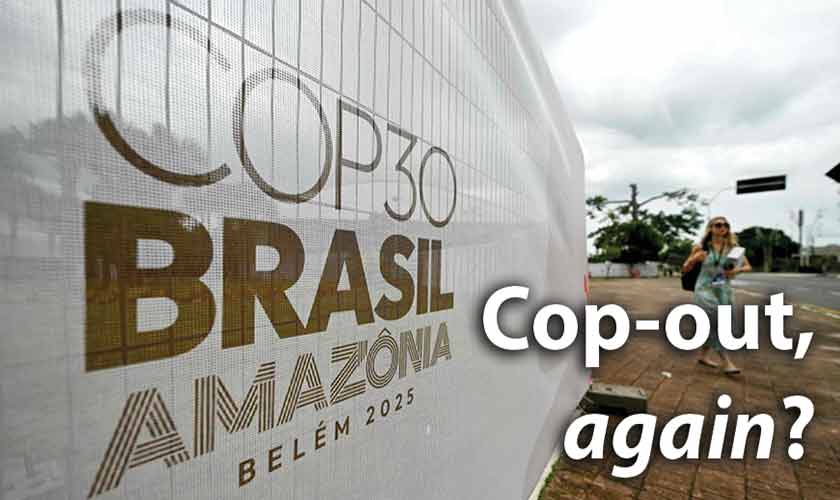
he 30th United Nations Climate Change Conference, held in Belém, Brazil, was billed as the COP of Truth—a moment when negotiators would finally confront the yawning gaps between global climate promises and the accelerating realities of planetary breakdown. Countries endorsed a political roadmap to mobilise $1.3 trillion in annual climate finance by 2035, including a commitment to triple adaptation finance, which emphasises the urgent need to close the global adaptation gap. Negotiators also adopted the Belém Adaptation Indicators, a package of 59 global metrics covering ecosystems, biodiversity and ecosystem-based adaptation, designed to track collective progress toward climate resilience.
Nature, too, gained renewed momentum.
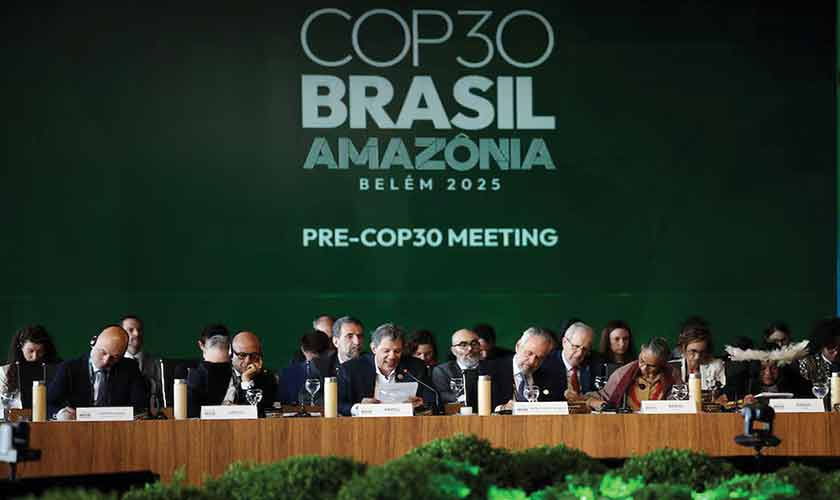
Brazil announced more than $10 billion in new finance for nature-based solutions and championed the long-term $125 billion Tropical Forest Forever Facility, signaling a shift toward valuing forests, Indigenous stewardship and community land rights. Taken together, these outcomes reflect an attempt to rebalance the global climate conversation—towards adaptation, local knowledge and the ecosystems that underpin resilience. For climate-vulnerable countries across the Global South, that shift matters.
Yet, beneath the rhetoric of progress lie a series of failures that cut to the heart of global climate justice. Even as COP30 inched the world closer to a more structured climate action, it stopped short of delivering the transformative commitments necessary to meaningfully confront the escalating climate crisis.
The most glaring failure was the absence of a fossil fuel phase-out. More than 80 countries entered COP30 calling for explicit language committing the world to end the use of coal, oil and gas. But in the final hours of the negotiation, that language evaporated. The final text retreated to weak voluntary roadmaps and vague references to earlier agreements—an outcome widely described as the weakest fossil fuel decision since COP28 and visibly out of sync with the scientific consensus presented to delegates. Without a clear signal on fossil fuels—the root driver of global warming—every other commitment risks becoming a technical exercise overshadowed by rising temperatures, worsening disasters and shrinking adaptation windows.
Finance, too, remained a contested and disappointing domain.
While COP30 celebrated its $1.3 trillion roadmap, the figure is a political aspiration not a binding commitment. The path toward tripling adaptation finance by 2035 is similarly non-binding. Even if these targets are met, they pale in comparison to the $2.4 trillion per year needed by developing economies by 2030 to achieve a credible transition, a gap clearly outlined in the COP30 finance briefing. The Loss and Damage Fund—long demanded by countries on the frontline—became operational but remained “symbolically capitalised,” with just $788.8 million pledged against a $395 billion need for 2025 alone.
For countries repeatedly struck by climate catastrophe, symbolic capital simply cannot rebuild washed-out bridges, replant destroyed farms or relocate displaced families.
Even promising technical achievements were marred by political compromise. The Belém Adaptation Indicators, initially envisioned as a rigorous framework, were heavily trimmed during negotiations. Experts note that the final list is “less technically robust” than intended, with entire thematic areas—such as climate-resilient infrastructure—receiving only token indicators.
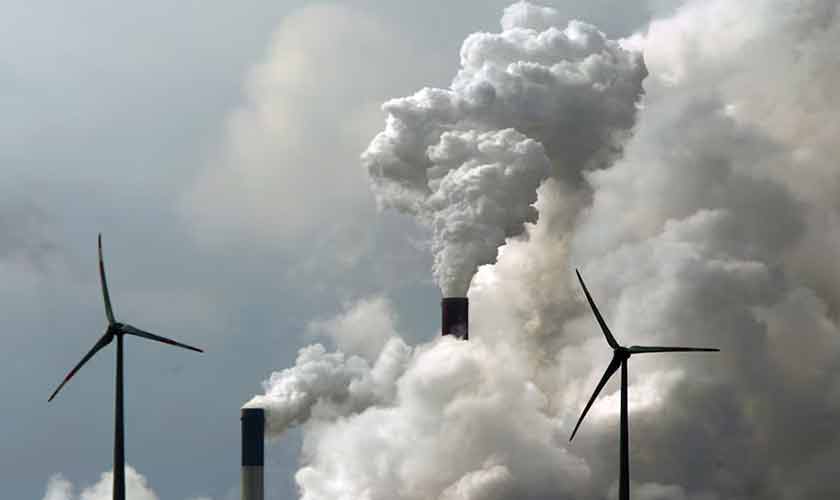
Without a clear signal on fossil fuels—the root driver of global warming—every other commitment risks becoming a technical exercise overshadowed by rising temperatures, worsening disasters and shrinking adaptation windows.
An urgently needed decision to align the world’s climate, biodiversity and land agendas was postponed. Parties “paused momentum” on strengthening cooperation between the Rio Conventions, pushing substantive action into future years. For a COP hosted in the Amazon, this postponement felt especially paradoxical.
These shortcomings are not mere diplomatic footnotes—they are failures with profound implications for countries like Pakistan, where the difference between adequate funding and unfulfilled promises determines whether communities can survive the next climate disaster.
Pakistan, contributing less than one percent to global emissions, finds itself among the world’s most climate-exposed nations. The absence of a fossil fuel phase-out ensures that global emissions will remain dangerously high, heightening Pakistan’s vulnerability to extreme floods, glacial lake outburst events, lethal heatwaves, droughts and destabilised monsoon cycles. Every year of delayed global mitigation is another year of escalating climate violence across Pakistan’s rivers, cities and agricultural plains.
The inadequacy of the Loss and Damage Fund is equally devastating. Pakistan’s 2022 floods inflicted over $30 billion damages—an amount that dwarfs the entire current capitalisation of the global fund. With COP30’s Loss and Damage mechanism operating at under 0.2 percent of required levels, Pakistan will continue to rebuild by borrowing, deepening a cycle of climate-induced debt dependence that undermines long-term development and burdens future generations.
The voluntary nature of climate finance further complicates Pakistan’s path. Without predictable funding, Pakistan cannot plan long-term adaptation investments, whether in resilient agriculture, early-warning systems, water security or urban climate-proofing. The Belém Adaptation Indicators may help track progress, but metrics alone do not build embankments or protect farmers from crop failure. Climate justice demands predictable, grant-based financing—but COP30 fell short of that demand.
Pakistan is also uniquely harmed by COP30’s failure to advance integrated climate-biodiversity-land frameworks. From the mangroves of the Indus Delta to the alpine ecosystems of Gilgit-Baltistan, Pakistan relies heavily on nature-based solutions for resilience. When global frameworks for ecosystem protection are delayed, Pakistan loses access to vital technical, financial and coordination mechanisms that could strengthen its adaptation strategy.
As global attention now shifts toward COP31 in Antalya, Turkey, the next twelve months represent a defining period. Countries are due to submit their 2026 nationally determined contributions, the $1.3 trillion finance roadmap will begin early implementation and the new adaptation indicators will start influencing funding decisions. Whether these processes produce real progress—or merely polished repetition—will shape the future for climate-vulnerable nations.
For Pakistan, the path ahead requires strategic diplomacy, moral clarity and sustained advocacy. COP30 demonstrated that global climate politics is inching forward—but painfully slowly and not yet at the scale demanded by justice. It is now imperative for Pakistan to use the momentum generated in Belém to push for binding finance, meaningful mitigation commitments and a Loss and Damage Fund worthy of its name.
The world may not have acted with the urgency the moment demanded—but it is still moving. Pakistan must ensure that movement bends toward fairness, resilience and dignity in a rapidly warming world.
The writer is a US based environmental expert and a visiting senior research associate at the Sustainable Development Policy Institute.