Print Story
X




The extraordinary access granted to fossil fuel interests during climate negotiations helps contextualise COP outcomes
| T |
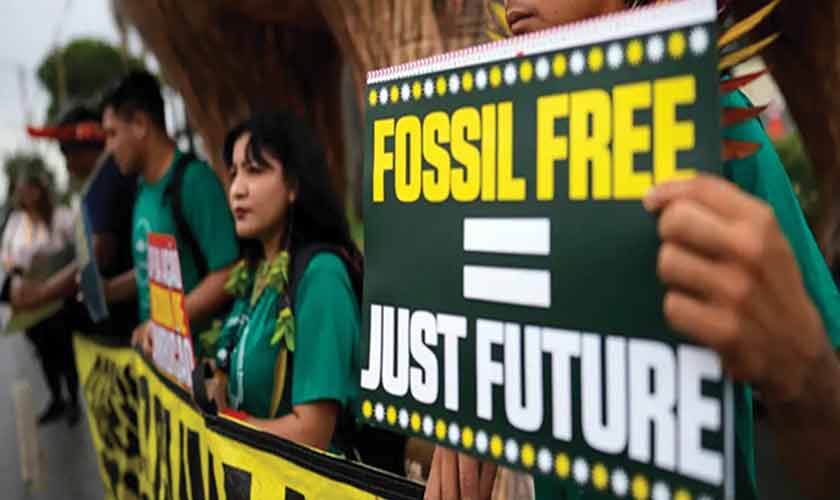
wo years ago, at COP28 in Dubai, a young climate activist approached me in the corridor outside the plenary and, nonchalantly, stuck a sticker on my badge. It had a bright green background and carried the words in bold black ink: Not paid by the fossil fuel industry. I left it there for the rest of the conference. The fact that such a sticker is even needed captures the trust deficit at the heart of global climate negotiations.
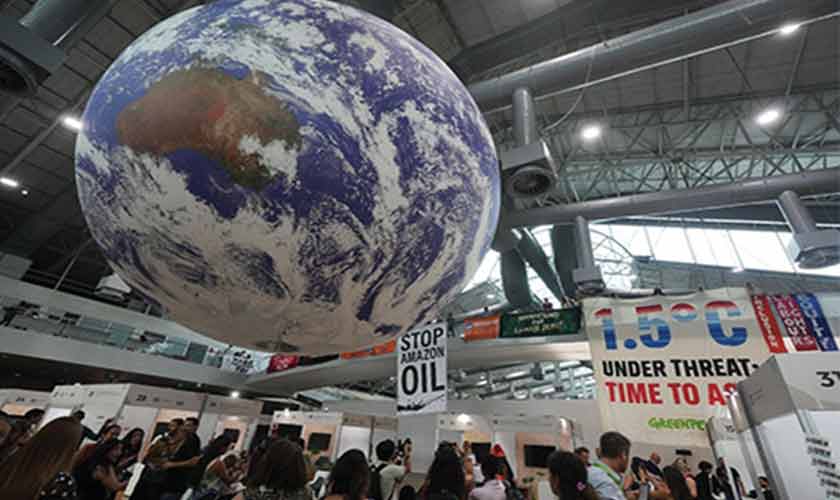
The 30th Conference of Parties to the United Nations Framework Convention on Climate Change ended on November 22, in Belém, Brazil. The Belém package delivered a new climate finance goal of $300 billion annually by 2035. It includes $120 billion for adaptation. While significant on paper, these figures still fall far short of the financing needs identified by vulnerable countries. According to some estimates as much as $3.5 trillion is required by 2035 to meet developing countries’ combined climate action needs (mitigation, adaptation and just energy transition).
There was also incremental progress on technical advances on forests, carbon markets and loss and damage arrangements. However, the most important outcome pertaining to the mitigation work programme, meant to accelerate global elimination of coal, oil and gas, resulted in no binding commitments and no formal roadmap for phasing out fossil fuels.
This has indeed become a familiar story since the Paris Agreement was first signed.
Mitigation, which is defined under Article 4 of the Paris Agreement, as the urgent reduction of greenhouse gas emissions to limit global temperature rise, remains the foundational obligation of the UNFCCC process. Without significant, rapid and sustained emission cuts, adaptation, loss and damage and finance become mere instruments for managing irreversible—and ever expanding—harm rather than preventing it.
A key point of contention since Paris has been whether nations will commit to a complete phase-out of fossil fuels or settle for weaker pronouncement such as phase-down (as happened in COP26 at Glasgow, 2021) or the transitioning away language, which was agreed to at COP28 in Dubai.
The aspiration of COP30 at Belém, moving decisively beyond those compromises, remained a mirage. As negotiations went into overtime in what was now a mostly empty conference centre, with a majority of observers having already departed, the reality dawned on those witnessing the proceedings. The final text would be a cop-out, once again. Any reference to fossil fuels and substantive action in line with the Paris Agreement remained a dream.
The outcome needs to be understood in the context of extraordinary access granted to fossil fuel interests during the negotiation process.
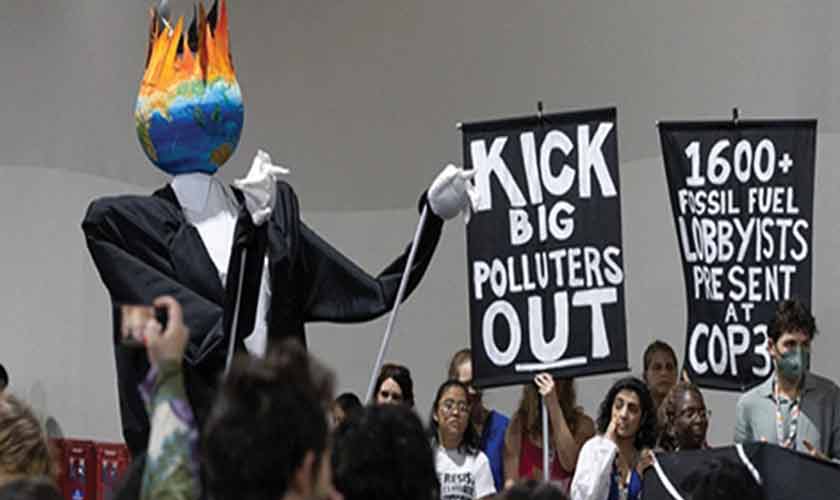
As per the Kick Big Polluters Out coalition, more than 1,600 individuals linked to fossil fuel companies and trade associations attended COP30 in Belém. They made up a larger contingent in comparison to all delegations, except host Brazil. Consider the fact that at least 164 of them were accredited inside official national delegations. Total Energies was represented by senior executives in the French delegation; Norway brought Equinor executives. Many Saudi Aramco and ADNOC advisers travelled to Belém with the Saudi and UAE delegations. In addition, trade associations such as the International Emissions Trading Association brought dozens more from ExxonMobil, BP and Shell. Indonesia was singled out in particular in Belém after analysis showed that sections of its negotiating text echoed fossil-fuel industry submissions almost verbatim, in essence, allowing corporate lobbyists to shape the country’s official position.
More fossil fuel lobbyists were present at COP30 than the combined delegations of all small island states, the countries facing an existential crisis due to climate change induced sea level rise.
More fossil fuel lobbyists were present at COP30 than the combined delegations of all small island states, the countries facing an existential crisis due to climate change induced sea level rise.
Interestingly, the fossil fuel industry’s parallels with the tobacco industry are unmistakable for the discerning. Both have funded campaigns that shed doubt on science, promoted marginal “solutions” (nicotine patches then, carbon capture now) and secured seats at the regulatory table. The course was altered, however, with Article 5.3 of the World Health Organisation Framework Convention on Tobacco Control, a binding firewall that bars tobacco interests from public-health policy. The UNFCCC still has no equivalent, allowing industry representatives to wear national badges while drafting texts that protect their profits.
At Belém, more than 80 countries called for a clear fossil-fuel transition roadmap aligned with the aims of the Paris Agreement. An early draft of the summit text referenced this roadmap, but in the final 72 hours, every mention disappeared under pressure from Saudi Arabia, Russia, and the Like-Minded Developing Countries group (including Pakistan). The LMDC justify such resistance by citing development needs and equity concerns grounded in the principle of common but differentiated responsibility. The result is a collective weakening of global ambition that ultimately harms climate-vulnerable nations like Pakistan most acutely.
Twenty-nine states threatened to block consensus around the finalisation of the text at Belém, yet ultimately acquiesced to a diluted outcome: a vague invitation for countries to submit “voluntary plans” at future meetings.
At a time when renewable energy is accelerating globally and technology to support a rapid shift away from fossil fuels is more accessible than ever, it is deeply concerning that outdated, self-interested thinking continues to take precedence over collective climate action. For Pakistan, which is now regularly being impacted by climate induced riverine flooding, heatwaves, glacial melting and glacial lake outburst floods, the cost of inaction is immeasurable.
The Belém package is, therefore, a cautionary tale. Despite modest tightening of disclosure rules, weak enforcement lets fossil-fuel interests retain decisive influence. Until the UNFCCC adopts binding reforms that include excluding fossil fuel lobbyists from delegations, real-time transparency, tobacco-style conflict-of-interest rules and cooling-off periods before government officials are able to join corporate entities, the mitigation ambition embedded in the Paris Agreement will remain hostage to industries it must restrain. Countries such as Pakistan, given their acute vulnerability, should be among the loudest voices demanding these reforms.
Two years after that activist pressed the green sticker onto my badge in Dubai, its matter-of-fact declaration: Not paid by the fossil fuel industry, remains the simplest and most emphatic test of legitimacy in these halls. Until the rules guarantee that every person drafting the world’s climate future can abide by that statement without hesitation or qualification, the negotiations will continue to falter. Until that legitimacy is restored, communities across Pakistan and beyond will long continue to pay the price of inaction.
The writer works at the intersection of climate, water, ecology and society. He can be reached at [email protected].