Print Story
X




The first step towards decent work for all is to have loophole-free legislation that is consistent with constitutional guarantees
| I |
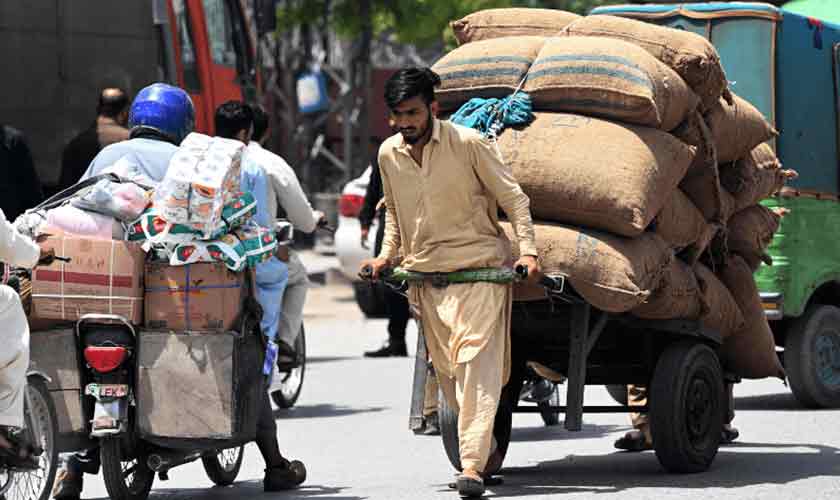
f you work in Pakistan today, on a farm or a construction site (unless it is government or big corporate construction), driving or delivering for a digital labour platform, stitching at home, cleaning an office at night, cooking meals at someone’s house or interning at an office to learn some employable skills, there’s a good chance the law doesn’t see you, or sees you only partially. The current labour statutes in Pakistan are a patchwork, written for a mid-20th Century factory floor, scattered across dozens of Acts (more than 40 pieces of legislation, excluding rules and regulations) with conflicting definitions and thresholds.
That fragmentation leaves millions outside the net and forces genuine employers to navigate legal grey zones. Even when formal sector workers are covered through sector-specific legislation, the laws use inconsistent definitions for terms such as worker, employer and establishment. The draft Codes in the Punjab and Sindh (at least the original versions, first unveiled in July 2024) represent a serious attempt to address these issues. A single, coherent framework is not an abstraction; it’s the only way inspectors, judges and workplaces can know what rules actually apply. And it is the only way to ensure that workers’ rights are protected.
Pakistan’s economy is largely informal, with more than 85 percent of the workforce employed in the informal economy, including agriculture. The Economic Census 2023, released only a couple of months ago, indicates that there are 7.14 million establishments in the country, of which 95 percent (6.8 million) are micro-enterprises employing fewer than 10 workers. Only 7,086 enterprises are large employers, employing 250 or more workers.
The Labour Codes in the Punjab and Sindh can help bridge the informality gap, as these have been drafted with a view to improving definitions, lowering applicability thresholds and expanding the coverage of labour legislation to all workers, rather than a select few. Rather than treating codification as an “ease of doing business” or flexibilisation exercise, as alleged by trade unions and some civil society organisations, the original versions of the draft Codes broaden coverage (to all those who work), simplify compliance and strengthen enforcement and access to social protection. Rather than leaving the informality largely intact, the draft Codes rewire institutions and incentives to draw workers and firms into regulated, rights-based formal relationships.
Some critics have tried to equate the legislative reforms in the Punjab and Sindh with those in India and other South Asian countries. In 2019-20, approximately 29 laws were consolidated into four codes, still pending notification for implementation. A closer look at these Indian Codes, however, shows that the Codes either raised or preserved high coverage thresholds (keeping many small establishments and un-organised sector workers outside the formal protections), keeping the informal or un-organised sector outside the jurisdiction of general labour law, except coverage under social security, facilitation of casualisation and weakening of worker voice.
On the other hand, the draft Labour Codes in the Punjab and Sindh not only expand coverage through broad definitions of workers, employers and establishments but also make it easier for workers to access their fundamental rights. The paragraphs below provide a detailed explanation.
Trade unions have interpreted some draft provisions restricting their activities, such as a more structured procedure for calling strikes or the provisions on essential services. Ironically, the codes, for the first time, have expanded coverage to the large informal economy, allowing millions to unionise and removed hurdles like minimum membership to ensure workers could unionise easily.
Freedom of association and collective bargaining:
The Codes explicitly uphold workers’ right to form unions and engage in collective bargaining by lowering the thresholds for trade union membership and collective bargaining. Crucially, these rights apply to all workers in every sector, including those excluded under current laws. By using the term worker in a broad, inclusive sense, the Codes ensure that freedom of association covers not just regular employees but also informal, contract and gig workers. By eliminating previous legal barriers that kept huge swathes of workers (like agricultural, contract or informal workers) from unionising, it aligns with the spirit of ILO Conventions 87 and 98. Notably, the Code’s Part II on fundamental rights applies to “everyone who works,” not just those with formal employment.
The draft Codes seek to remove hurdles that kept unionisation rates low (less than 1.5 million unionised workers out of 85+ million labour force), such as excluding informal workers or imposing high membership thresholds. The key is that the Code’s framework affirms workers’ freedom to form and join unions of their choice.
Elimination of forced or bonded labour:
In line with ILO Conventions 29 and 105, the Codes tighten prohibitions on forced labour. These broadly define “forced or compulsory labour” to cover practices like debt bondage and forced overtime. By expanding the definition beyond its traditional focus on bonded labour at brick kilns or the agricultural sector, the Codes close loopholes and affirm that no worker should be coerced into working under threat or debt. Any peshgi (advance payment) arrangements are regulated through banking channels to prevent exploitation. These measures give effect to Pakistan’s constitutional ban on all forms of forced labour and human trafficking, moving the needle closer to eradicating modern slavery in the country.
Protections for contract workers:
The loudest alarm from trade unions is over alleged “legalising contract labour,” interpreted as the Codes entrenching precarious employment. The Codes indeed permit the use of fixed-term contracts and engaging contract workers through SECP-registered employment agencies (not current sham contractors). However, it’s misleading to say this “legalises” contract labour. In reality, the Codes set strict conditions on such arrangements: they must be genuine, time-limited, not open-ended substitutes for permanent jobs. Crucially, all contract workers are now covered by the same minimum protections as permanent workers – a guarantee that was not previously in place.
The current large-scale informality in Pakistan’s formal economy is mainly due to the current unrealistic legislation, which has led to high rates of contracting and subcontracting as a way to reduce costs, thereby depriving people of their rights. The Codes choose a middle path: these recognise the reality of diverse work arrangements but bring them into the regulated, protected fold. The key point is that the Codes do not “endorse exploitation;” they outlaw the exploitative aspects of contract labour by mandating equal rights and by scrutinising the genuineness of contracts.
The push for formalisation echoes ILO Recommendation 204 on transitioning from the informal to the formal economy, aiming to ensure that 82.5 percent of Pakistan’s wage employees, who are currently in temporary or task-based arrangements, gain access to full workplace rights.
Protections for gig workers:
For gig economy workers (such as ride-share drivers and food delivery riders), being defined as workers is groundbreaking, as it legally entitles them to minimum wage, safety protections and the right to organise, addressing a massive gap in the previous laws. This is the first effort in South Asia to legislate protections for gig workers. It addresses issues similar to those raised internationally, such as algorithmic management, lack of job security and misclassification. This principle is precisely what global human rights groups and trade unions are urging through the ILO for a potential new international standard on platform work. Together with Fairwork, the Centre for Labour Research was the first organisation in the region to draft a law regulating platform work in 2022.
Equality, non-discrimination and gender protections:
In a major advance, the Codes introduce comprehensive anti-discrimination guidelines. For the first time, discrimination based on sex, gender, pregnancy, caste, social origin or disability, physical appearance (among other grounds) is expressly prohibited in workplaces. The Codes mandate equal pay for work of equal value and seek to close the shocking gender pay gap (where Pakistani women earn on average 37 percent less than men). The Codes also propose establishing an Equal Employment Opportunity Office to receive and address complaints of workplace discrimination and harassment. The draft Codes eliminate the colonial remnants of “master-servant rule,” under which managerial employees could not bring their cases before various authorities or the labour court. The Labour Codes apply to everyone, including managerial employees, providing them with access to dispute resolution mechanisms under labour law.
Child labour safeguards:
Reflecting ILO Convention 138 (minimum age) and the constitutional guarantee on compulsory education, the Codes raise the minimum working age in the Punjab to 16 years. Children under 14 cannot be employed in any occupation, and those aged 14-15 are only allowed to do light, non-hazardous work under strict conditions. The Codes also retain and reinforce prohibitions on hazardous work for anyone under 18, targeting sectors such as domestic work and brick kilns where child labour has persisted.
Together, these key provisions signal a much-needed upgrade of workers’ rights. The Codes extend many basic job benefits (such as minimum wage, working hour limits, leave and social security) to categories of workers who were previously invisible in the law, including part-time and piece-rate workers.
By bringing tens of millions of informal workers under the umbrella of legal protection, the draft Labour Codes lay a foundation for more equitable and decent work for over 120 million working-age individuals in the Punjab and Sindh. The original versions of the Codes aimed to protect religious workers, one of the most exploited and overworked groups of workers. The economic census reveals that there are 2.5 million religious workers in over 0.6 million mosques and religious seminaries.
As noted, the same basic rights now apply to “all workers at all workplaces in all sectors,” eliminating sector- and size-specific exclusions. The size-neutral approach, used in draft Codes, levels the playing field and removes incentives to stay informal or under-report employees. It also means a worker changing jobs (say from a bank to a factory to a digital labour platform) doesn’t fall under completely different legal regimes every time – one labour code covers them all.
The Codes use one set of definitions for terms like worker, employee, employer, principal, occupier, replacing the “inconsistent array of definitions” in previous laws. Clear definitions and roles will also help labour inspectors enforce the law without getting bogged down in technical arguments over coverage.
From an employer’s perspective, consolidation can actually reduce the compliance burden in the long run. Yes, the Codes are hefty documents (more than 400 sections over 150+ pages), but it’s far easier to have one comprehensive code than to juggle two dozen Acts and more than 70 rules/regulations.
Another often overlooked benefit of unification is that it reduces legal loopholes and ambiguity that often plagued the old regime. The new Code’s broad coverage makes evasion from labour law much harder – a worker is a worker, regardless of contract form and fundamental protections cannot be contracted away.
Simplification also means the law can be more easily updated in the future. Instead of amending multiple Acts, the government can amend the single code to respond to new issues. It is a living document that can evolve as work evolves, without fragmenting back into an incoherent mess.
Some detractors argue that the Codes are driven more by an agenda to attract investment and make labour “flexible” than to protect workers. The above-referred provisions, however, tell a different story, where workers’ protections are actually enhanced significantly. The draft Codes also include provisions on due diligence, fair employment standards for public procurement and worker data protection.
This labour law reform affects the lives of millions, from the factory belt of Faisalabad to the farms of rural Sindh; from the emerging tech gig workers in Karachi and Lahore to the home-based women workers who stitch footballs in Sialkot and make bangles in Hyderabad. All workers deserve a better deal than they have gotten so far. The draft Labour Codes are essentially about delivering that better deal. It is about saying that every worker, whether formal or informal, contract or permanent, male or female, young or old, matters and must be protected.
The Punjab Labour Code 2025 is currently pending with a Standing Committee of the Punjab Assembly. The Sindh Labour Code is expected to be submitted to the Cabinet for approval soon. Hopefully, Balochistan, Islamabad Capital Territory and Khyber Pakhtunkhwa will follow suit. The first step towards decent work for all is to have loophole-free legislation that is consistent with constitutional guarantees and international commitments, including the UN cvenants, ILO conventions and multilateral commitments such as the EU’s GSP regulation. The original draft Labour Codes ensure exactly that.
Iftikhar Ahmad ([email protected]) and Raja Faiz-ul Hassan Faiz work at the Centre for Labour Research, Pakistan. They were members of the drafting team for the Labour Codes in the Punjab and Sindh