Print Story
X




The world of Urdu literature is poorer after the loss of Dr Arfa Sayeda Zehra
| O |
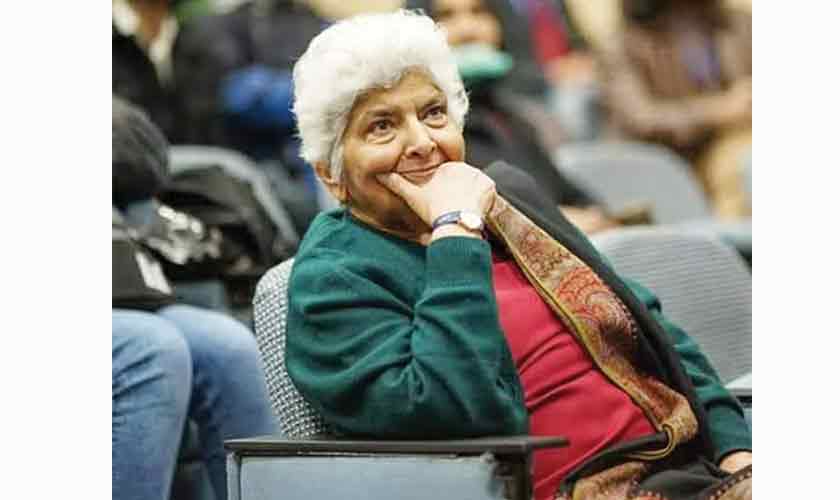
n November 10, I lost my best friend, my confidante, my mentor. Joy of Urdu lost its chief patron and advisor, our cheerleader, our guide: Dr Arfa Sayeda Zehra, and another inspiration after Sabeen Mahmud, on the 10th anniversary of losing her. As I think of Arfa Apa, I realise that with her passing, the world of Urdu literature is poorer.
For me, her reputation had preceded her. By the time I finally heard her speak and met her after Anjum Rana helped connect us, encouraged by Sabeen, I had already started our volunteer-run bilingual organisation, Joy of Urdu.
Both Arfa Apa and Sabeen believed in my crazy idea and my commitment to it, until finally I did as well. Perhaps that is the sign of a really great teacher: recognising the potential in people. They continue to inspire and they never really leave us.
Since Joy of Urdu always worked online and had had hybrid events years before Covid, we were one of the first organisations to pivot completely to our digital platform. At the height of our online activities, we were holding five sessions a week. One of those was the popular Joy of Urdu Weekly Hour: a session she titled Dr Arfa Sayeda aur Zarminae Ansari ki Himaqatein, for good reason, as a dear common friend likes to say.
After an experimental session, I read from Shafiq-ur Rehman’s book of humorous essays and satire, Himaqatein, in a live online session and Arfa Apa corrected my many reading and pronunciation mistakes and patiently, and occasionally in amusement, answered my questions about Urdu words and phrases. Over the years, under her tutelage, my Urdu improved vastly, so that I can look back and cringingly realise how basic some of the questions were. Yet, she never once showed impatience or annoyance while I made the same mistakes week after week after week, until I finally got it. When I did get it right, she was waiting and then it was like receiving an Olympic gold medal to hear her say, “Shabaash Zarminae!” No wonder there has been an outpouring of grief from thousands of her students around the world.
Over the last couple of years, as she fell ill, she was preparing me to continue Himaqatein without her. She also suggested someone she was extremely fond of, and whose intellect and scholarship she admired. I told her that she was irreplaceable; it was so much fun doing the sessions with her that I just wasn’t interested in continuing without her, and that she would be fine. She knew she was not going to be fine. I probably knew too, but I did not want to. I still don’t want to. How can I accept that our calls, which were such a regular highlight in my nearly isolated life in Portugal, though not as much as the multiple calls per day during Covid, will be no more?
Writing this has me on a roller coaster of emotions. I can’t help but smile. During the first few weeks of these sessions, we would read some of the prose beforehand to decide which one to read in the live session on the following Sunday. One of the Himaqatein essays had us in fits of uncontrollable laughter till I was in tears. We agreed that it was MUCH more professional than we had got out of our system the day before, than being as goofy on the live Sunday programme.
There are so many aspects of Arfa Apa that I was fortunate to be privy to. While most people have an idea about how principled she was, and may have experienced her sense of humour, one incident reminds me of her wonderfully, wickedly incisive wit as well as her sense of duty to Urdu. She often said that the two of us were similar in that we had never been interested in making money. Yet, with the popularity of our online sessions, our commitment to being as professional as we could, despite being completely self-funded and volunteer-run, she had heard someone claim that she was being paid $50,000 by Joy of Urdu. (Or some such ridiculous number.) Amidst peals of laughter, I asked her how she replied. Without losing her composure, she retorted, “50? You insult me! It is $100,000!” That shut the person up for good. We always laughed about it whenever I lamented our lack of funds to hire someone and not have to rely on the unpredictable schedules of our otherwise wonderful volunteer teams around the world.
I read from Shafiq-ur Rehman’s book of humorous essays and satire, Himaqatein, in a live online session. Arfa Apa corrected my many reading and pronunciation mistakes and patiently, and occasionally in amusement, answered my questions about Urdu words and phrases.
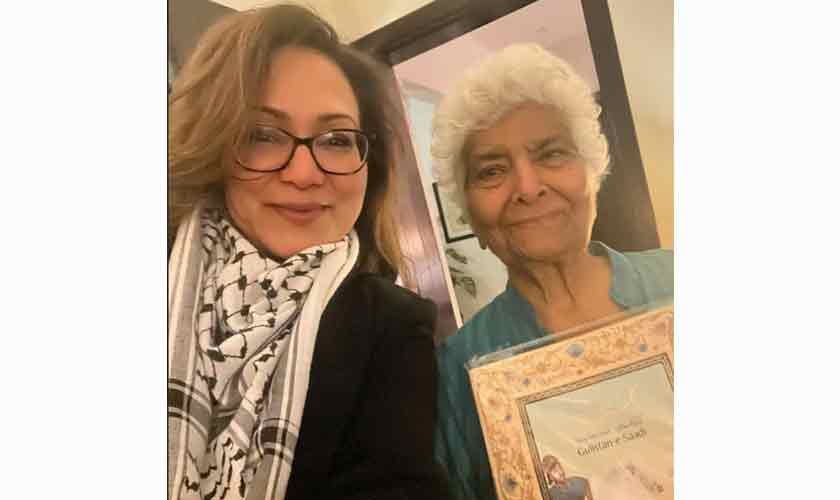
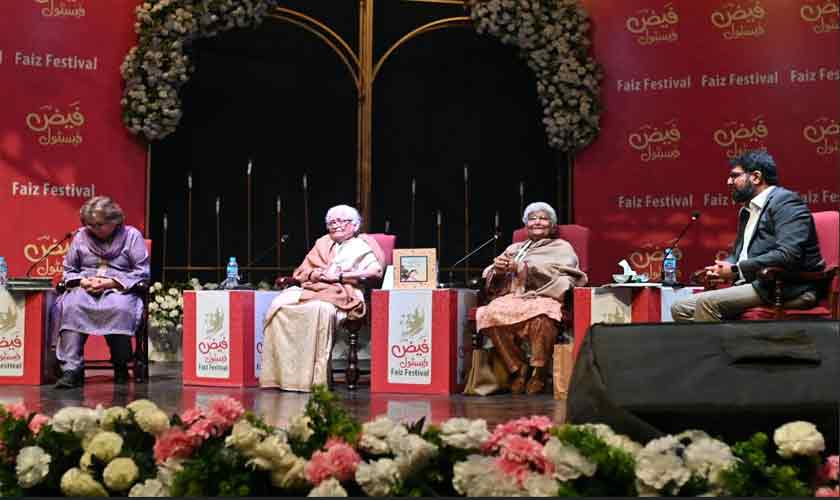
There are just so many memories. So many lessons. So much love. She could hear the sadness in your voice when everyone around missed it. She saw behind the mask into one’s soul because of her deep empathy and humanity. As a mentor, she appreciated and honed my work ethic, supporting me at some of the most momentous events of my life. I suspect that she made them happen. Our first bilingual Joy of Urdu book, “Three Tales from Gulistan-i-Saadi”: is the only book in print with her name on the cover, was launched with her and Zehra Nigah Apa, one of Urdu’s greatest contemporary poets, on Urdu’s largest platforms: Rekhta and #FaizFestival.
At the Jashn-i-Rekhta launch, she wanted me to talk about my journey and about Joy of Urdu and the book, but eventually relented seeing how nervous I was having just landed from Portugal. Along with one of our Boston Chapter Coordinators, Zahra Ali and Zehra Apa, she forced me to lie down in the hotel bed in Dubai to take a non-existent nap, and then allowed me to simply thank whoever I could remember in my nervousness on stage, while she spoke about the book, and Zehra Apa read the poem that she had written about it. I had argued that the hundreds of people there had come to see her and Zehra Apa, not me, so it was almost irrelevant what I said, and thus, an ideal opportunity to express my gratitude to our global team.
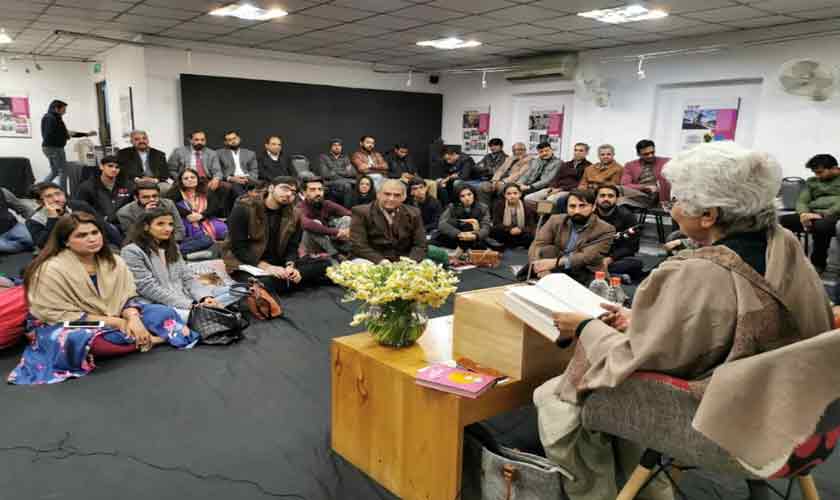
Joy of Urdu has the unique honour of being launched in Karachi by our late Advisor Asif Aslam Farrukhi. His DP on Facebook is still the photograph I took of him reading one of his stories at the launch event which was attended by, among others, another founder member and longtime supporter, Hina Khwaja Bayat. The Joy of Urdu Toronto-Mississauga Chapter was launched in Canada by Arfa Apa. One of the professors who facilitated and hosted the event included Dr Ashwin Joshi (associate professor of marketing and associate dean of programs at Schulich School of Business, York University, Toronto) who says that he never knew who Dr Arfa was until he started getting calls and messages to get on to the wait list, and that he had never seen such interest in any talk in his entire academic career before the one that Dr Arfa delivered to a packed audience in University of Toronto’s largest auditorium. People drove from 4 hours away, and even from Michigan in the US, to see her. Everyone loved her.
Her generosity was unparalleled. When I lost the aqeeq in the ring I always wore, she had Farhat Ali Jewellers on The Mall set her black aqeeqs in silver and had a pendant and ring sent to me in Dubai almost overnight. They are priceless. The super busy jeweller – who has the richest of the rich in Pakistan ordering multimillion rupees worth of stuff – got it done overnight for her because everyone loved her.
In the days she was driving herself to FC College, if she ever felt I was working too hard on one of my short trips and decided I needed a break, she would drive me herself to dinner even though she had just returned after a full day of work followed by a Joy of Urdu Lahore Chapter event.
Once she discovered that I loved paaye. She was an excellent cook, and often I would arrive in Lahore to find that she had just had a big dish delivered with my favourite kind of naans, so I could eat my favourite delicacy as soon as I wanted. Similarly, after missing the short-lived faalsa season for decades of studying and then living abroad, I started enjoying faalsas again because there would be a huge box waiting for me. If I was travelling later in the summer, the box would be frozen and waiting. Once when she was going to be travelling to Canada, she gave instructions to “her” fruit guy and her driver to send me falsaas delivered fresh the day I landed in Lahore. Even though she was out of the country, they were the choicest, blackest little dots of joy that I have ever eaten. Everyone loved her.
She took me to “her” electronics repair guy in Old Anarkali Bazaar where we sat on rickety chairs in the tiny shop/ workshop as they plied us with lovely glasses of tea and finished fixing all my random, broken electronics. Everyone loved her.
At one of the Faiz Festivals, I got a bronchial infection and she would bring me a thermos of hot ginger honey and herbal tea which I had to drink throughout the day, under her supervision, along with the natural lozenges she brought for me every day of that festival.
They say, Do not meet your idols, for they have clay feet. I have worked with a few of mine, and in all the cases, this statement holds, except in the case of Dr Arfa Sayeda Zehra.
Both Arfa Apa and Sabeen believed in my crazy idea and my commitment to it, until finally I did as well. Perhaps that is the sign of a really great teacher: recognising the potential in people, and the sign of an unforgettable personality: they continue to inspire, and never really leave us.
Dr Arfa’s videos are available on all of Joy of Urdu’s platforms, including YouTube. They are only a fraction of the videos we are slowly editing and uploading, since we depend on volunteers, until we can find a sponsor to help us expedite the process.
The writer is an architect (NCA, Lahore) with a master’s from MIT, concentrating on research and writing. She is an author, journalist, producer in various media and cultural tourism consultant.