Print Story
X




It’s time to change how we treat children by genuinely offering to listen to them
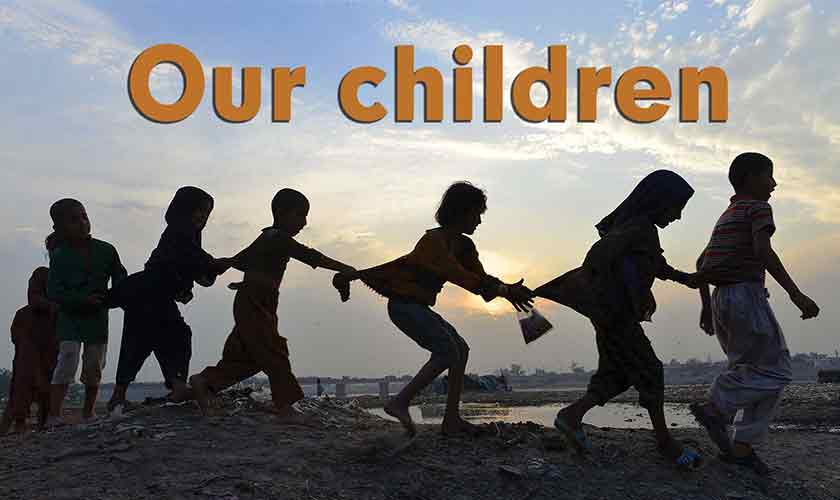
Imagination is the only weapon in the war against reality.
— Alice in Wonderland.
| M |
any years ago, I came home from work and was greeted by my older son, then 17, looking unusually serious. “You have to come to my room,” he said quietly. I felt a knot tighten in my chest. After some hesitation—likely because he feared how I might react—he told me he had found his younger brother on the roof, looking down and contemplating jumping. “I had to talk to him for a long time before he agreed to come down,” he said.
I went to my son’s room and found my younger son lying face down on the bed. He refused to speak. I was exhausted after a long day at work and, to my shame, I reacted poorly and raised my voice. Of course, that didn’t help. After I calmed down, I told my older son he had done exactly the right thing and assured him that his mother and I would take care of it.
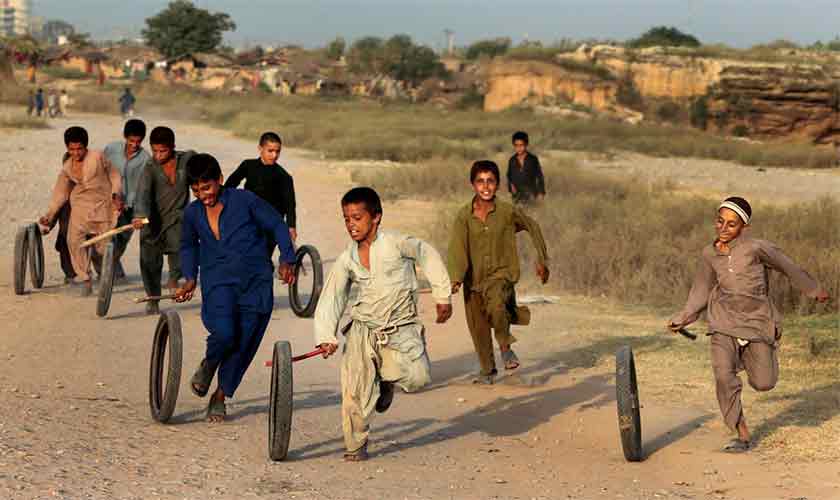
We sought professional help for our younger boy. Today, he is 22 years old—a high-achieving college student, an aspiring fashion marketer and a guitar player; his usual happy, chirpy self. He still gets morose from time to time, but he has matured enough to manage his moods more effectively and occasionally tells me about friends who are struggling emotionally, whom he tries to support in his own way.
Parenting is one of the hardest tasks my wife and I have ever attempted together. Now, as we move into our late middle-age and look towards retirement, it feels as if the work of parenting never truly ends.
The World Children’s Day is marked on November 20, commemorating the UN General Assembly’s 1959 Declaration of the Rights of the Child and the 1989 adoption of the Convention on the Rights of the Child. In some countries, the commemoration spans an entire Children’s Week. Whatever the format, the day holds particular importance for a country like Pakistan, which has one of the youngest populations in the world.
This “youth bulge” defines our demographic landscape. With a population exceeding 240 million, nearly 63-65 percent of Pakistanis are under the age of 30; almost 55 percent are under 25. The single largest cohort is adolescents and young adults (15-24 years)—more than 40 million people. Another one-third of the population is below 15. Despite a gradual decline in fertility, rapid population growth continues.
This structure presents a potential demographic dividend—a chance for economic acceleration if we invest in education, health and employment. Without such investment, however, the youth bulge risks deepening unemployment, frustration and inequality.
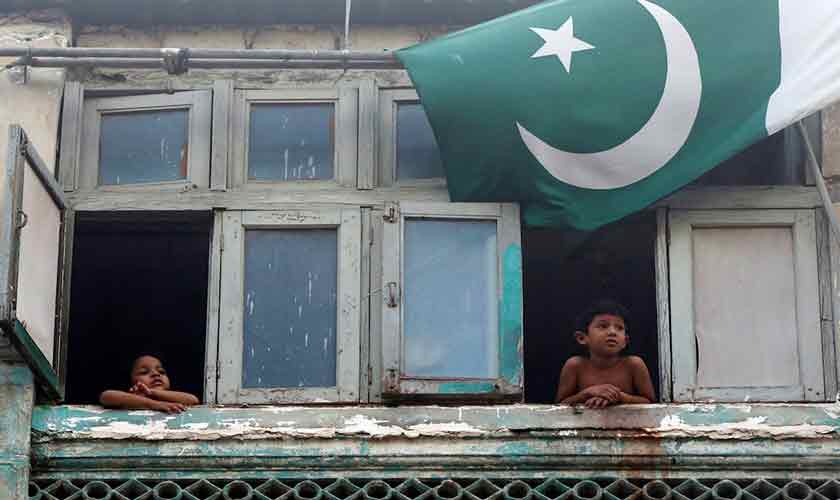
Despite being a “young” country, the voices of our children and youth remain muted. Their stake in Pakistan’s future is enormous, but their say in shaping it is minimal.
Despite being a “young” country, the voices of our children and youth remain muted. Their stake in Pakistan’s future is enormous, but their say in shaping it is minimal. The banning of student unions in the mid-1980s stripped students of representation. Schools continue to rely on outdated teaching methods, and although efforts to introduce career counselling have begun, they remain scattered and inadequate. The mental health of children and adolescents, while more visible today than in the past, is still overshadowed by other government priorities. And although maternal and neonatal health has seen increased attention in recent years, our outcomes remain troublingly poor.
What, then, does the future hold for our children—and for the world they will soon inherit?
In a global landscape marked by conflict, economic uncertainty and natural disasters, our young people are our greatest resource. While we struggle to educate and equip them with the tools they need, one development offers genuine hope: the rising number of young women entering colleges, universities and professional institutions. Educated and empowered women become healthier mothers; delay marriage; have fewer and healthier children; and make better use of health services. Their children experience better nutrition, schooling and opportunities.
The benefits ripple across generations.
My daughter, now 19, often laughs and tells us she has no intention of getting married until after she finishes college. She admonishes me when I tell her I want many grandchildren. Her (older) brothers, even while trying to bully her—usually unsuccessfully—follow her lead. From early on, my wife and I have tried to listen to our children and respect their wishes. It is their future, and they have the right to build it as they see fit.
As we reflect on World Children’s Day, perhaps the greatest gift we can offer our children is not protection from the world, but preparation for it—by listening to them, uplifting them, and giving them the space to imagine and shape the world they deserve.
The writer is the chairman of the Department of Psychiatry at King Edward Medical University, Lahore. The KEMU is organising Pakistan’s first International Child and Adolescent Psychiatry Conference, later this month (for more details, visit: childpsycon.org).