Print Story
X




Once renowned for producing match-winning spinners, the country has struggled to find a world-class wicket-taker of similar impact. Pakistan’s story has taken a different turn since the era of Saeed Ajmal.
Pakistan has a rich tradition of producing world-class spin bowlers who have left an indelible mark on the international cricketing landscape.
Pakistan and India have regularly produced quality spinners who won matches for their teams.
Abdul Qadir, Anil Kumble, Mushtaq Ahmed, Saqlain Mushtaq, Ravichandran Ashwin and Saeed Ajmal perfected the art of spin.
But Australian legend Shane Warne and Sri Lankan maestro Muttiah Muralitharan left behind all the other spinners. Most of the spinners’ performance is linked with supporting conditions, but Warne and Muralitharan proved themselves even in unsupportive conditions.
In recent years, Pakistan has produced several talented fast bowlers like Shaheen Shah Afridi, Naseem Shah, Haris Rauf, and Hassan Ali who have gained international recognition. The emphasis on developing fast bowling talent may have shifted attention away from spinners.
India has Kuldeep, Axar, Jadeja, Australia has Adam Zampa, Lyon, England has Adil Rashid, and South Africa have Maharaj and Shamsi.
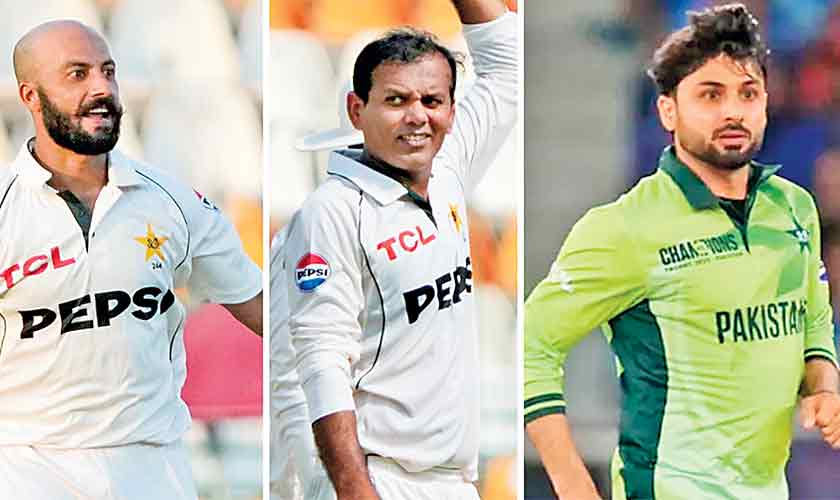
There is a genuine decline in the quality of spin bowling talent emerging in Pakistan. Many spinners like Shadab Khan, Abrar Ahmad, Mohammad Nawaz, Imad Waseem, Usama Mir, Zahid Mehmood, Zafar Gohar, Noman Ali and Sajid Khan played after Saeed Ajmal but no one cemented his place due to inconsistent performances. Occasionally a bowler performs well, but there is no real threat for the opposition on a regular basis.
Spinners showcase a unique ability to adapt to diverse pitch conditions. Whether it is a turning track in the subcontinent or a seaming wicket in Australia, spinners can tailor their approach accordingly. Their flexibility makes them invaluable assets for captains, offering a constant threat regardless of the playing conditions.
Abrar Ahmed, a leg-break googly bowler is the currently only permanent spinner in the national side for all format of the game. He has played 10 Tests, taking 46 wickets at an average of 34.34.
Abrar is more successful in white ball formats as he has taken 28 wickets in 14 ODIs and 32 scalps in 26 T20I with the average of 20.78 and 19. 56 respectively.
Abrar Ahmed on the ninth and eight positions in ODIs and T20Is respectively.
Slow left-arm orthodox bowler Noman Ali has played 21 Tests for Pakistan, taking 97 wickets, averaging 24.51. In the last few home series his performance was outstanding, but at the age of over 39 he can’t serve for a long time period.
Noman Ali is in the third position in the ICC Test bowlers ranking after India’s Jasprit Bumrah and New Zealand’s Matt Henry.
Right arm off-break bowler Sajid Khan has taken 65 wickets in 14 Tests, averaging 28.92. He has taken four times five wickets haul and twice ten wickets in a Tests. But he never get a chance in white ball games.
Leg-break bowler Zahid Mehmood claimed 13 wickets in four Tests he played but didn’t get a chance again.
Leg-break bowler Usama Mir has not got a chance in Tests for Pakistan so far.
The domestic cricket structure in Pakistan has faced challenges and changes over the years.
These changes can impact the development of spinners at the grassroots level. A well- organised and competitive domestic structure is essential for identifying and nurturing talented spinners from a young age.
In Pakistan there are limited opportunities for spinners to gain experience of diverse conditions, which can hinder their development.
The coaching infrastructure and facilities available for spinners also play a pivotal role in shaping their development. Ensuring top-notch coaching for spinners at the grassroots level, providing access to state-of-the-art training facilities, and creating a conducive environment for spin bowling development are essential steps that need attention.
While the perception of a decline in Pakistan’s spin bowling might be prevalent, it is essential to recognise that cricket is a cyclical sport. The absence of world-class spinners in recent times does not necessarily indicate a permanent dearth of talent. The nation has a track record of producing legendary spinners, and with concerted efforts in coaching, infrastructure development and a strategic approach to spin bowling at all levels, Pakistan can once again become a breeding ground for world-class spin talent.
Asian spinners have long ruled the world of cricket, and the reasons go far beyond raw talent.
Subcontinent conditions remain the most spin-friendly on the planet: dry pitches, abrasive surfaces, and long, hot days that naturally aid turn and grip. From India to Sri Lanka, cultural familiarity with slow bowling starts early; young players grow up watching legends like Muralitharan, Kumble and Saqlain, inspiring them to master variations rather than rely on pace.
The result is a conveyor belt of spinners who combine accuracy, deception, and temperament suited to long spells.
Yet Pakistan’s story has taken a different turn since the era of Saeed Ajmal. Once renowned for producing match-winning spinners, the country has struggled to find a world-class wicket- taker of similar impact. Part of the decline stems from structural issues: domestic pitches favour seam more than spin, depriving young bowlers of the environment needed to develop.
Additionally, Ajmal’s ban due to an illegal action created a psychological shift; coaches and players became overly cautious, prioritizing “safe” bowling actions over mystery and innovation. As a result, Pakistan’s new spinners are often tidy but lack the boldness and variation that once defined the nation’s finest.
Until Pakistan reinvests in spin-friendly pitches, coaching creativity, and long-term development, the post-Ajmal vacuum may continue.
The cricket management should hire some former spinners like Mushtaq Ahmed, Saqlain Mushtaq or Saeed Ajmal who have enough international experience so that they can find young talented spinners and groom them according to national team requirements.