Print Story
X




Thirty-six years after the UNCRC, children in Pakistan and beyond still wait for justice, safety and dignity

| E |
very year, on November 20, the world marks Universal Children’s Day. The day is meant to celebrate childhood and reaffirm our collective promise to protect every child’s rights. It commemorates the adoption in 1989 of the United Nations Convention on the Rights of the Child, the most widely ratified human rights treaty in history.
But 36 years later, a troubling question lingers: have we really changed the lives of all our children?
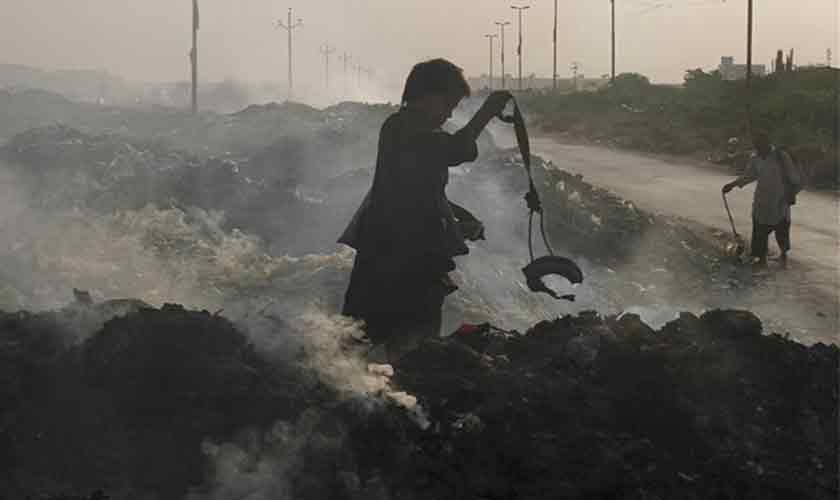
Across continents, the answer is heartbreakingly clear. Children are still dying in war zones, displaced by conflicts they did not start. Millions go to bed hungry, their childhoods stolen by malnutrition. Others are denied classrooms and playgrounds, trapped instead in sweatshops, on the streets or in forced marriages. From Gaza to Sudan, from refugee camps to rural poverty, children remain the silent victims of adult failures.
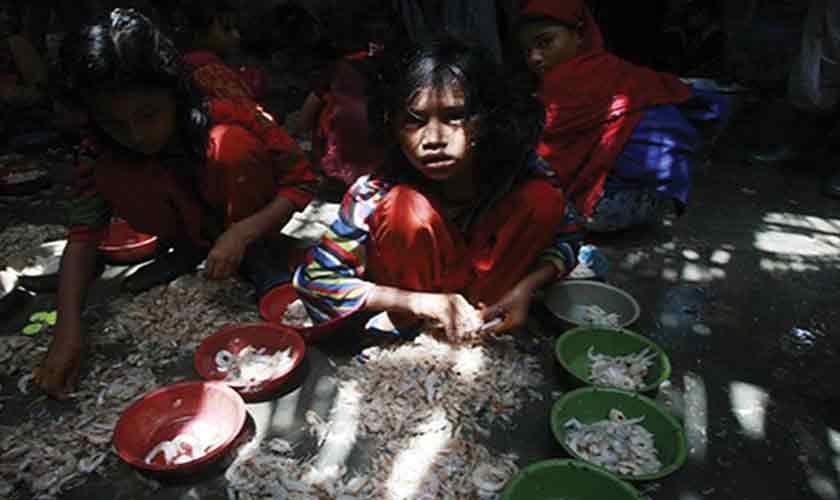
Children’s Day should not be a token event. It should be a day of reckoning; a moment to hold ourselves accountable for unfulfilled promises. Children are not merely our future; they are human beings entitled to dignity, protection and respect, just as adults.
In Pakistan, the story of child rights is a mix of progress and painful persistence. On paper, the country has shown commitment, ratifying the UNCRC in 1990, enacting laws for education, protection and justice.
However, for many children the reality remains harsh.
Take something as basic as birth registration, the first legal recognition of a child’s existence. Despite efforts by provincial governments to improve the system, thousands of Pakistani children are still born “invisibly” without papers or identity, and therefore without access to essential services.
On the brighter side, 2025 marked some important milestones. Pakistan successfully launched its first national human papillomavirus (HPV) vaccination drive in September, targeting school girls to protect them from cervical cancer. Despite misinformation and fears spread through social media, thousands of girls received the vaccine—a victory for science, public health and children’s rights.
Another landmark achievement was in Balochistan, marking its progress in advancing child rights in Pakistan. The province not only passed the Balochistan Maternal and Perinatal Death Surveillance and Response Act, 2025, but also enacted the Balochistan Child Marriage Restraint Act.
The MPDSR law, developed with support from the World Health Organisation and other partners, mandates the reporting, investigation and review of all maternal and newborn deaths to identify preventable causes and improve health outcomes. The passage of the Child Marriage Restraint Act represents a historic step towards ending child marriage and protecting vulnerable children from exploitation and lifelong harm. With these two major reforms, Balochistan has set a powerful example for the rest of the country. The province’s commitment to survival, protection and dignity of children deserves recognition and appreciation.
Pakistan’s justice system for children—whether they are in conflict with the law or in contact with law—remains flawed. The Juvenile Justice System Act, 2018, once celebrated as a progressive reform, has yet to move beyond paper. The key mechanisms it envisions—juvenile justice committees, diversion system, rehabilitation centres and observation homes—are either missing, non-functional or poorly implemented.
In many districts, children are still arrested, detained alongside adults and denied legal aid in violation of both the JJSA and the spirit of the UNCRC. To make matters worse, amendments in 2022 have created confusion over whether the federal or provincial government is responsible for establishing rehabilitation centres, leaving vulnerable children in bureaucratic limbo.
In this system, justice delayed is not just justice but also a childhood denied.
The overall state of child protection in Pakistan is fragile. In 2024, 3,364 cases of child abuse were reported (according to a Sahil report)—a horrifying reminder of the violence children endure daily. Behind these numbers are stories of trauma and silence, often buried by social stigma and systemic failure. Conviction rates remain abysmally low, emboldening abusers and silencing many survivors.
Child labour is another layer of exploitation. While child labour in hazardous industries is prohibited, domestic child labour, often indistinguishable from modern slavery, is not criminalised. Despite promises by the Law Ministry to amend the penal code, the reform remains stuck in political limbo.
There was a glimmer of hope when the ICT Child Marriage Restraint Act, 2025, was finally passed. After years of advocacy, Islamabad became the second territory in Pakistan to formally raise the legal age for marriage. The backlash has been fierce, with opponents citing “tradition” and “religion” to justify the continuation of child marriage. It’s worth recalling that nearly a century ago, when Quaid-i-Azam Muhammad Ali Jinnah drafted the original Child Marriage Restraint Act of 1929, he faced similar resistance. His words still echo with timeless moral clarity: “I cannot believe that there can be any divine sanction for such evil practices as are prevailing, and that we should for a single minute give our sanction to the continuance of these evil practices any longer.”
Almost a century later, Pakistan struggles to live up to that vision.
The National Commission on the Rights of the Child published The State of Children in Pakistan 2024. It catalogues not only the challenges—from child labour to abuse and lack of education—but also pathways for reform. The report reminds us that real change begins with honest reflection, sustained investment and political will.
The NCRC’s work, despite being limited in scope, has been instrumental in pushing children’s issues into the national conversation. But institutions such as the NCRC need stronger support, independence and coordination across ministries to make a difference.
Children’s Day must serve as a call to conscience for governments, parents, civil society and citizens. The rights to survival, development, protection and participation—the four pillars of the UNCRC—are not privileges but obligations. Children are human beings, citizens entitled to life, dignity, opportunity and safety. The test of a nation lies not in how it treats its powerful members but how it protects its most vulnerable.
The writer is a law practitioner in Lahore. His X handle: @miqdadnaqvi.