Print Story
X




Neelofar arrives in cinemas on November 28, carrying more than the promise of a love story. Beneath the press junkets, the interviews and the long-delayed anticipation lies a deeper narrative about Pakistan’s film culture, its expectations and the mythology built around two of its biggest stars.
| S |
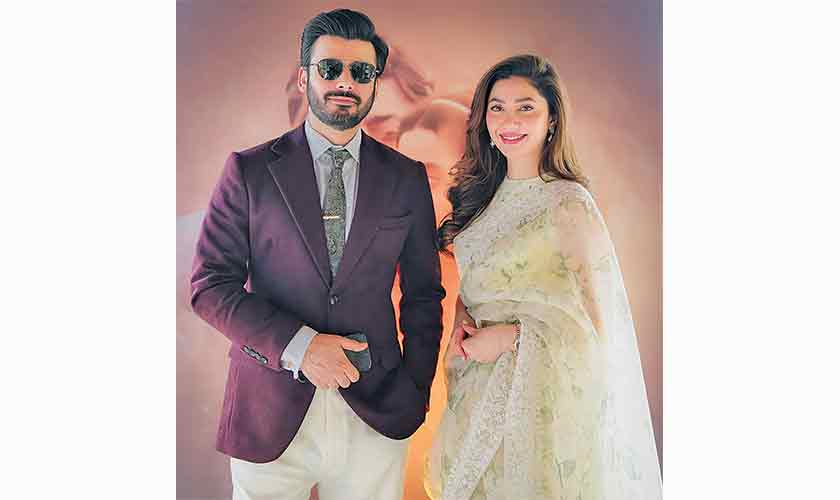
peaking across multiple conversations from Frere Hall to various press meets and greets, Fawad Khan, Mahira Khan and the cast and crew of Neelofar reveal how it is a film shaped as much by artistic intention as by the cultural hope projected onto it.
Even after all these years, Pakistan remains fascinated by the idea of Mahira Khan and Fawad Khan together on screen. Their body of work in unison is surprisingly small (Humsafar, a handful of ads, The Legend of Maula Jatt and now Neelofar) yet audiences continue to treat them as an iconic onscreen pair. Mahira Khan acknowledges this with warmth, joking that she is “his letterbox”, the one who sends him fan screenshots because he avoids social media. Fawad, characteristically self-effacing, says he is unaware of the expectations but he clearly understands the aura that surrounds them. The unspoken truth is that Pakistan has been waiting for emotional closure since Humsafar, still suspended in the chemistry that Sarmad Khoosat-directed drama created more than a decade ago. Every interviewer, carefully or coyly hopes Neelofar might be the place where audiences finally get “that moment”, the hug that never happened on television, the softness flickering between two actors who refuse to overanalyse their own chemistry.
This is a key point as they both insist the “chemistry” is organic, not manufactured. Mahira says they never try to dissect it and Fawad reminisces about improvisations such as “May I?” in Humsafar and a pen tucked absent-mindedly in Mahira’s hair, moments that became defining because they were not designed. Their creative dynamic thrives on instinct, not calculation, which may be why audiences still find them believable as a pair even after long gaps between collaborations.
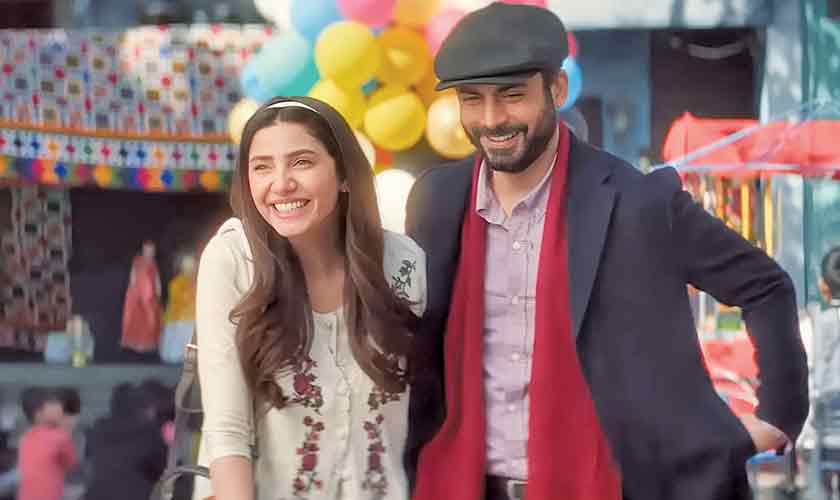
But Neelofar is not merely a reunion. It marks Fawad Khan’s debut as a producer, something he frames neither as an ego-driven step nor a power move but as a natural extension of curiosity. His approach is markedly humble: he talks about listening more than speaking, learning on the job and acknowledging that he is late to the game. The script, he says, reached Mahira first and then him, but the film’s idea captivated him immediately: a writer facing creative paralysis meets a woman who cannot see the world yet perceives life more clearly than he does. It reminded him of a certain kind of filmmaking, one that is no longer common in Pakistan. These are intimate and character-driven stories (like Before Sunrise) that rely on emotion and atmosphere instead of spectacle.
From all accounts, writer and director Ammar Rasool seems to be the quiet centre of this creative world. Cast members repeatedly describe him as sensitive, gentle and deeply attuned to composition and light. Fawad admires his understanding of music; Sarwat Gilani compares the film’s visual experience to “sitting under a Sadequain painting”, calling it a story that captures you within twenty minutes. These are not throwaway compliments, they signal a production shaped by restraint and emotional intelligence rather than traditional star-driven aggression. Even Behroze Sabzwari and Atiqa Odho, veterans of the industry, emphasise Ammar’s craft and the seriousness with which every detail is approached.

A recurring theme across the press interactions is the fragility and ambition of Pakistani cinema itself. Sarwat articulates it most candidly: until we treat our films as films, our stars as stars and our products as products, the industry cannot grow. The cast collectively echoes this sentiment, asking audiences to meet Neelofar on the terms of cinema, not viral content. There is an earnestness here that is rarely seen in promotional circuits. The team knows the industry is under-resourced and often dismissed. All this makes Neelofar a litmus test for Pakistan and whether as an audience we still value filmmaking that prioritises story over spectacle.
On set, the filmmaking process appears to have been collaborative and unusually gentle. Both leads talk about disagreements and creative debates, Mahira more expressive, Fawad more persistent, but they describe a space where logic prevails over ego. Their Lahore-inflected humour about food on set reflects something deeper, in an industry with limited infrastructure, warmth and morale become essential tools of production. A “happy set” is not a cliché here. It is a survival mechanism.
The larger question, repeated by interviewers with varying degrees of seriousness, is whether this reunion on the big screen means a return to television. Mahira jokes she will produce the drama herself, Fawad laughs nervously, asking not to be held to promises made lightly. The handshake they share is playful, nostalgic and intentionally noncommittal. Experts will recognise it as a way of honouring audience sentiment without committing to something that may never materialise.

Taken together, these conversations reveal a portrait of Neelofar as more than a film. It is a rare moment where two major stars step into mature artistic space, Mahira speaking with increasing clarity about character, boundaries and process, while Fawad transitions into a producer who wants to contribute to the ecosystem rather than simply headline it. It is also a project shaped by a director quietly building his own cinematic language, supported by a cast that seems united in purpose.
In the end, the story behind Neelofar reflects the story it tells, two people navigating the seen and unseen, the spoken and unspoken. A film made with patience, feeling and emotional clarity in a landscape that often demands speed. And perhaps most importantly, a reminder that Pakistani cinema, even during an uncertain period, still has artists who believe in creating something lasting, something that asks audiences to look closely, listen carefully and meet the work with the same sincerity that went into making it.