Print Story
X




In an awards season increasingly shaped by narrative management rather than surprise, the Critics Choice Awards offered a revealing snapshot of where critical confidence currently rests.
| T |
he 31st Critics Choice Awards, hosted for the fourth consecutive year by Chelsea Handler, provided an instructive glimpse into the upcoming awards season. Rather than signalling disruption or surprise, the ceremony unfolded as a careful alignment of craft, momentum and the narratives currently favoured within the industry’s changing ecosystem.
At the centre of the evening was One Battle After Another, which claimed Best Picture alongside Best Director and Best Adapted Screenplay for Paul Thomas Anderson. The sweep felt less like a turning point and more like a confirmation, a reminder of how a seasoned auteur can return to familiar thematic terrain and still command attention. Anderson’s characteristically understated acceptance speech, “This is really fantastic, fantastic news,” drew laughter while underscoring how his work rarely relies on flourish to secure prestige. Marketed as a subversive comedy about radical politics, the film’s success suggested that critics remain receptive to bold ideas when they are anchored by craftsmanship and provocation simultaneously. It was recognition not simply of ambition, but of familiarity. Was it the best film? That depends on your perception. Was it a film about American politics, racism and identity as they stand today or about the love of a father for his daughter? How one responds to the storytelling determines whether the critics got it right or simply paid ode to an A-list cast led by Leonardo DiCaprio.
Close behind were Sinners and Guillermo del Toro’s Frankenstein, each collecting four awards. Sinners won for Original Screenplay, Score and the newly introduced Casting and Ensemble category along with Best Young Actor for Miles Caton. Its strong showing pointed to an evolving comfort with genre cinema that engages history and identity without sacrificing emotional clarity. Rather than being rewarded for novelty, the film was recognised for its balance between ambition and discipline.
Frankenstein’s haul leaned more heavily into performance and technical achievement. Jacob Elordi’s win for Best Supporting Actor stood out, not least for the personal tone of his speech. Thanking del Toro for shaping a childhood dream before turning to his parents, Elordi cut through the evening’s polished rhythms and reminded viewers that prestige often rests on deeply individual journeys.
In the lead acting races, Timothee Chalamet’s win for Marty Supreme captured the increasingly blurred line between performance and visibility in awards discourse. His portrayal of a driven table tennis hustler was praised for its emotional specificity but the win also reflected the reach of a campaign that understood how to position artistry within broader cultural conversation. Accepting the award, Chalamet praised director Josh Safdie for resisting moral instruction. “You made a story about a flawed man with a relatable dream,” he said.
“You didn’t preach to the audience about what’s right and wrong and I think we should all be telling stories like that.” The remarks framed the performance as one rooted in empathy rather than messaging.
Chalamet also made a rare and notably personal gesture by thanking his partner of three years, Kylie Jenner. “Thank you to my partner of three years. Thank you for our foundation. I love you. I couldn’t do this without you. Thank you from the bottom of my heart.” The moment felt intimate rather than strategic, reinforcing how awards narratives are increasingly shaped by personal context alongside professional achievement.
Jessie Buckley’s win for Best Actress for Hamnet was warmly received even as Rose Byrne’s momentum throughout the season has been difficult to ignore. Byrne’s sweep of major critics’ groups in New York, Los Angeles and at the National Board of Review for If I Had Legs I’d Kick You had positioned her as the season’s apparent frontrunner, a level of near-unified critical alignment not seen since Helen Mirren’s run for The Queen in 2006. Buckley’s Critics Choice victory complicated that narrative without dismantling it. It reaffirmed the enduring appeal of literary adaptations and period storytelling while keeping the race open enough to resist early closure. The contrast between the two performances highlighted the season’s range rather than establishing hierarchy. Personally, Rose Byrne was robbed but such outcomes are to be expected. It was a gut-wrenching performance and no other nominee came close to what she achieved, but question around the film’s scale and campaign strength also remain relevant.
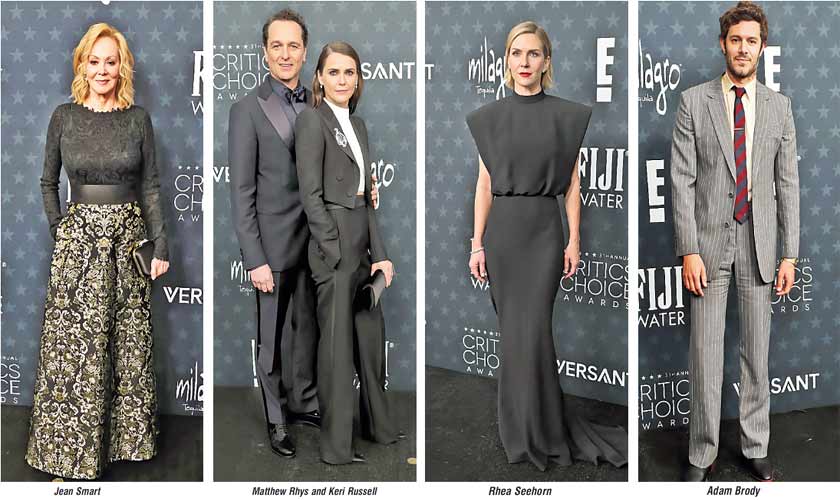
Television awards largely echoed recent Emmy outcomes. The Pitt claimed Best Drama Series with acting wins for Noah Wyle and Katherine LaNasa, while The Studio took Best Comedy Series alongside awards for Seth Rogen and Ike Barinholtz. Jean Smart extended her dominance with another win for Hacks, reinforcing how familiarity and excellence often coexist in long-running awards narratives. Rogen’s self-deprecating joke, “I can cancel therapy this week. I’m good. I’m fixed,” neatly captured the emotional currency of critical validation.
Limited series emerged as one of the evening’s strongest fields. Adolescence dominated with wins for Best Limited Series and acting awards for Stephen Graham, Erin Doherty and Owen Cooper, signalling a clear appetite for emotion-driven storytelling in shorter formats.
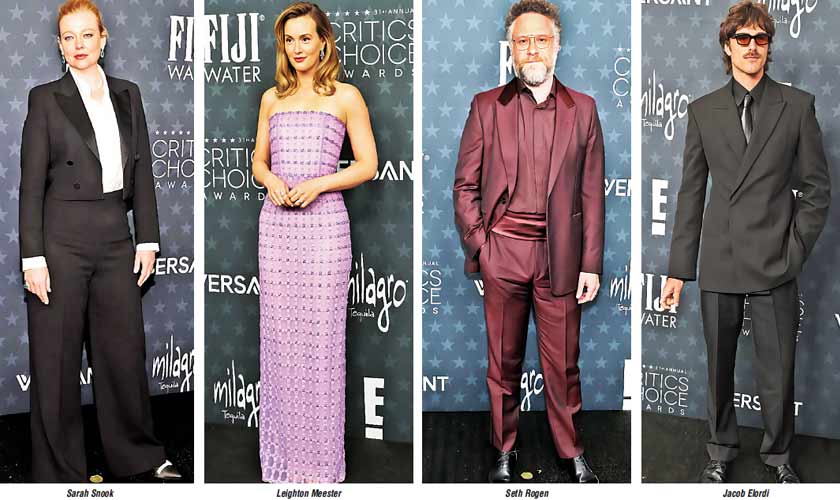
Rhea Seehorn’s long-awaited win for Pluribus was among the night’s most resonant moments. After multiple losses for Better Call Saul, her recognition carried the weight of persistence and restraint. Sarah Snook’s win for All Her Fault further consolidated her post-Succession trajectory. Accepting with disarming informality, she joked about forgetting to prepare a speech before thanking her collaborators and signing off with a simple, “We’re just playing pretend.” The moment showed how ease and credibility often accompany sustained excellence.
Netflix’s KPop Demon Hunters won Best Animated Feature and Best Song for ‘Golden’, reflecting the continued expansion of prestige boundaries to include animated and globally oriented storytelling. The recognition suggested an openness to scale and spectacle, even as such works are increasingly mediated through virality.
Jimmy Kimmel Live! took Best Talk Show, with Kimmel leaning into political satire during his acceptance speech. Handler’s opening monologue and tribute to the late Rob Reiner framed the filmmaker as a symbol of Hollywood warmth and decency. “The minute you met him, he felt like an old friend,” she said, grounding the ceremony in nostalgia rather than provocation.
Taken together, the 2026 Critics Choice Awards felt less like a referendum on taste and more like a reflection of where critical comfort currently lies. Craft was largely prioritised over disruption, momentum favoured over reinvention. New categories made space for emerging talent, genre cinema found confident footing and performances both familiar and fresh were recognised. More than predicting outcomes, the ceremony mapped the narratives critics appear ready to relish, not through declarations but through quiet agreement.