Print Story
X




Fire safety is a project that the lawmakers embarked on, only on paper. Laws exist, but, in practice, they’re flouted more often than they’re followed
| I |
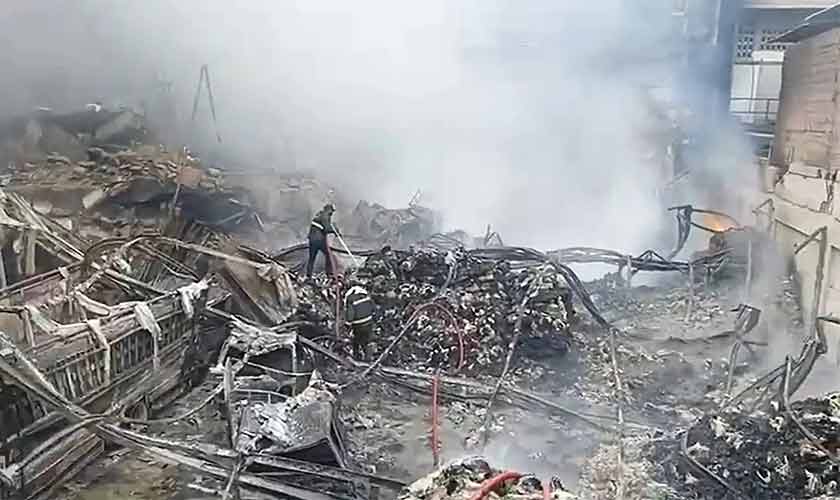
In recent days, Karachiites have witnessed several tragic incidents of fire breaking out in several locations. The biggest of these erupted on September 9, at a garment factory in New Karachi. The fire blazed on for hours, injuring many workers and causing a huge financial loss.
Earlier, in late August, at least six people were killed in a fire that broke out after an explosion in a warehouse in a densely populated area near the Taj Medical Complex. The same month, a massive fire erupted in a factory in the Karachi Export Processing Zone near Landhi, injuring eight people and spreading to at least three other factories.
These tragedies have once again raised the question of why there is no comprehensive and coordinated strategy to deal with fires in this city.
What causes hazardous fires?
Electrical and plumbing defects in commercial and residential buildings are rarely corrected. Instead of investing in safety measures, owners and management force employees to continue working despite leakages, sparks in electrical wires and broken pipelines. Some of the buildings do not even have legal electricity connections. Overloading and poor wiring increase the chances of short circuits.
Then there are serious flaws in the design and construction of some buildings. Lack of emergency evacuation routes, poor ventilation and the presence of flammable materials at places cause loss of human lives. Garment factories, sewing workshops, warehouses and oil depots in crowded inner-city areas are particularly vulnerable to this risk.
Safety systems and legal action
According to experts, about 70 percent of residential, commercial and industrial buildings in Karachi do not have an adequate fire safety system. There is a severe lack of equipment, including fire alarms, fire exits and sprinklers. Residents have not been provided emergency training and there have been no public awareness campaigns.
The presence of fire-fighting infrastructure such as standpipes, water tanks, alarm systems and fire-prevention walls has been made mandatory in the building bylaws, but their implementation is negligible. Fires often break out in buildings across Pakistan due to poor infrastructure, weak enforcement of safety regulations and widespread negligence.
According to the Fire Protection Association, about 3,000 fire incidents were reported in Karachi in 2024 alone. It said the Fire Department is under-resourced and an effective strategy has not been formulated.
Urban governance
The main question is why government agencies are unable to take measures to reduce the risk of fire breaking out in residential and commercial areas? Corruption, political and administrative pressure against uniform enforcement of the law, lack of resources and lack of capacity of firefighting agencies are one part of the story. The number and facilities of fire brigades are also grossly inadequate, in proportion to the size and population of the city. The situation is made worse by the fact that firemen arrive late or do not have adequate access to water and equipment.
Increased risk
According to experts, the main reason for the increasing incidents of fires in warehouses, markets and stores in Karachi is unplanned development and a severe lack of safety measures. Most warehouses and commercial centers are built without formal plans and water systems for extinguishing fires, fire hydrants, alarms or ventilation systems are often missing. The poor and flammable construction materials used in these buildings allow fires to spread rapidly.
Some of the warehouses in the city’s crowded and old commercial centers such as Empress Market, Bolton Market and New Karachi are in such narrow streets that fire brigade vehicles cannot access those. This results in delays and, sometimes, the fire spreads disastrously.
Many warehouses and markets are located near high-tension electricity lines or have old and faulty wiring. This is the most common cause of fire due to overloading and short circuits. These centres store large amounts of clothes, plastics, chemicals, oil and other flammable materials, but there are no separate zones or safety protocols for them, so that a single spark can cause a major explosion or severe fire.
Most warehouses and markets also lack emergency exits and safe routes. This makes it more difficult for firefighters to access the building and rescue the people trapped inside.
Experts say that a major reason for this situation is weak supervision by the city administration. There is a lack of effective coordination between the Building Control Authority, the Department of Industries and Commerce and the Fire Brigade.
Safety audits of buildings are conducted rarely. These ought to be routine. Deterrence is also important. In case of violations, strict fines and punishments should be imposed on the owners. Since that does not happen, building owners avoid taking security measures to cut costs.
Prevention
The government should make safety measures their top priority. The first step is collecting accurate data. The statistics department and local government should jointly conduct regular surveys of factories, warehouses and residential buildings and conduct safety audits of buildings located in old and densely populated areas to identify defective structures.
Fire alarms and sprinkler systems should be standard. During construction and renovation, inclusion of safety exits should be mandatory.
Institutional and community engagement is also vital. For that, trade associations, civil society, labour unions and the media should play a role in awareness and action.
Investing in fire brigades and building capacity would help. Modern fire tenders, equipment and personnel training to effectively deal with large-scale incidents can go a long way. Public awareness is also important. Fire safety training should be imparted in schools, colleges and workshops.
Recent fires in Karachi have shown that the city is in dire need of a comprehensive fire safety policy, strict legislation and effective enforcement. If timely measures are not taken, such incidents may increase in the future.
The contributor is a Karachi-based urban planner and geographer