Print Story
X




Munir Niazi’s ghazals and nazms distil memory, identity and time into lasting verse
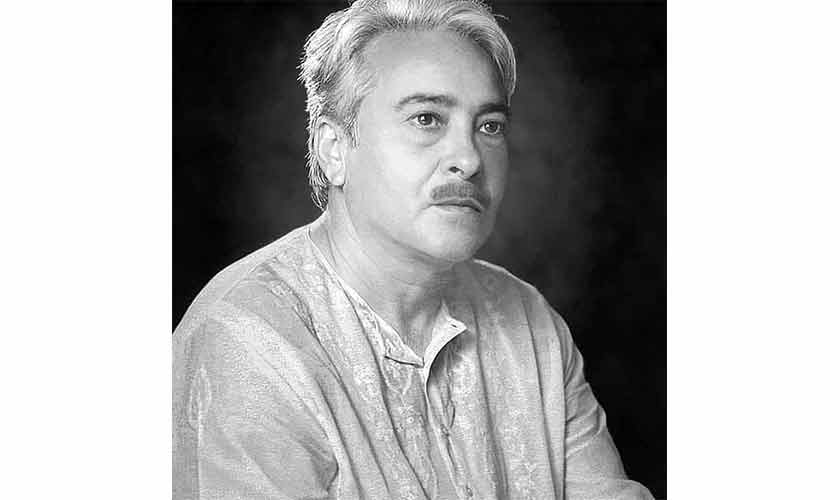
| M |
unir Niazi (1928–2006) is one of the few modern poets whose work is characterised by meaning that emerges through an elusive and often deceptive linguistic structure. Whether in his ghazals or nazms, a careful and nuanced reading reveals a poetic self of great artistic finesse. This self is neither linear nor one-dimensional; rather, it manifests like a prism, refracting into multiple hues, each shade forming a distinct poetic image.
Perhaps for this reason, much like Ghalib, Niazi transforms his creative self into a receptacle for the full spectrum of life’s experiences. The pain and pleasure he endures are expressed in his poetry with an intensity that is both evocative and profound. He writes:
“Gham ki baarish nay bhi teray naqsh ko dhoya nahin/ Tu nay mujh ko kho diya, main nay tujhay khoya nahin”
At first glance, the verse appears deceptively simple, yet the interplay between “imprint” and “rain” creates a recursive network of signifiers, fracturing the poet’s self into a layered discursive space. While rain would ordinarily erase imprints, the poet’s evocation of a “rain of sorrow” shifts the verse from the literal to the metaphorical, suggesting that grief, rather than erasing the beloved’s imprint, deepens its presence.
The “imprint” remains unqualified by any linguistic markers; it is neither a compound noun nor a fixed phrase. Instead, it functions as a complex metaphor, open to multiple interpretations: it could signify a footprint, a colour, a light, a fragrance or the beloved’s face. By deploying a self-contained metaphor, Niazi creates an image intimately linked to the poet’s own heart – a link subtly reinforced by the rain of sorrow, as grief is invariably rooted there.
A second reading reveals a counter-presence, an opposing figure set against the poet’s self. This could be the beloved, or someone else entirely. Here, the beloved’s act of erasure – her forgetting of the lover – paradoxically affirms the permanence of the imprint upon the speaker’s heart. The beloved has lost the lover, whether by choice or circumstance, but the lover, despite enduring countless trials (the rain of sorrow), remains unable to reciprocate this forgetting.
A third reading brings forward the metaphysical elevation of both beloved and lover. To preserve the pleasure of union within the void of separation – to inscribe the beloved’s presence upon the heart despite the wounds of absence – is no ordinary poetic achievement. This act of sublimation belongs only to the poets who, like Munir Niazi, possess the rare gift of distilling their fragmented selves into a singular creative force.
Michel Foucault, in The Archaeology of Knowledge, argues that disparate events acquire coherence through a structured succession. This principle applies equally to history, fiction and poetry. In Niazi’s work, the fragmented past either stretches into the disorder of the present or collides with it, only to dissolve once more. The following verses illustrate this dynamic:
“Jamaal-i-yaar ka daftar raqam nahin hota/ Kisi jatan say bhi yeh kaam kam nahin hota”
Niazi’s verse depicts the beloved’s beauty as so vast and multifaceted that any attempt at expression feels futile. This ineffability elevates the beloved beyond the ordinary, embodying both the divine and the earthly. The verse draws a striking contrast between the beloved’s infinite radiance and the lover’s relentless pursuit, sustained by the hope of one day witnessing its full splendour.
To preserve the pleasure of union within the void of separation… is no ordinary poetic achievement.
Foucault reimagines space and time through a psychological lens, rooting them in reality while reshaping them through creative perception. In Munir Niazi’s poetry, time and space become fluid, breaking away from conventional temporality. His poetic universe forges its own chronology, where fragmented selfhood, melancholic solitude and existential disintegration unfold beyond the bounds of empirical reality. He writes:
“Aawaaz day kay dekh lo, shayad woh mil hi jaaye / Warna yeh umr bhar ka safar raigan to hai
Woh jo is jahaan say guzar gaye kisi aur shehr mein zinda hain/ Koi aisa shehr zaroor hai inhi doston say bhara hua.”
These verses convey human transience through a profound sense of sorrow, presenting it as subject to the relentless force of time. Here, “city” and “journey” move beyond their literal meanings, becoming metaphors for time and space. Niazi distils inner fragmentation into a poetic temporality that defies linear progression, where memory and absence exist in constant tension.
His poetry resists confinement within a single critical framework, instead embracing structural fluidity. While often described as spectral, little critical attention has been paid to whether this haunting presence is merely a poetic device or an end in itself – a distinction that matters. In Niazi’s work, haunting is not a grand metaphor but, when it appears, a medium of revelation. He employs it to rediscover a lost interior world, where the possibility of recovery is inseparable from fear and a lingering, spectral unease. He writes:
“Chaaron samt andhera ghup aur ghata ghanghor/ Woh kehti hai kaun/ Main kehta hoon main/ Kholo yeh bhaari darwaza/ Mujhko andar aanay do/ Uskay baad ik lambi chup aur tez hawa ka shoor”
– Sada Ba Sehra
This poem works on two interpretive levels. The first words, such as “darkness” and “dense clouds,” construct a landscape that mirrors the severity of external reality. On the second, the brief exchange between “her” (she) and “me” (I) suggests two divergent mental states – perhaps facets of the same consciousness – whose dissonance generates an air of mystery. The estrangement is so profound that it culminates in prolonged silence, broken only by the eerie howling of the wind.
The poetic persona, after a long and difficult journey towards self-recognition, finds himself shut out from his own existential core. The failed encounter between the self and its essence produces an all-encompassing silence – an emptiness in which fear transforms into an unending melancholia.
One of the poem’s most compelling features is its title, Sada Ba Sehra. Although the word “desert” never appears in the text, it is evoked metaphorically through the phrase “all around,” subtly suggesting the desolation characteristic of a desert landscape. Calling out into the void becomes an act of seeking a lost self – one that immerses the reader in an atmosphere of spectral anxiety while binding the poet within his own existential dilemmas. A similar probing of fear’s psychological depth can be found in the poetry of Emily Dickinson:
“The stimulus there is/ In danger, other impetus/ Is numb and vital-less.// As ‘t were a spur upon the soul,/ A fear will urge it where/ To go without the spectre’s aid/ Were challenging despair.”
– I Lived on Dread; To Those Who Know
Like Niazi, Dickinson presents fear as an omnipresent force. Yet while her terror is wholly internalised, Niazi’s poetry moves in the opposite direction. In his verse, the self’s anxieties arise from an engagement with external reality, whereas Dickinson’s fear is anchored in an inner psychological and spiritual struggle. If Niazi’s trajectory moves from the external world into the depths of his own interiority, Dickinson’s attempts are to navigate outward from within.
To characterise Niazi’s poetry as dominated by spectral anxiety or fear would therefore be reductive. These elements function instead as finely tuned poetic instruments, used to articulate the intricate interplay between memory, identity and the relentless passage of time.
In the tradition of modern poetry, Munir Niazi sets himself apart from both his contemporaries and, to a significant extent, his predecessors by cultivating two distinct poetic realms – one for the ghazal and the other for the nazm – each shaped by separate experiential and observational foundations. This bifurcation is crucial, as the themes and experiences expressed in his ghazals differ markedly from those explored in his nazms. Rather than displaying a single, unifying intellectual thread across both forms, his work reveals a deliberate cognitive duality.
This conceptual divergence accounts for the striking stylistic and expressive range in his poetry. While his nazms are largely grounded in an engagement with the mysteries and metaphysical dimensions of the cosmos, his ghazals operate within a distinct experiential framework. The nazms, in particular, reflect an expansive poetic self – one that appears to transcend individual subjectivity and assume the limitless qualities of the celestial. In this way, Niazi’s poetic self, as it emerges in his nazms, does not merely contemplate the universe but absorbs and internalises its vast and enigmatic essence.
The writer is a poet and a critic. He is an assistant professor of Urdu at Chhatrapati Shahuji Maharaj University in Kanpur, India, and the author of three books