Print Story
X




Despite rifts and internal fractures, the PTI has survived. At what cost?
| P |
akistan Tehreek-i-Insaf’s precarious and paradoxical position in Pakistan’s political landscape can be aptly reflected by the idiom, between the devil and the deep blue sea. This piece looks at things from the PTI’s side of the fence (not the author’s personal view or inclination).
The party has been at the receiving end for several years. There was even talk of banning it. In the end the powers that be decided against it; though that could always change. There were those who thought that if the party could be suppressed and managed, why should one go further? Makes sense.
Despite the internal divisions and criticism, one must admit that the party has managed to survive rough times. At least, so far. How and in what shape and condition it has endured remains debatable and open to interpretation.
When the extreme opposition a party faces is beyond politics; when the opponent is not just other politicians but also more powerful quarters, the going really gets tough. The establishment, once seen as aligned with the PTI, is now its staunchest opponent. The events of May 9, 2023, led to mass arrests of its leaders and workers; the loss of PTI’s parliamentary presence; politically motivated legal challenges, not only for Imran Khan but also for his spouse; not to forget the media blackout, internet shutdown and social media curbs that have all made it harder for the party to mobilise its supporters. There are no signs so far of a letup.
The PTI opened its doors for talks with powers that be several times, but to no avail. Those in power did not feel the need to settle.
The party appears to be a headless chicken. From day one, it was heavily dependent on Imran Khan. He was the driving force; he set the party’s ideology and was its sole decision maker. Some of his important companions were made to quit politics unceremoniously.
When a party is seen as more of a cult than a political entity, the challenges it faces are more damaging. Once the leader is gone, the movement loses its compass.
The government’s choices of who gets to meet Khan in prison and when, have created more confusion than clarity on many issues. The communication gap is making the party look even more frail and feeble. When a party is seen as more of a cult than a political entity, the challenges it faces are more damaging. Once the leader is gone—through imprisonment, exile or disgrace—the movement loses its compass. The second in command and the followers feel disoriented, betrayed and spiritually adrift. In this mix-up, they find it hard to make rational judgments.
But this does not have to be the end of the road.
In the absence of a unifying moral and political head, the party now faces factionalism and divergent interpretations of the vision of its leader. In the worst case scenario, this infighting could overshadow the external struggle. The PTI is divided. Some of its second tier leaders want to explore reconciliation while others wish to continue with resistance. This disagreement on its approach is natural and happens on almost all issues and at all times with most political entities.
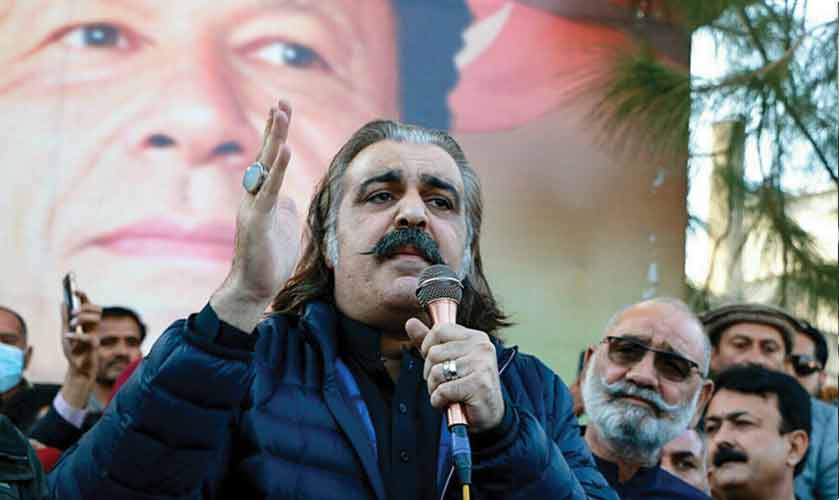
If capable lieutenants take over, the party can go on; even thrive. But the hard decisions they must take expose them to censure. An example of this is the recent Senate election in Khyber Pakhtunkhwa. Chief Minister Ali Amin Gandapur is getting flak for striking a deal with the opposition in the provincial legislature and handing them ‘more seats than they deserved.’ His argument that the agreement with the opposition was aimed at thwarting horse-trading has not been appreciated. He is in a senior position and as such privy to more information than most of his party colleagues. Maybe he was aware that if it did not arrive at an ‘unpleasant’ agreement, the party might not get even the six seats.
Could Gandapur have shared the information with his party? His approach to persuading others leaves much to be desired and his leadership qualities raise eyebrows. It’s not exactly clear why Imran Khan chose him. There is a view that he foresaw trouble at the time and, therefore, wanted a fighter to lead the party in the province.
Imran Khan’s choice of Buzdar in the Punjab was a failure. His selection of Gandapur may end up looking similar. Many in the party believe that he has been unable to fight Imran’s case like he should have. His conduct in several protest marches has been questioned.
But winning six Senate seats is not bad performance. Keep in mind the success in managing to elect Murad Saeed who has been in hiding. The fact that the state has been after him for quite some time makes the accomplishment meaningful. The party has sent a clear message through his nomination and election.
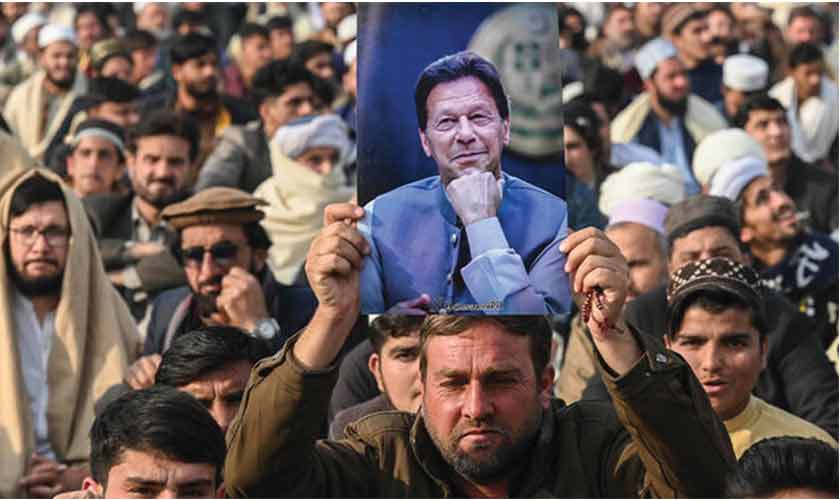
The party faces both internal and external pressures. A politically divisive environment nurtures competing power centres in a party. The only way out is to keep turning Imran Khan’s populism into an institutional framework: elections, merit-based leadership, internal democracy and sharing the facts with party’s supporters and followers. Many may not agree, but an imprisoned Khan remains a symbol of resistance.
The acrimonious equation between him and the establishment has not changed one bit in the two years of his incarceration. The fundamentals have not budged. The PTI leaders understand that continued confrontation will mean longer incarceration and political suppression. On the flip side, it will give them the moral authority to claim street power. A compromise translates into loss of ideological purity and public trust.
For now, both the establishment and Khan are sticking to their guns. While the establishment has an upper hand, the PTI has made small gains. As its struggle for survival continues, much depends on the party’s ability to reorganise and decentralise leadership beyond Imran Khan.
The writer, a journalist for 33 years, has been an editor at the BBC in Pakistan for over two decades. Currently, he is the managing editor at Independent Urdu.