Print Story
X




Pakistan’s political system is no longer an enigma. Its rulers, elected or selected, govern as authoritarian praetors
| L |
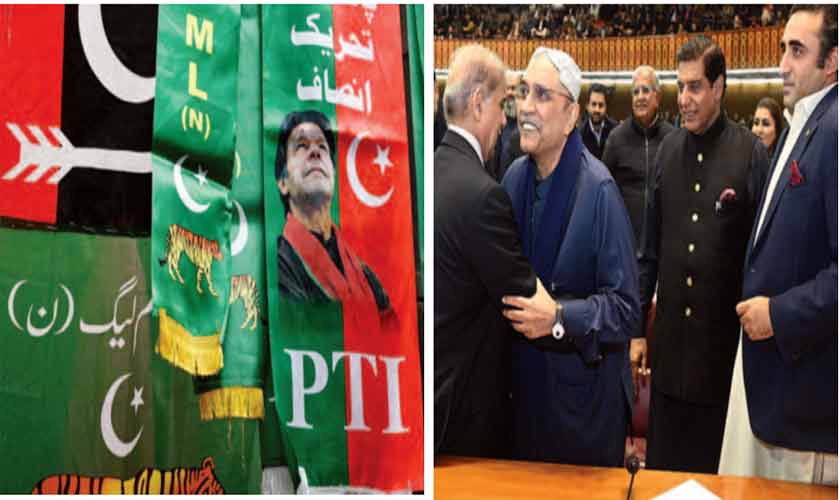
ast Monday, eleven new members were elected to the Senate of Pakistan from Khyber Pakhtunkhwa. The results followed forecasts made public well before the electoral exercise was undertaken—six of the successful candidates come from the ruling Pakistan Tehreek-i-Insaf and five from the opposition parties in the province—the PML-N, the PPP and the JUI-F. Despite the media hype and unnecessary gossip about “dissidents” in the PTI taking on Chief Minister Gandapur’s plan, the elections delivered what was “agreed” between the Treasury and the combined opposition. Some rules were bent, doublespeak employed and the political ‘enemies’ embraced. Why, one may ask, however, go through the motions when the outcome is already settled? The exercise merely paid homage to the adage: all’s well that ends well.
The very next day, some of the leading PTI leaders, including party parliamentarians and workers were handed down decade-long jail terms by two anti-terrorism courts in Lahore and Sargodha for their role in the May 9, 2023, countrywide violence that ensued following the arrest of former prime minister and party chief, Imran Khan, in a corruption case. The verdicts could not have come at a more opportune moment for the incumbent administration pursuing an agenda which, many in the federal capital stress, is not theirs to begin with. “Gone are the days when we would initiate projects or ventures. Now, we are mere hauliers,” quipped an administration insider. A quick nudge and wink followed to keep his remark off-the-record.
Pakistan’s political system is no longer an enigma for students of political science. And if there were still any ambiguity as to what system Pakistan was currently operating under, Defence Minister Khawaja Asif removed that for all and sundry by calling and praising it as a hybrid model, wherein civilian and military leaders are marching in step towards national glory.
Asif gloated on X (formerly Twitter) that “the revival of the economy; India’s defeat; improvement in ties with the US; … were made possible by the cooperation between PM Shahbaz Sharif and Field Marshal Asim Munir and the excellent relations between Islamabad and Rawalpindi.” He expressed similar sentiments in a later interview with Arab News, saying things would have been much better for Pakistan had a similar model been adopted in the 1990s. Critics described Khawaja Asif’s remarks as an ‘admission’ of Nawaz Sharif’s failure to fathom the reality and work with the establishment. This seems to be a new take on Charles de Gaulle’s remarks that “politics is too serious a matter to be left to the politicians.”
Accusations of familial and financial considerations trumping political and professional competence are all over the place. The quality of leadership is constantly sliding.
Hybrid or not, the country, it seems, is back to the ways of most of its life when power lay beyond the parliament. The government is being run jointly by politicians and the establishment. Truth, comes out ultimately to stand the test of time. However, whispers might sometimes travel faster in the corridors of white marble edifices on the Constitution Avenue.
Public and private conversations in the capital revolve much around subjects like economic stability, sustainable growth, structural reforms, fiscal consolidation, export diversification, debt reduction, entrepreneurship, youth empowerment and revitalising the private sector etc. That, however, is not what media outlets dish out daily. The headlines are rarely about anything but beating India; deadly encounters with terrorists in Khyber Pakhtunkhwa and Balochistan; more loans from Bretton Woods institutions and ‘friendly’ countries; regular price hikes blamed on measures taken under IMF pressure; ‘successful’ foreign trips; and promises of a better future. The focus is on crypto, mining, corporate farming—things that may not deliver the bonanza for those trying desperately to leave the country to find employment elsewhere, anywhere in the world.
Politics, it seems, is fatigued like the septuagenarian leaders. With Nawaz Sharif, Shahbaz Sharif, Asif Zardari, Imran Khan and Maulana Fazl-ur Rehman in their 70s, a life of comfort seems to be a priority. They might not have done wonders for their parties but maybe enough for their families. A PML-N government is snuggly ensconced in Islamabad although most of its cabinet members and their work are hardly visible to the general public. They must be working hard to keep the prime minister happy, for he is known as a hard taskmaster. The question raised most frequently is: are 32 federal ministers, 11 ministers of state, 4 advisors, 9 special assistants and 5 coordinators really needed in Islamabad, when most of the people-related work is expected to be done in Lahore, Karachi, Peshawar, Quetta, Gilgit and Muzaffarabad?
The Senate elections have exposed political parties and their leaders. One wonders if merit and suitability played any part in picking candidates for the upper house of the parliament? Accusations of familial and financial considerations trumping political/ professional competence are all over the place. The quality of leadership is constantly sliding, an assessment a federal minister candidly accepted in a social media interaction. Politics, it seems, is now a mad pursuit of personal and familial ascendency. Not that it is a uniquely Pakistani problem. It is increasingly becoming a global trend. Possibly, that is why former US President Ronald Reagan once remarked, “it has been said that politics is one of the oldest professions. I have learnt that it bears a striking resemblance to the first.”
The writer is resident editor of The News at Islamabad.