Print Story
X




Why hopes of medical treatment of so many Pakistanis still rest with India
| C |
ome summer of 2025, 10-month-old Mishkat Fatima was packed and ready to travel with her family to Chennai, India, where a renowned cardiac surgeon at the MGM Hospital had offered to perform a life-saving procedure to correct her complex congenital heart defect. A few days before their departure, her family received devastating news: her medical visa had been cancelled. Like dozens of other critically ill Pakistanis, Mishkat became an unintended casualty of worsening diplomatic tensions between India and Pakistan. The Indian government also ordered all Pakistani patients in India to leave the hospitals and revoked pending medical visas in the aftermath of the Pahalgam attack. Overnight, Mishkat’s best hope for survival was lost.
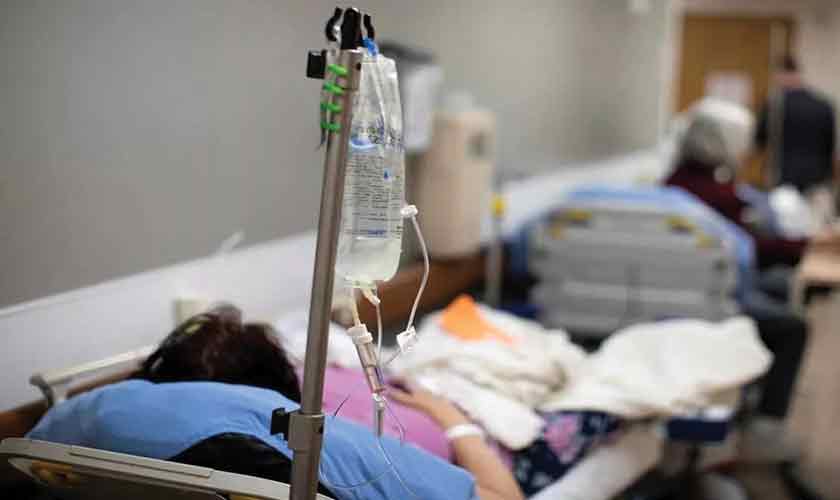
For years, Pakistani patients—particularly those with heart failure and children born with congenital heart defects—have been crossing the border into India for treatments that are often unavailable, unaffordable or inaccessible in Pakistan’s fragmented healthcare system. Hospitals like MGM in Chennai and the Asian Institute of Medical Sciences in Faridabad have earned the trust of hundreds of Pakistani families due to their advanced cardiac programmes, successful transplant histories and relatively low costs.
According to healthcare experts, at least seven Pakistani patients have received heart transplants in India in recent years. Many others were in various stages of obtaining visas or arranging finances when the diplomatic fallout struck. Dozens of parents, including Mishkat’s father Farhan Ali, were left heartbroken and helpless. “We tried every hospital in Karachi,” he says. “Aga Khan only treated her in emergencies and refused surgery due to the high risk. The SIUT also said they couldn’t handle her case. The only hope we had was in India.”
The situation has exposed a systemic crisis in Pakistan’s healthcare landscape. Senior cardiologist Dr Akram Sultan says the root cause is not a lack of surgical expertise but a failure to develop systems that serve patients, especially the poor and critically ill. “Pakistan has excellent surgeons,” he says, “but in public hospitals like NICVD Karachi and PIC Lahore, the bureaucracy and mismanagement drag patients through months of delays. Meanwhile, private hospitals charge fees that most people simply cannot afford.”
He notes that families who are forced to spend millions of rupees often ask, “If we are going to spend this much, why not go to a place where we get better care, are treated with dignity and can hope for better outcomes?” India, despite the complex relationship, has become that place for many.
The ethical questions are profound. Is it morally justifiable for a country to block life-saving treatment for innocent children and the terminally ill due to political developments? Conversely, is it acceptable for a country to continue to rely on an adversary’s healthcare system while failing to develop its own?
Public health advocates are now calling this an issue of “national health security.” A senior official in Islamabad says it was disgraceful that while Pakistan tries to promote health tourism to attract foreign patients, its own citizens are being forced to cross hostile borders to seek basic care. “It exposes the gaping holes in our healthcare system,” he says.
Beyond surgeries to fix congenital heart defects, heart transplants have remained out of reach for most Pakistani patients due to a critical gap: the absence of a deceased organ donation system. While the legal framework exists, cultural reservations have made routine implementation nearly impossible. Hospitals rarely report brain-dead patients and families seldom consent to organ donation.
The result is devastating. Twenty-one-year-old Emaan Taufiq from Sialkot and 25-year-old Asad Ali from Karachi are both battling end-stage heart failure. They have been preparing to travel to India for heart transplants. They need up to $150,000 for the procedure. Even obtaining a visa has required years of struggle.
Pakistan’s longest-surviving heart transplant recipient, Faisal Abdullah Malik, underwent his surgery in Chennai in 2015. He says he is alive thanks to the donor heart of an Indian citizen. “In Pakistan, we can’t even get a heart biopsy done because the equipment doesn’t exist,” he tells The News on Sunday. “We have world-class surgeons, but we lack a culture and system that supports organ donation and transplantation.”
Dr KR Balakrishnan, the Indian cardiac surgeon who operated on Faisal and several other Pakistani patients, says that Pakistan can replicate India’s success if it builds a structured donation programme. In India’s Tamil Nadu, the state-run TRANSTAN has facilitated more than 600 transplants by coordinating public pledges and retrieval of organs from brain-dead patients.
In contrast, Pakistani programmes like the one at NICVD, which initiated a Left Ventricular Assist Device project as a precursor to heart transplants, never materialised. Even institutions like the PIMS and the AFIC that once announced transplant programmes have failed to conduct a single successful procedure.
Even minor follow-ups after transplant surgeries remain impossible. Faisal Abdullah Malik from Karachi says even routine post-transplant tests, such as cardiac biopsies, cannot be performed in Pakistan due to a lack of equipment. “You can’t even manage a post-transplant patient here,” he says.
A few success stories like that of Abdullah and Minsa, the siblings expelled from India and later admitted to the AFIC in Rawalpindi, offer glimmers of hope. A medical board at the NICVD Karachi confirmed that the children’s condition, Tetralogy of Fallot, could be treated in Pakistan. Their father, Shahid Ali, eventually agreed to treatment at the AFIC. But such responses remain an exception rather than a rule.
Federal Health Minister Syed Mustafa Kamal has advised Pakistanis against seeking medical treatment in India, branding the neighbour as “hostile and unethical.” He insisted that Pakistani hospitals are capable and that public support should go into strengthening domestic systems.
But experts, including Dr Akram Sultan, stress that capacity without access is meaningless. “We need systems, not just slogans. We need investment in infrastructure, training, and most importantly, dignity for patients,” he says.
As Pakistani families continue to lament lost chances and sell off assets in desperation, the question is no longer just who will treat Mishkat or Emaan or Asad, it is who will fix Pakistan’s broken healthcare system?
If the country is to end this helplessness, it must not only invest in advanced facilities but also in building trust between the public and the system. That means transparent healthcare governance, promotion of organ donation through cultural dialogue and partnerships with countries like Turkey or Pakistani-origin experts abroad to build indigenous transplant programmes.
Until that happens, the heart-wrenching reality remains: Pakistan’s sickest citizens will continue to look to foreign lands for hope, healing and the right to live.
The writer is an investigative reporter, currently covering health, science, environment and water issues for The News International