Print Story
X




The idea of a transitional caretaker regime was introduced to facilitate free, fair elections through impartial executive control. Does it still hold?
| I |
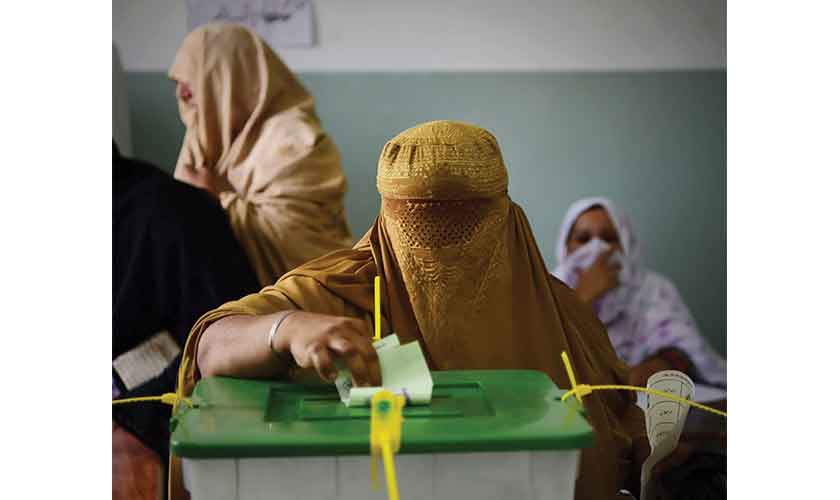
n Pakistan, state institutions have a trust deficit. Their chronic failures to maintain the rule of law and their vulnerability to the diktat of the powerful have largely eroded public trust. The constitutional responsibility of the Election Commission of Pakistan to hold free, fair, and transparent elections according to the law has been jeopardised by the interventions of powerful individuals and institutions.
The framers of the 1973 constitution entrusted the responsibility for holding free elections to the ECP. The incumbent regime was to facilitate the democratic transition. The original constitutional scheme collapsed in 1977 when ZA Bhutto and his government failed to maintain the legitimacy of the electoral process. The opposition’s agitation against alleged rigging derailed the democratic process and resulted in a repressive martial law regime. When the Zia regime finally restored the democratic process, it introduced the concept of caretaker governments (through the RCO of 1985). Later, elected governments adopted the idea and it remained in practice. Through the 18th Amendment and the Elections Act 2017, the idea gained more constitutional and legal ground.
During 1988-1997, four electoral cycles were conducted under the supervision of caretaker set-ups. The idea of a transitional caretaker regime was introduced to facilitate free, fair elections through an impartial Executive. The idea was introduced to check the misuse of state resources and administrative authority in favour of the ruling party. The moving spirit was the maintenance of a conducive environment for fair elections and the provision of a level playing field for all contesting political parties. It was hoped that the process will result in credible and legitimate electoral verdicts, respected by all contestants.
Through constitutional restructuring and electoral reforms, it was ensured that broad-based political consensus will be a pre-requisite for a non-partisan caretaker regime. It was also assumed that the caretakers will be apolitical and non-controversial consensus figures enjoying the trust and confidence of the major political players. The leaders of the house and the opposition were empowered to propose the names and hold a consultation for consensus building. It was presumed that the two leaders will consult leading parliamentary forces from the ruling and opposition sides. Consultation, consensus, impartiality and non-partisanship were believed to form the basis of the process.
There has been a lot of speculation recently regarding the caretaker setup. The delay in holding elections in the Punjab and Khyber Pakhtunkhwa has already resulted in extended terms for caretaker setups in both provinces and created a precedent for extra-constitutional players. There have been rumours regarding technocratic setups for two years along the lines of the Bangladesh model for the introduction of tough economic reforms. The Bangladesh model never received judicial and democratic approval and in 2011, through the 15th Constitutional Amendment, the Hasina Wajid government abolished the caretaker setups. The last two electoral cycles have been held under the supervision of the incumbent regime. The opposition (BNP) has alleged rigging and manipulation and demanded that the 2024 elections be held under a neutral setup.
Hasina’s two successive tenures have resulted in political stability and economic recovery with the introduction of structural reforms for sustainable economic growth, despite a problematic democratic track record and some political repression. Bangladesh’s experience has shown that on account of their legitimacy elected governments are a better option for the introduction of structural reforms and sustainable economic growth. It is feared that a further postponement of elections and extended terms for caretaker setups will result in further deterioration of economic conditions. A charter for economy enjoying broad-based national consensus for the introduction of structural reforms through popularly elected governments can resolve the crisis more effectively.
The Pakistan Tehreek-i-Insaf (PTI) has been effectively ousted from the consultation for the next caretaker setup. The consultation going on currently is essentially within the ruling coalition. This has raised questions about the impartiality of the future setup. The legal requirement is for an agreement between the leaders of the house and the opposition. In case of persistent disagreement, the second forum is the parliamentary committee. However, the PTI has already resigned or opted out. The ruling coalition appears to be in no mood to include the PTI in the process.
In the hybrid system of governance in Pakistan, the de jure centres of power appear to lack dominance over the de facto power centres. Powerful people at the helm of the affairs operate like master architects and popularly elected regimes fail to resist their interventions. A caretaker government is more vulnerable to and a soft target for hard power.
The search for suitable candidates becomes more complicated due to the prevailing uncertainty of the situation. Economic distress; the recent surge in terrorist attacks; the issue of approval of the results of the 2023 census; new delimitation of constituencies; and the possibility of massive floods over the coming weeks can provide justification for postponement of elections and extension(s) in the terms of caretaker setups.
A non-partisan, neutral caretaker setup for a stipulated short stint to ensure a transparent electoral process is not only a constitutional requirement but also important for sustainable economic growth and political stability. Consensus among all political stakeholders and the provision of a level playing field to all players will enhance the legitimacy of the electoral process and result in the strengthening of democratic forces.
The writer has a PhD in history from Quaid-i-Azam University, Islamabad. He is an assistant professor at the Allama Iqbal Open University, Islamabad. His major area of interest is electoral politics in Pakistan. He can be reached at [email protected]