ISLAMABAD: The once-close strategic partnership between Türkiye and Israel has deteriorated into a bitter rivalry, with both sides trading threats and accusations as they compete for influence across a fragmented Middle East, raising concerns of a potential confrontation between two of the region’s most powerful militaries, the Economist reported.
Turkish and Israeli officials have been hurling threats and insults at one another for years, and the war of words has grown more acrimonious since the start of Israel’s war in Gaza in 2023. But the rhetoric now appears to be getting out of control, with Israeli politicians speaking of Türkiye in the same breath as Iran.
On June 23, an Israeli minister claimed that Türkiye, along with Syria, had replaced Iran as the biggest danger to his country. Israel upped the ante on June 28 by formally recognising the genocide of the Armenian people carried out by the Ottomans in 1915 — a move Türkiye has long rejected.
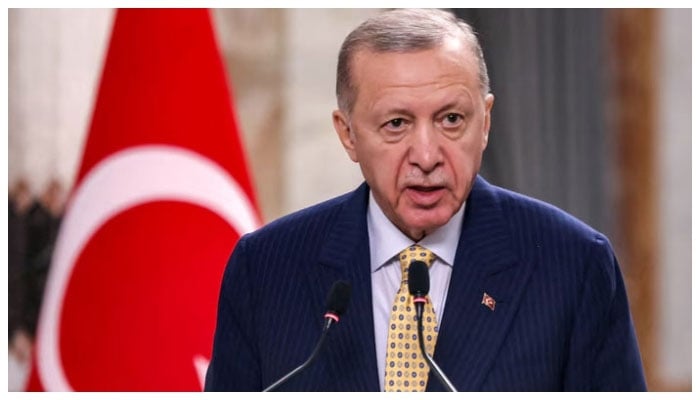
Turkish President Recep Tayyip Erdogan, who has accused Israel of genocide in Gaza, recently claimed that Israel’s bombing campaigns in Syria and Lebanon posed a direct threat to Türkiye. In early June, his interior minister said he hoped to become the governor of Jerusalem once the city came under Turkish control. The Ottoman Empire ruled Jerusalem and Palestine for four centuries until 1917.
Much of this is posturing for domestic audiences, analysts say. Israeli Prime Minister Binyamin Netanyahu, who faces voters in October, wants to sustain the narrative of an Israel besieged and thus the need for a strong leader. Erdogan, who may bring forward Türkiye’s election due in 2028, needs a bogeyman to distract from inflation at 30 percent and high interest rates.
But the rivalry runs deeper than political theater. Both sides fear being encircled by the other. Israel points to Türkiye’s oversized footprint in Syria and its budding military alliances with Egypt, Pakistan and Saudi Arabia. Türkiye stresses Israel’s wars in Gaza, Iran and Lebanon, and its cooperation with Kurdish insurgents.
Israel’s war in Iran is only the most recent cause for alarm for Türkiye. It has long opposed interventions there, fearing the prospect of Iranian state collapse, a new refugee crisis on its borders, and disruptions to trade and energy flows. Türkiye also worries that the Iranian regime, with which it has mostly cordial relations, might be replaced by one friendly to Israel.
Israel’s expanding cooperation with Greece and Cyprus — designed to check Türkiye’s influence in the eastern Mediterranean — is another source of friction. The three countries have stepped up intelligence-sharing, naval and air exercises.
Israel has long been aggrieved by Türkiye’s support for Hamas, the Islamist group behind the October 7 attacks. But recently, it has been more worried by Türkiye’s role in Syria. The war in Iran has strengthened Türkiye’s hand, analysts say. The country cemented its role as a broker between America and Iran, improved its standing inside Nato, and managed to remain on good terms with Trump despite refusing to back his war.
To hedge against potential threats from either Iran or Israel, Türkiye has continued to draw closer to other regional powers, especially through defense cooperation. Talks on a regional security pact, which Türkiye wants to conclude with Egypt, Pakistan and Saudi Arabia, have picked up steam over the past year.
Israel, meanwhile, has failed to achieve its aims in Iran. Neither side has burned its bridges entirely. Türkiye maintains an embassy in Tel Aviv and Israel one in Ankara, although both recalled their ambassadors in 2023. Despite a trade embargo Erdogan announced two years ago, Turkish exports continue to reach Israel by way of other countries or the Palestinian Authority. Oil from Azerbaijan and northern Iraq still arrives in Israel through Ceyhan, a Turkish port.
Israel sees Hakan Fidan, the Turkish foreign minister and a former spy chief who may succeed Erdogan, as implacably anti-Israeli and claims he has strong ties to Iran. One Israeli intelligence analyst calls him “the most dangerous man for Israel in the region.” The prospect of open conflict between America’s closest ally and Nato’s second-largest army seems far-fetched. But recent years have shown that wars once deemed unthinkable are possible — and the stakes could not be higher.