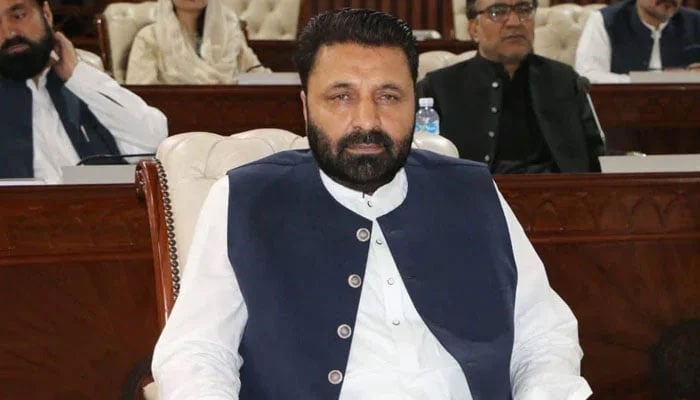
PPP’s Advocate Amjad Hussain has been elected unopposed as the new chief minister of Gilgit-Baltistan. Elected unopposed, Hussain becomes the fifth chief minister of GB, while the PPP’s Imran Nadeem and the PML-N’s Malik Kifayat ur Rehman were also elected unopposed as speaker and deputy speaker, respectively. The arrangement reflects the post-election alliance forged between the PPP, PML-N and the Istehkam-e-Pakistan Party (IPP), which agreed on a power-sharing formula that will also see the governorship go to the PML-N. The June 7 elections produced a fragmented but manageable mandate, with the PPP emerging as the largest party. The coalition is a good example of the pragmatic nature of politics in GB, where alliances often determine who governs. Chief Minister Hussain has argued that the PPP’s victory has shattered the long-held perception that only the party ruling at the centre can form a government in Gilgit-Baltistan. While there is some merit to the symbolic significance of the outcome, the PPP is a coalition partner of the PML-N-led federal government and holds key constitutional offices. Therefore, while the election result may indicate a degree of political evolution, it does not represent a complete break from the centre’s influence in the region. The new chief minister has also interpreted the election as evidence that the people of GB have chosen democratic political parties over traditional, ethnic, religious and sub-nationalist trends. Whether this conclusion fully captures the complexity of voter behaviour is debatable.
Perhaps the most consequential issue raised during the campaign and after the election concerns GB’s constitutional future. Hussain has reiterated the PPP’s position that granting provisional provincial status to GB would be an appropriate response to Indian Prime Minister Narendra Modi’s decision to revoke the special status of Indian Illegally Occupied Jammu and Kashmir. According to this view, providing GB with representation in the National Assembly and Senate until a plebiscite is held in Kashmir would strengthen Pakistan’s position on the Kashmir dispute while protecting the constitutional rights of the people of the region. That said, this debate remains far from settled. Supporters argue that granting provisional provincial status is a legitimate right that does not violate international law and would finally address the longstanding constitutional limbo faced by the people of Gilgit-Baltistan. Critics, however, maintain that such a move could potentially weaken Pakistan’s legal and diplomatic position regarding India’s revocation of Article 370. Regardless of where one stands on the issue, the chief minister’s remarks merely reiterate the PPP’s established policy. The overall election campaign in GB was not without controversy. PTI leaders alleged that they were not allowed to campaign freely. Such allegations deserve attention because democratic legitimacy depends not only on the conduct of polling day but also on whether all political actors are allowed to compete on an equal footing.
Yet the election is now over, and governance must take precedence over politics and the real challenge begins now. The new government, together with its coalition partners, must focus on delivering good governance and ensuring that GB’s people receive the political and constitutional rights they have long demanded. Calls for greater judicial independence from the federal government and an end to political interference cannot be ignored. Equally pressing are the region’s challenges in the power, healthcare, education and infrastructure sectors. Better connectivity and improved educational opportunities are essential for creating employment and expanding economic prospects for the region’s youth. Climate change presents another urgent challenge. GB remains highly vulnerable to climate-related threats, making it imperative for the government to prioritise adaptation measures, disaster preparedness and public safety. The region’s unique geography and environmental sensitivity leave little room for complacency. Above all, the genuine grievances of the people of both GB and AJK must be addressed without delay. These are sensitive regions whose unresolved political, constitutional and developmental concerns can be exploited by hostile actors. Ensuring justice, representation and economic opportunity is therefore not merely a matter of governance but also one of national importance.