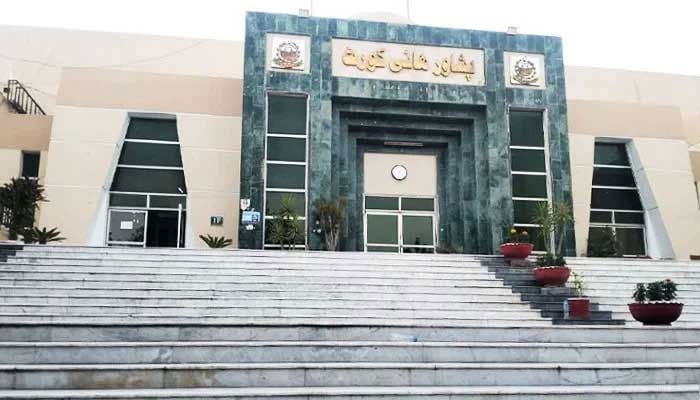
PESHAWAR: The Peshawar High Court (PHC) on Monday dismissed writ petitions challenging the increase in fees for the issuance and renewal of arms licenses by the Khyber Pakhtunkhwa government.
The court directed the provincial government to tighten the process of issuing arms licenses to protect society from the harmful consequences of the misuse of weapons.Counsel for the petitioners and the additional advocate general appeared before the court during the proceedings.
Additional Advocate General (AAG) Taimur Haider represented the provincial government.A two-member bench comprising Justice Ejaz Anwar and Justice Inamullah Khan heard the petitions.
Khyber Pakhtunkhwa Rifle Association and other petitioners had filed the writ petitions.Following the hearing, the PHC issued a detailed 34-page written judgment.The verdict stated that courts cannot interfere in government policy decisions unless they contain an illegal provision or result in the violation of fundamental rights.
The petitioners argued that the increase of more than 100 percent in licensing fees for various categories of arms was unlawful.They contended that the Khyber Pakhtunkhwa Arms Act, 2013, had been transformed into a revenue-generating tool rather than serving the public welfare, which they claimed was contrary to its intended purpose.
The AAG maintained that under the Khyber Pakhtunkhwa Arms Act, 2013, and the Arms Rules, 2014, the government is legally empowered to increase licensing fees.He argued that the government regulates the licensing system and determines the applicable fees under the relevant laws.
The government also has the authority to increase or decrease fees through general or special orders.According to the government’s counsel, the issuance of arms licenses is not merely an administrative function but a matter closely linked to public safety and law and order.
He submitted that the increase in fees was approved by the provincial cabinet and implemented after fulfilling all legal requirements, making the measure lawful.In its judgment, the court observed that the judiciary cannot act as a substitute for the executive in policy-making matters.