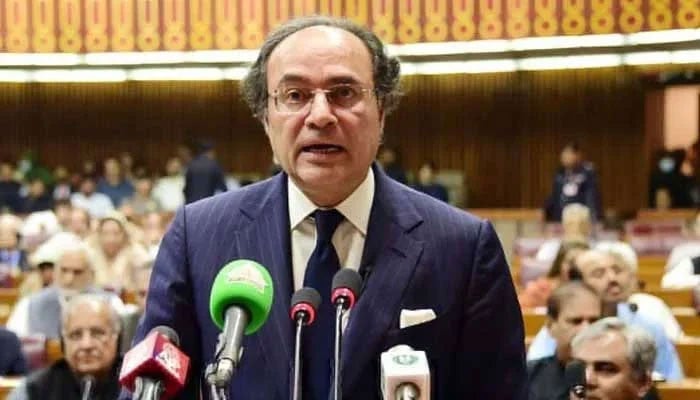
The scenes witnessed during the presentation of the federal budget were sadly familiar. As the finance minister rose to deliver his speech, opposition members shouted slogans, crowded the area around the speaker’s dais, and attempted to disrupt proceedings.
Such conduct has become a recurring feature of Pakistan’s parliamentary life. Similar scenes are witnessed almost every year during the presentation of the federal budget and the president’s address to parliament.
This behaviour is neither new nor effective. For nearly three decades, opposition parties have resorted to noisy protests inside parliament with remarkable regularity, often tearing copies of official documents and trying to drown out the speaker. Yet these tactics have never prevented a budget speech from being delivered or a presidential address from being completed. The government of the day invariably proceeds with its business.
One is therefore compelled to ask what purpose these disruptions serve. Parliamentary democracy already provides the opposition with ample opportunities to express disagreement. Following the budget presentation, the Leader of the Opposition and other members are given the floor to criticise government policies, challenge assumptions and present alternative viewpoints. Their arguments are far more likely to influence public opinion when delivered through reasoned debate rather than disorderly conduct.
The public increasingly views such behaviour as political theatre rather than serious parliamentary engagement. Legislatures are meant to be forums for debate, persuasion and accountability. When elected representatives reduce proceedings to shouting matches, they diminish the institution’s dignity and weaken public confidence in democratic governance.
Unfortunately, disruptive conduct is not confined to parliament. Political parties outside the legislature have also developed habits that are equally damaging to democratic culture. Whenever in opposition, major parties often resort to long marches, sit-ins, rallies and demonstrations to pressure governments into accepting their demands. While many of these demands may be legitimate, governments frequently respond by denying permission for public gatherings, setting up barriers, sealing routes and deploying large contingents of law-enforcement personnel to prevent assemblies from taking place.
The result is often confrontation, sometimes leading to the tragic loss of life and destruction of property. The pattern has become predictable: the opposition insists on demonstrating, the government insists on preventing it – and ordinary citizens pay the price.
Yet democratic societies are built on the recognition that dissent is not a threat but an essential component of governance. Peaceful assembly and political protest are fundamental rights, not privileges to be granted or withdrawn according to political convenience. Governments confident in their legitimacy should have little reason to fear peaceful demonstrations or demands to uphold basic rights.
There was a time when a different approach prevailed. During the tenure of PM Muhammad Khan Junejo, political demonstrations were generally allowed to proceed without unnecessary restrictions. Opposition rallies took place, parliament functioned with relative dignity, and political differences were managed through dialogue rather than confrontation. While that period was far from perfect, it demonstrated that democratic competition need not descend into perpetual conflict.
An even more disturbing development in recent years has been the conduct of certain law-enforcement agencies while dealing with political protests. Never before have we witnessed such frequent reports of police personnel damaging vehicles, using excessive force during arrests, or treating demonstrators with a degree of hostility more appropriate to a battlefield than a civilian environment. Particularly troubling are allegations of disrespectful treatment of women during crowd control operations or while conducting arrests of political opponents at their homes.
More alarming is the increasingly militarised language employed by some police commanders. Words matter. When law-enforcement personnel are repeatedly told that political protesters are enemies, the distinction between policing and warfare begins to blur. Once a political movement is viewed exclusively through a security lens, excessive force becomes more likely. The objective shifts from maintaining order to defeating an adversary. That is not the role of the police.
The police and the military serve fundamentally different purposes. A military commander prepares soldiers to confront and defeat an enemy. A police commander is responsible for enforcing the law while using the minimum force necessary to restore order. His/her task is not to destroy an opponent but to protect life, safeguard property and uphold the law.
The internationally accepted approach to civil disturbances follows a clear progression: persuasion, negotiation, crowd management, arrests, baton charge where necessary, tear gas and other non-lethal measures, and only as a last resort, the controlled use of firearms when there is an imminent threat to life. Even then, the purpose is to neutralise the threat, not to maximise casualties.
Recent tragedies have shown the consequences of abandoning these principles, including loss of life and damage to property on all sides. Excessive force may temporarily disperse a crowd or subdue protesters, but it rarely resolves the underlying political dispute or the demands for the restoration of fundamental rights. More often, it deepens grievance, fuels resentment and widens divisions within society.
Pakistan is now in its 79th year of independence. The time has come for all stakeholders, politicians, parliamentarians, governments, opposition parties, police forces, other law-enforcement agencies and those centres of influence that often shape events from behind the scenes to reflect on their conduct.
The lessons from parliament, the streets and the policing of political activity all point in the same direction. Opposition parties must replace disruption with persuasion, whether inside the legislature or in public campaigns. Parliamentary debate should take precedence over theatrical obstruction, while public protest should remain peaceful and within the bounds of law.
Governments, for their part, must stop treating dissent as disloyalty or sedition. A democratic state should facilitate lawful political expression rather than reflexively seeking to suppress it. Allowing peaceful assemblies and engaging opponents through dialogue reduces the likelihood of confrontation and strengthens public confidence in democratic institutions.
This, in turn, places a special responsibility on law-enforcement agencies. Police commanders must remember that citizens exercising political rights are not enemies to be subdued. Their duty is to maintain order impartially, protect lives and property, and ensure that constitutional freedoms can be exercised safely. Every institution, elected or unelected, must remain within the limits of its constitutional mandate. Democracies endure when power is exercised with restraint and when disagreement is managed through rules rather than force.
Pakistan’s democratic future will not be secured by louder slogans in parliament, escalating confrontations in the streets or harsher crackdowns by the state. It will be secured when institutions perform their proper roles, when political rivals accept each other’s right to compete, and when the state protects both order and liberty with equal commitment.
The true test of a democracy is not how it treats those who agree with it, but how it responds to those who dissent. The strength of a democratic state lies in preserving the distinction between political competition and warfare, between policing and combat, and between disagreement and enmity. That is the standard Pakistan must uphold and can no longer afford to neglect.
The writer is a former inspector general of police (Punjab) and a former Punjab caretaker home minister.