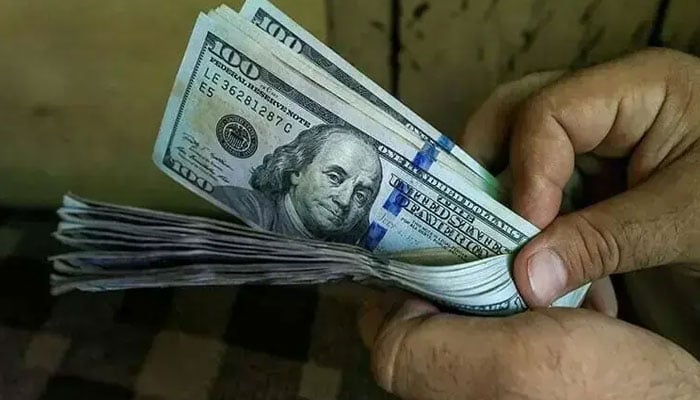
With only $16.4 billion in foreign exchange reserves held by the State Bank, exports of a meagre $30 billion, debt servicing, defence expenditures, and a per capita income of $1,900, the fragility of Pakistan’s economy is quite obvious.
While only Rs66.4 billion has been allocated as a recurring grant for the Higher Education Commission, Rs838 billion has been earmarked for the Benazir Income Support Programme (BISP). The asymmetry in expenditures on higher education and BISP reflects the federal government’s priorities. Hardly any money is left for running the federal and provincial governments and financing development programs.
For that purpose, Islamabad has to borrow from external sources. The fragility of Pakistan’s economy is growing with each passing day as the debt-to-GDP ratio increases and the government has to borrow domestically and from financial institutions such as the IMF, the World Bank and the Asian Development Bank. While the prices of petroleum products, gas and electricity are periodically raised to address budgetary shortfalls, the government has announced only a 7.0 per cent increase in salaries and pensions. When more than 40 per cent of the people of Pakistan are living below the poverty line, one can expect a surge of frustration in society. Ironically, less than 2.0 per cent of Pakistan’s GDP is spent on education, while more than 50 per cent of the federal budget is spent on loan repayments.
Given Pakistan’s alarming economic reality, it is high time to take bold, courageous steps to curtail non-developmental expenditures and enhance exports, foreign direct investment and foreign exchange reserves. Ironically, those living in their comfort zones with enormous privileges and perks lack the wisdom, capability and vision to pull Pakistan out of its growing economic predicament. Merely relying on remittances, the country cannot address issues that continue to fuel inflation, increase poverty levels and erode people’s purchasing power.
Claims about transforming Pakistan into an Asian Tiger by 2030 negate the ground realities of Pakistan’s economy. Pakistan’s foreign exchange reserves, per capita income, and GDP, which were higher than those of India, Bangladesh and Sri Lanka around four decades ago, have now declined. Countries such as South Korea, Singapore, Malaysia, Indonesia and the Gulf states, which were behind Pakistan on many economic indicators, are now far ahead.
India approached the IMF for the last time in 1991, but its next-door neighbour has remained under an IMF program for several decades. Borrowing from China and Saudi Arabia is another example of Pakistan’s failure to stabilise and enhance its foreign exchange reserves. With meagre foreign direct investment, Pakistan is unable to attract external funding, reflecting a lack of trust and confidence among foreign investors in the country’s ability to provide security and a positive investment environment.
How can Pakistan overcome its economic fragility, and why has the country, in almost 80 years of its existence, not achieved economic stability and vibrancy? How can Pakistan escape the damaging ramifications of its heavy reliance on IFIs and lending countries? How can Pakistan emerge as a hub of economic activity without proper planning and development and without leadership capable of introducing policies that can enhance exports, increase foreign exchange reserves, augment the tax-to-GDP ratio and follow a policy of self-reliance instead of external borrowing?
There is no shortcut to addressing Pakistan’s economic fragility, but those who wield power must meet three conditions if they want the country to be better off before celebrating 100 years of independence in 2047.
First, the state must reset its priorities and allocate at least 15 per cent of GDP to education. Without that, Pakistan will only produce people who are dependent on state support rather than scientists, engineers, doctors, researchers and other professionals. And it is not only a question of spending on education but also of eradicating corruption and nepotism, which are destroying the country’s education system at all levels. South Korea and Singapore are examples where a significant proportion of resources is devoted to education. Both countries spend more than 5.0 per cent of their GDP on education. By investing in Pakistan’s future, one can expect the country to turn around and excel in both the economy and technology.
Second, like China and India, which for decades pursued a policy of self-reliance, Pakistan must drastically slash its imports. Pakistan’s trade deficit further increases its debt burden. Pakistan needs to double its exports and considerably reduce its imports to create strategic space for its economy. Furthermore, the tax-to-GDP ratio needs to be enhanced, and the imposition of taxes on all forms of business activity is essential. For instance, there are millions of shops of all types in Karachi, but the majority of their owners do not pay any tax. Many of them do not even file income tax returns.
Third, there is a dire need to eradicate corruption and nepotism, which cause losses amounting to trillions of rupees. However, this is easier said than done. Unless the mafias operating at various levels are dismantled and the leadership adheres to proper work ethics and a culture of merit, Pakistan can neither achieve political nor economic stability, nor realise the objectives of good governance, a viable justice system and rule of law. For that purpose, there is a need for a paradigm shift in leadership at both the state and societal levels. That leadership must possess qualities such as hard work, intelligence, and integrity.
By adhering to a proper work ethic that encompasses efficiency and vision, Pakistan can certainly emerge as a vibrant state by the year 2047. Otherwise, if Pakistan continues to lack merit, accountability, rule of law and proper work ethics, the country will remain poor, illiterate, underdeveloped and dependent on external sources.
The writer is a meritorious professor of International Relations and a former dean of the Faculty of Social Sciences, University of Karachi. He can be reached at: [email protected]