The word rival comes from the Latin rivalis, meaning someone sharing a river. More than 4500 years ago, two Sumerian city-states, Lagash and Umma, fought over water. The conflict was immortalised in a stone carving depicting it. History’s earliest recorded water war carried a lesson that has lost none of its relevance. Those who control water often control the fate of those who do not.
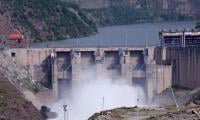
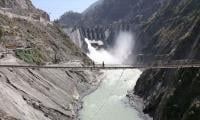
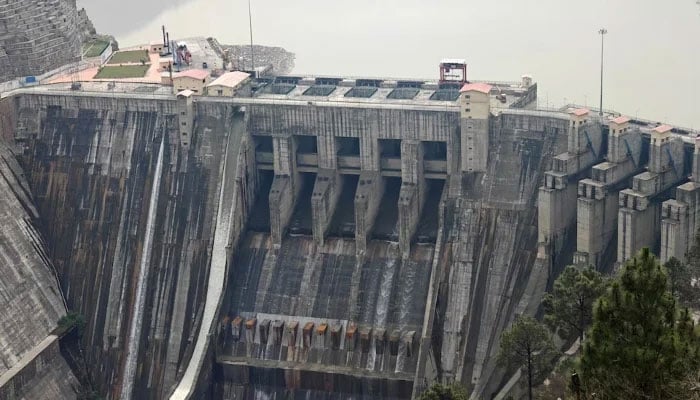
Jawaharlal Nehru famously called dams the temples of modern India. Today, these temples appear to serve not merely development but coercive leverage. Indian PM Manmohan Singh’s tenure saw the commissioning of the 900MW Baglihar Dam in 2008, followed by the 850MW Ratle project on the Chenab and the 1500MW Nathpa Jhakri facility. Together, they altered the region’s hydrological balance, increasing upstream leverage over downstream flows.
While Pakistan remained in policy slumber, India’s aqua war enabled new and expanded dams, tunnels and hydropower projects across the Indus basin. This tightened its control over river flows. Now, India’s water resources minister has declared that not a single drop of water would reach Pakistan in the coming years and that this objective was being actively pursued at the direction of Indian PM Narendra Modi.
Pakistan has long described any attempt to choke its water supply as an act of war. If the threat was existential, preparation should have followed. The real shock does not lie in India’s latest threat but in our long-standing reluctance to reduce the vulnerability that enabled it.
For decades, our power elite treated water as a diplomatic issue rather than what it was – a core national security concern. We thought we were playing our part by issuing condemnations, lodging objections and approaching international forums. Meanwhile, the rivers continued to flow, creating the illusion that the problem was managing itself.
The Indus system is the circulatory system of Pakistan’s economy. Our agriculture, industry, cities and food security depend upon it. Any state so reliant upon a resource in the hands of a longstanding adversary should have treated it as a permanent strategic vulnerability. At our complacent best, we behaved as though time itself were a guarantor.
We possess among the lowest water storage capacities of major agricultural nations. Seasonal surpluses routinely flow away unused. Rainwater harvesting remains underdeveloped and urban water management remains starkly inefficient, with staggering distribution losses. Reservoir projects have advanced at a pace that would be considered slow under normal circumstances and irresponsible under strategic ones.
The real failure is not the expected upstream threat. It is the neglect downstream.
No foreign government prevented us from constructing reservoirs. No rival blocked rainwater harvesting. No external power forced water wastage on farms or leakage in municipal systems. These failures were domestic. They resulted from stark neglect, indifference and a chronic inability to prioritise long-term national interests over immediate political calculations.
For years, India expanded hydraulic infrastructure on rivers flowing towards Pakistan. Disputes over upstream projects repeatedly surfaced. A serious state would have treated each dispute as a reminder of its own vulnerabilities. Every new upstream project should have accelerated downstream investment in storage, conservation, efficiency and resilience. Every indication of future pressure should have strengthened national preparedness. Instead, strategic time was squandered.
Few national resources have been wasted as recklessly. The solutions were never obscure. These included more reservoirs, modern irrigation, canal lining, rainwater harvesting, wastewater recycling, stronger groundwater management, smarter crops, urban conservation and improved forecasting.
Countries facing harsher climatic conditions have transformed scarcity into discipline. We transformed abundance into complacency. Rivers were treated as permanent guarantees rather than strategic assets requiring stewardship. The result: a dangerous gap between vulnerability and preparedness. Responsibility for this condition rests with our power elite.
Governments, slogans and the facade of power changed. The underlying pattern, however, remained remarkably constant. Immediate political interests repeatedly defeated long-term planning. Projects measured in decades struggled to compete with ambitions measured in election cycles or ruling tenures. Preserving power remained a greater priority than preparing the nation.
No state can control a rival but every state can control its preparedness. That is the only distinction that ultimately matters. Some would say India lacks the will and infrastructure to implement its threat. Technical, legal, environmental or international constraints will stall its execution. That is not the point. National security cannot rest upon assumptions regarding an adversary’s limitations. It must rest upon confidence in one’s own preparations.
Pakistan faces a water security crisis as water becomes an increasingly potent instrument of regional power. As rivers shrink and populations grow, control over water may prove more consequential than control over territory.
India’s suspension of the Indus Waters Treaty, cessation of data sharing and rejection of international rulings make one reality unavoidable – external verdicts carry little force without compliance. It is naive to assume otherwise.
Pakistan cannot depend on arbitration or expectation of enforcement. Its only path lies inward in building storage, strengthening resilience and securing water through its own capacity and urgency. New Delhi’s latest stated intent is a brutal reminder of vulnerabilities we chose to ignore for decades. The real surprise is not India’s conduct. It is our persistence in treating the foreseeable as unforeseen.
The writer explores the forces which shape power, belief and society.
He can be reached at:[email protected]