Japan is a nation of around 124 million people, a country that suffered total devastation during the Second World War. The destruction was not only physical; the nation also went through deep grief, shock and collective trauma.
Yet, within roughly 25 to 30years after the war, Japan had risen to become the world’s second-largest free-market economy after the US. How Japan achieved this is a separate and much deeper debate, but one thing is clear: it required a particular mindset, discipline, national spirit and collective resolve.
During a visit to Japan we travelled to three major cities: Osaka, which is part of a metropolitan region of almost 19 million people; Kyoto, a relatively small but historically rich city, with the Greater Kyoto area having a population of around 3-4 million people; and Tokyo, one of the world’s largest urban centres, with more than 37 million in the wider metropolitan region. These visits gave us a personal opportunity to observe Japan not only as a developed economy, but also as a disciplined and deeply organised and highly caring society.
The reflections in this travelogue are based on personal experiences during that visit. These are simple lessons drawn from daily life, from streets, trains, shops, restaurants, places of worship and ordinary encounters with people.
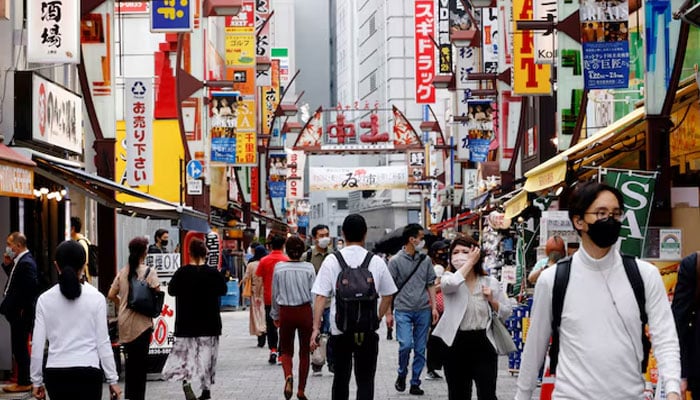
Despite being one of the most advanced countries in the world, Japan takes great pride in its language and cultural identity. Wherever you go, whether in markets, departmental stores, restaurants, railway stations, public places or corporate offices, people generally speak Japanese. The first and most striking observation is cleanliness. In public places, dustbins are not visible everywhere. You do not find trash cans on every road, station, street or small lane. Yet the streets remain remarkably clean. This is part of a broader government policy and civic system implemented across Japan.
This culture of hygiene is also visible in all departmental stores and indoor shopping places. In the fitting rooms of departmental stores, when customers try clothes, they are required to remove their shoes. Disinfectant is used to clean hands and feet, and gloves are provided.
The same respect for cleanliness and hygiene is visible in places of worship. The ancient temples we saw were extremely clean, orderly and well-maintained inside and out. Public transport gives the same message. Whether it is the underground train, metro or other systems, everything is modern, clean, quiet and well organised. Passengers read, sit silently, use phones without disturbing others, or simply mind their own business.
One unique observation was during an afternoon metro journey at around 2:30pm. When my wife and I entered the metro, it was almost full, and I noticed that I was the only male passenger there. Nearly all the passengers were women. To me, it reflected an important aspect of Japanese society: women are active participants in public life. They travel independently, work, shop, manage their daily responsibilities and use public transport with confidence.
Japan’s hospitality and customer service are deeply impressive. Whenever we were lost or trying to find a particular location, people responded with remarkable kindness and patience. Often, they walked with us to guide us properly. Two or three times, people walked almost half a kilometre to make sure we reached the right place.
A small incident at 7-Eleven reflects the same attitude. We had gone there to buy a new SIM card. In the meantime, my old SIM card fell on the floor. The young man at the counter came outside, bent down, and searched for it for five or six minutes. After some effort, he found it and returned it. He could have ignored it, but he treated that small item as important.
Safety is another defining feature. If someone leaves something somewhere, no one seems likely to pick it up and take it away. In fact, if you forget something, people may come running after you to return it. This happened a couple of times. Traffic discipline is equally remarkable. At zebra crossings and traffic lights, people wait until the pedestrian light turns green. They do not cross even if the road is completely empty.
Shopping also reveals thoughtful systems. Whether buying a ticket, groceries or something from a shop, a small tray is often placed in front of the customer. The customer places money or card in that tray, and the cashier returns change or receipt through the same tray. In many places, staff also wear gloves while handling items.This system appears to serve a practical purpose: it reduces direct hand-to-hand contact, keeps the exchange more organised, and reflects respect for hygiene and personal space. Another very unique point is the culture around tipping. Tipping is not allowed, neither demanded. When asked, many workers told us that the salary or wages they receive are what they are meant to live on.
In all taxis, doors open automatically. Once, when we tried to open the door by ourselves, the driver stopped us and said not to touch the handle because the door would open automatically. When the we sat inside, the door closed automatically as well. A drive along the memory lane was the presence of well preserved Toyota Cressidas and Toyota Crowns in mint condition serving as taxis, a common sight back home decades ago.
One powerful observation was of an elderly man cleaning the subway. The place was already extremely clean, yet he was still doing his work with full determination, focus and commitment.
Like many places around the world, Japan also has a visible Pakistani presence, mostly through restaurants. As usually happens, after a few days, we naturally felt the urge to eat something from our own staple diet. When we started searching for Pakistani cuisine, we came across a halal restaurant named Sultan in Tokyo which served beef nihari made from Wagyu beef, one of the world’s most famous and premium-quality beef varieties. For us, visiting that restaurant was a very memorable experience. It reminded us that Pakistanis have made their presence felt in different parts of the world, including Japan.
A separate observation revealed Dubai’s global brand power. During a short break for ice cream or something light, Dubai-style chocolate was being sold in different forms, including shakes and cones. When we told the shop girl that we are from Dubai, she became excited and took a picture with us.
Japan shows the world the power of civic discipline, tolerance, national character, ownership and a mindset where the country comes first, while Dubai shows the power of vision and branding. For Pakistan, both lessons matter.
Japan’s greatest lesson is simple: people do the right thing even when nobody is watching. If Pakistan can embrace that single principle in our homes, schools, businesses and public spaces, we will have taken a significant step towards becoming the nation we aspire to be.
The writer is a former global corporate executive (Unilever, PepsiCo, Yum! Brands), a mental health advocate and a founding board member of Taskeen, a pioneering organisation focused on emotional well-being in Pakistan.