The recent statement by India’s Water Resources Minister C R Patil that New Delhi is working to ensure that “not a single drop of water” reaches Pakistan has once again reignited anxieties across South Asia.
In Pakistan, predictable reactions have followed: television debates, emotional rhetoric, social media outrage and renewed declarations that any attempt to alter water flows would constitute an ‘act of war’. While public concern is understandable, policymakers must resist the temptation to become trapped in symbolic battles and instead focus on the deeper strategic, legal, technical and institutional realities surrounding the Indus Basin.
States rarely lose because of external threats alone. They lose when they fail to prepare for foreseeable risks. The current debate surrounding the Indus Waters Treaty (IWT) is one such example in which Pakistan risks being consumed by rhetoric while neglecting reforms that should have begun decades ago.
To understand the significance of India’s recent statements, one must first appreciate the remarkable history of the Indus Waters Treaty. Signed in 1960 under the World Bank, the treaty survived multiple wars, military standoffs, nuclear crises and periods of extreme political hostility between India and Pakistan. Few international agreements have demonstrated comparable resilience. The treaty allocated the three eastern rivers (Ravi, Beas and Sutlej) to India while granting Pakistan rights over the western rivers (Indus, Jhelum and Chenab), subject to limited Indian usage for non-consumptive purposes such as hydropower generation.
At the time, many Pakistani policymakers viewed the treaty as a painful compromise. Yet history suggests it was also one of the most successful water-sharing agreements ever negotiated between hostile neighbours. For more than six decades, it provided predictability to millions of farmers, industries and households dependent on the Indus Basin. It transformed water from a permanent source of conflict into a managed dispute governed by agreed procedures and technical mechanisms.
India’s decision to suspend its participation in the treaty following deteriorating bilateral relations represents a significant departure from this historical framework. However, there is a crucial distinction that often gets lost in public discourse. Political declarations are not the same as hydrological realities.
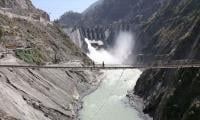
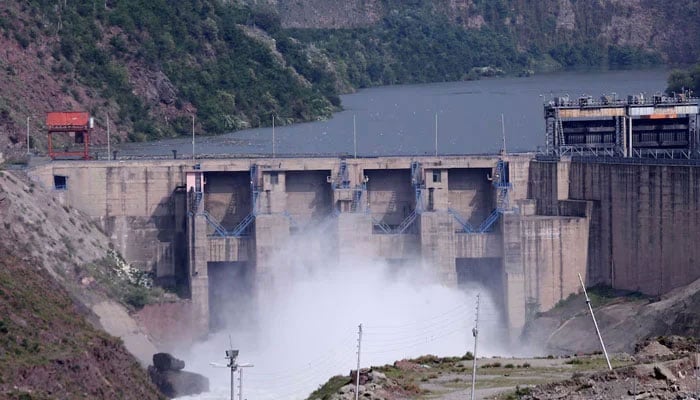
Contrary to popular fears, India currently lacks the infrastructure necessary to completely stop the flow of western river waters into Pakistan. Even Indian experts acknowledge this limitation. Existing run-of-river hydropower projects such as Salal, Baglihar and Kishanganga possess limited storage capacity. They can influence the timing of water releases and create short-term fluctuations, but they cannot permanently divert or withhold the vast volumes flowing through the Indus system.
The Chenab River alone carries tens of billions of cubic metres of water annually. Diverting such quantities requires massive reservoirs, extensive canal systems, pumping infrastructure, environmental clearances and enormous financial investments. The proposed Chenab-Beas transfer projects being discussed in India are not engineering works that can materialise overnight. As even Indian officials acknowledge, implementation would likely extend well into the next decade.
This does not mean Pakistan should be complacent. On the contrary, India’s statements should be interpreted not as an immediate hydrological threat but as a strategic signal. New Delhi appears to be exploring ways to maximise its utilisation of waters allocated to it under existing interpretations, while simultaneously creating leverage over Pakistan by sowing uncertainty.
The real danger lies not in an overnight water blockade but in gradual cumulative impacts. Increased storage, enhanced regulation of river flows, seasonal manipulation of releases and future diversion projects could collectively reduce predictability for Pakistan’s agricultural sector. In a country where nearly 90 per cent of food production depends on irrigation, even moderate disruptions can carry significant economic consequences.
Yet focusing exclusively on India risks obscuring Pakistan’s own failures.
For decades, Pakistan has behaved as though water scarcity is solely an external problem. This narrative is politically convenient but factually incomplete. The country loses enormous quantities of water every year due to inefficiencies within its own system. Outdated canal infrastructure, seepage losses, poor water accounting, inadequate storage capacity and unsustainable groundwater extraction have collectively weakened national water security far more than any current Indian project.
Pakistan’s per capita water availability has declined dramatically from over 5,000 cubic metres in the 1950s to well below internationally recognised water scarcity thresholds today. This decline cannot be blamed solely on India. Population growth, climate change, institutional fragmentation and decades of underinvestment have all contributed significantly.
Perhaps the most uncomfortable truth is that Pakistan stores far less water than many comparable countries. While nations facing water stress typically maintain substantial reservoir capacity to manage seasonal variability, Pakistan remains dangerously vulnerable to floods during wet periods and shortages during dry periods. Political disputes over dam construction have repeatedly delayed investments that should have been completed years ago.
The challenge becomes even more complex when viewed through the lens of international law. Pakistan’s position that the Indus Waters Treaty remains legally binding is supported by established principles of treaty law. Under international legal norms, treaties generally cannot be terminated unilaterally unless specific withdrawal provisions exist. The treaty contains no clear mechanism allowing either party to simply walk away.
The treaty also created permanent institutions and dispute-resolution mechanisms precisely to manage disagreements. From Pakistan’s perspective, India’s declaration of suspension lacks legal standing because the treaty itself remains in force until mutually modified or replaced.
However, international law is rarely self-enforcing. This is a reality policymakers must understand. Legal arguments matter, but they are only one component of statecraft. Successful countries combine legal strategy with diplomacy, technical preparedness, economic resilience, and international coalition-building.
Pakistan’s response, therefore, must involve active engagement with international institutions, multilateral partners, environmental organisations, and legal forums to reinforce treaty compliance. The objective should be sustained diplomatic pressure. Water security should be treated as a technical, economic, environmental and national planning issue.
Climate change further complicates the equation. Himalayan glaciers are retreating. Weather patterns are becoming increasingly erratic. Extreme floods and prolonged droughts are becoming more frequent across South Asia. These developments threaten both India and Pakistan, regardless of political disputes.
This is why policymakers in Islamabad should avoid becoming trapped in a reactive posture. The more productive approach would involve a comprehensive national water security strategy built around five priorities. First, Pakistan must accelerate investments in water storage infrastructure. The debate over dams has consumed decades, while water availability has steadily declined. Strategic storage is no longer optional; it is essential.
Second, irrigation modernisation should become a national priority. Large portions of Pakistan’s irrigation network were designed for a different era. Precision irrigation, canal rehabilitation, digital monitoring and improved water accounting can significantly reduce losses.
Third, groundwater governance must be strengthened. Unregulated extraction is depleting aquifers across many agricultural regions. Without intervention, groundwater depletion could become a greater threat than any upstream diversion.
Fourth, Pakistan should expand its diplomatic engagement beyond bilateral channels. Water security increasingly intersects with climate policy, sustainable development, food security and environmental governance. Building international support requires sustained engagement across all these domains.
Fifth, policymakers must integrate water security with broader economic planning. Agriculture, industry, energy, trade and climate adaptation policies should be coordinated rather than developed in isolation.
The lesson from six decades of the Indus Waters Treaty is not merely that agreements matter. It is that institutions, planning and preparedness matter even more. Pakistan should defend the treaty vigorously, but it should also recognise a fundamental reality: no international agreement can substitute for sound domestic governance.
For Pakistan, the path forward is clear. Defend the treaty. Pursue international legal remedies. Engage diplomatically. And fix the structural weaknesses within the national water system.
The writer is a trade facilitation expert, working with the federal government of Pakistan.