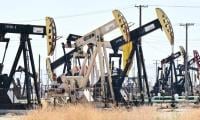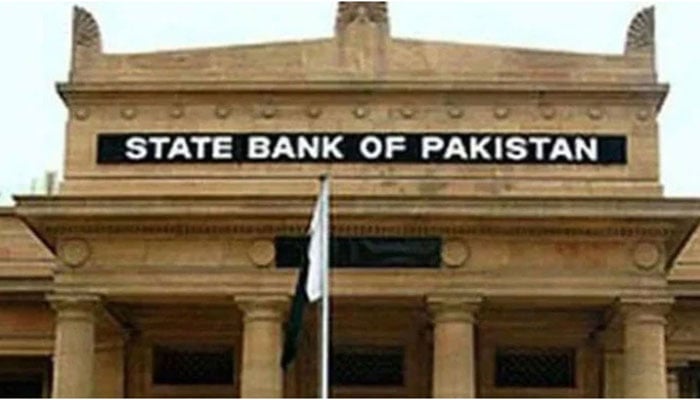
The State Bank of Pakistan’s Monetary Policy Committee (MPC) on Monday left its benchmark policy rate unchanged at 11.5 per cent. This MPC meeting came right on the heels of the latest budget. The MPC statement noted that while global oil prices have eased following news of an impending thaw between the US and Iran, they remain elevated compared to pre-conflict levels. The impact of the conflict is now also reflected in recent economic indicators, with headline inflation rising into double digits in April and May, while core inflation has edged up. According to the MPC, economic activity is now showing signs of moderation, reflecting the impact of elevated prices, austerity measures, and prevailing economic uncertainty. As such, the committee observed that the macroeconomic outlook was largely unchanged from its previous meeting and assessed that the current monetary policy remains appropriate to guide inflation towards the target range of 5.0 to 7.0 per cent over the medium term. This seems prudent considering that inflation is already quite high and one does not know if the current peaceable mood between the US and Iran will last. After all, this is not the first time we have been at this stage.
Predictably, not everyone is happy with the move to keep rates stable. The Federation of Pakistan Chambers of Commerce and Industry (FPCCI) president has reportedly said that a static, double-digit policy rate is detrimental to the country’s economic survival and that failure to ease borrowing costs would only spur de-industrialisation and undermine export targets. Admittedly, exports and investment is something that the country desperately needs. The outgoing fiscal has seen a growth rate of just 3.7 per cent, barely enough to keep up with the country’s rising population, while the new budget has set a growth target of 4.0 per cent. While the latest budget was not exactly short on tax relief for the salaried and businesses, real-estate buyers and sellers and small-medium sized enterprises, whether it will be enough to accelerate growth remains to be seen. Government officials have said that Pakistan is ‘in a very good place’ fiscally after two years of economic stabilisation measures and that the main focus is now shifting towards sustainable growth driven by exports, while continuing structural reforms in taxation, energy, state-owned enterprises and public finances. However, even they think it is still too early to revise the budget based on any upside from a potential end to the conflict in the Middle East. They have also noted that damaged energy infrastructure means supply chains will take time to normalise.
What all this shows is that the country’s economic prospects are closely tied to the regional political and economic situation. This goes for both the fiscal and monetary sides of things. The relief given in the latest budget may well fail to reach the intended targets if any savings are swallowed up by accelerating energy and other prices. It would also be hard to lower the policy rate in such an environment. Given how closely this is tied to investment and exports, it is unlikely that Pakistan will see the kind of sustainable export-led growth that the government wants with an 11.5 per cent policy rate. However, despite the country’s tremendous diplomatic efforts to secure a peace deal, it cannot control what the US or the Israelis decide to do. What it can control is how quickly the reform agenda progresses and whether or not Pakistan can move towards a less fossil-fuel-oriented energy environment. These are things that the country has to do anyway, but the current situation only highlights the urgency of doing so. The latest budget has made some decent steps towards a fairer tax system and broadening the tax net. The government must keep the momentum going.