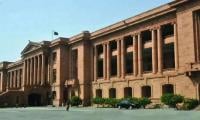
The Sindh High Court (SHC) has observed that the Constitution guarantees not merely survival but also the right to a dignified life, timely medical treatment and functional healthcare services, imposing a continuing obligation on the State to ensure that public hospitals are not merely symbolic institutions but fully functional service delivery units.
The observation came on a petition seeking a court injunction regarding the deteriorating condition of public healthcare facilities in Naushehro Feroze district, particularly the district headquarters (DHQ) hospital and taluka headquarters (THQ) hospitals, including the one in Kandiaro.
The petitioner had submitted that the government hospitals, instead of providing essential and basic healthcare services, were operating with severe deficiencies, thereby forcing patients to seek costly private treatment or travel long distances to other hospitals, resulting in avoidable hardship and loss of precious lives.
He submitted that both the DHQ and THQ hospitals were critically under-equipped, and lacked emergency services, trauma centres, ICUs, maternity and child care units, diagnostic facilities such as X-ray, CT scan, MRI and echocardiography, blood banks and even basic medical supplies and medicines.
A division bench of the high court headed by Justice Adnanul Karim Memon after hearing the arguments of the counsel and health department officials observed that the government officials had asserted that taluka hospitals in the district were functional and provided multiple healthcare services, and that emergency cases were managed and referred to tertiary care hospitals when necessary.
The bench observed that this indicated the presence of certain services, but it simultaneously reflected a systemic limitation, as critical patients were routinely referred to distant hospitals, demonstrating a lack of self-sufficient emergency and trauma care at the district/taluka level, which was a requirement of the day.
The high court observed that such repeated referrals without adequate stabilisation facilities may amount to a structural deficiency in emergency healthcare delivery, particularly in a district with a significant population and frequent emergency cases. The SHC observed that the absence of fully functional trauma centres, ICU-level care, and specialised emergency management further raised serious concerns regarding compliance with constitutional obligations.
The high court observed that although the respondents claimed that medical staff were performing duties diligently, no effective mechanism had been shown that ensured attendance, monitoring or accountability of healthcare personnel, particularly during night shifts and emergencies.
Regarding allegations of mismanagement of funds and inadequate utilisation of resources, the SHC observed that though officials denied the allegations, they remained unexplained in substance.
The bench observed that the DHO/health secretary shall take pains to call explanations from the delinquent staff, including medical officers, and if they remained adamant, they shall be told to report to the administrative department for disciplinary action to be culminated to its logical conclusion as per the law, and they shall be replaced by others to work with dedication.
The high court observed that overall, the record revealed not a complete absence of healthcare services, but a fragmented, referral-dependent system where primary and secondary hospitals were unable to provide comprehensive emergency care, resulting in delays and avoidable risks to human life.
The SHC observed that this fell short of the constitutional requirement of accessible, timely and effective healthcare delivery, and so effective measures were required to be undertaken by the DHO/Sindh health secretary forthwith.
The high court directed the chief secretary, health secretarty and relevant district health officers to introduce biometric attendance and real-time monitoring of medical staff, ensure strict enforcement of duty rosters, and take action against absenteeism with zero tolerance.
The high court directed the competent authorities to ensure the establishment of a functional emergency trauma stabilisation unit at the DHQ Hospital with the availability of an ICU-level emergency care, essential life-saving medicines and functional diagnostic equipment.
The SHC ordered that an independent audit of hospital resources, procurement and fund utilisation shall be conducted, and a transparent reporting system shall be implemented covering patient care, referrals and availability of facilities.
The high court observed that a district-level monitoring mechanism may also be established to ensure accountability and periodic inspection of hospitals by the DHO concerned. The court directed that the proposal for a satellite trauma centre shall be pursued on priority, and referral systems shall be strengthened to ensure that only stabilised patients were transferred to tertiary care hospitals, for the reason that health care was not a matter of administrative formality but a constitutional imperative tied to human life and dignity.
The SHC observed that the present case reflected the need for structural strengthening and effective governance rather than mere denial of deficiencies to ensure meaningful realisation of the right to health for the people of Naushehro Feroze district.