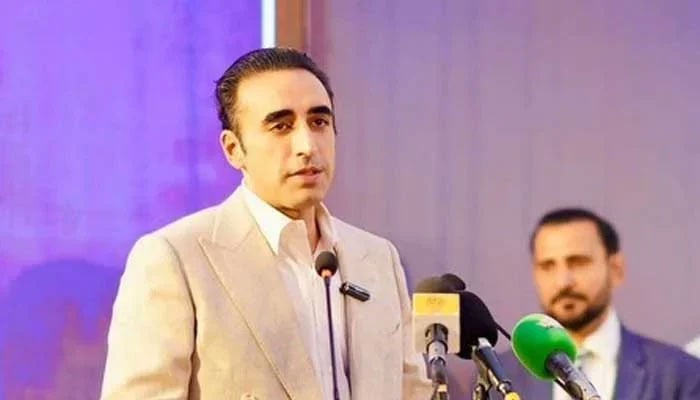
PPP Chairman Bilawal Bhutto Zardari’s statement that the PPP has emerged as the largest political force in Gilgit-Baltistan made news headlines across the country. According to preliminary election results, the PPP secured 10 seats in the 24-member Gilgit-Baltistan Assembly, making it the single largest party in the region. With 13 seats required to form a government, political negotiations are now expected to determine the final shape of the next government.
The PML-N secured six seats, while seven independent candidates also emerged victorious. Although some political analysts are speculating about possible alliances, I expect several independent candidates to join the PPP, strengthening its position as the largest parliamentary force. Prime Minister Shehbaz Sharif’s congratulatory message to the PPP following its impressive performance has further fueled discussions about the future political landscape in GB.
Undoubtedly, the return of the PPP as the leading political force in GB is a significant achievement not only for the party leadership but also for thousands of dedicated PPP workers who have remained committed to the party through changing political circumstances.
Geographically, strategically, and economically, GB is one of the country’s most significant regions. Its high mountains, crystal-clear lakes, and snow-covered peaks symbolise Pakistan’s natural beauty, while its people are renowned for their hospitality, patriotism and resilience.
I vividly recall the historic 2009 elections when a provincial-style legislative assembly was introduced in Gilgit-Baltistan for the first time. The PPP emerged victorious and formed the government. Under the leadership of then-president Asif Ali Zardari, GB was granted significant administrative and constitutional powers, laying the groundwork for enhanced political participation and governance reforms. Many analysts still regard those reforms as a milestone in the region’s democratic evolution.
Subsequently, the PML-N won the 2015 elections, followed by the PTI in 2020. These outcomes led to a popular perception that whichever party governed Islamabad would inevitably dominate elections in GB. Strong and mutually beneficial relations between GB and the federation remain essential to the national interest. A significant portion of the region’s economy is linked to federal development funding, infrastructure projects, public-sector employment and policy support. Numerous roads, bridges, power projects, educational institutions and healthcare facilities have been developed through federal assistance.
The strategic significance of the area has increased further with the China-Pakistan Economic Corridor (CPEC), the flagship project of China’s Belt and Road Initiative. As the gateway to CPEC, Gilgit-Baltistan occupies a critical position in regional connectivity and international economic development.
That’s why many analysts initially predicted results based on past electoral trends. However, the political atmosphere changed remarkably when Bilawal Bhutto Zardari personally landed in GB to lead the election campaign. He directly engaged with local communities, highlighted the concerns of youth, women and remote populations, and promised continuity in development initiatives.
First Lady Aseefa Bhutto Zardari’s active participation further energised the campaign and strengthened the party’s grassroots mobilisation. Her outreach efforts generated enthusiasm among party supporters and attracted considerable public attention.
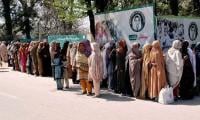
In my view, the people of GB, known for their high literacy rates, peaceful disposition and extraordinary hospitality, have demonstrated their commitment to democratic values. By participating enthusiastically in the electoral process, they have reaffirmed their belief in the power of the ballot.
The latest results suggest that voters continue to evaluate political parties based on their performance, outreach and ability to address local concerns. The PPP’s successful return represents a renewal of public trust. The people of GB seek development, employment opportunities, improved infrastructure, quality education, better healthcare services and expanded tourism potential.
As the government formation process begins, all political stakeholders must respect the public mandate and work collectively for the constitutional rights, sustainable development and long-term prosperity of Gilgit-Baltistan. The region’s future depends on a shared commitment to progress, stability and better opportunities for its younger generations.
The writer is a member of the National Assembly and patron-in-chief of the Pakistan Hindu Council. He tweets/posts @RVankwani