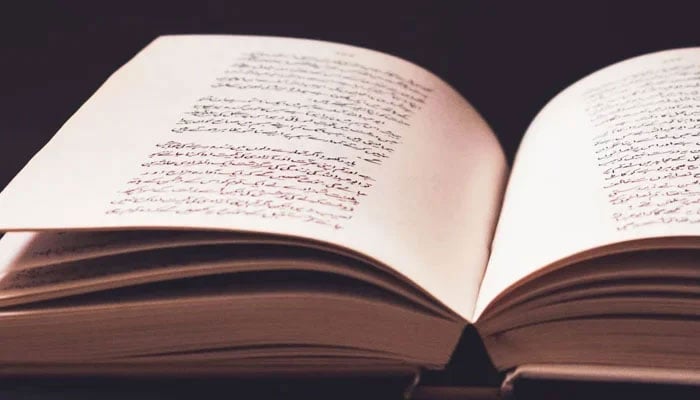
I recently had the opportunity to attend the launch of Vellichor at the Karachi Press Club – an event that celebrated not only literature but also the enduring importance of books, libraries, newspapers and the culture of reading.
The theme of the gathering was both timely and thought-provoking, prompting reflection on the role that libraries and books continue to play in shaping individuals and societies.
There is something profoundly moving about walking into a library. The silence is never empty; it is filled with the voices of generations. Every shelf carries stories of triumph and tragedy, discovery and imagination, wisdom and warning. A library is more than a collection of books; it is a living archive of humanity’s journey through time.
It is often said that great leaders are readers. History offers ample evidence of this truth. Behind many transformative leaders, thinkers, scientists, and visionaries lies a lifelong relationship with books. Reading expands horizons, challenges assumptions, and cultivates the ability to think critically. It allows us to travel across continents, civilisations and centuries without ever leaving our chair.
Books possess a unique quality that few other mediums can replicate. Their pages carry the weight of history, the depth of human emotion, the richness of culture and the creativity of the arts. They preserve the memories of nations, document the evolution of societies and safeguard traditions that might otherwise fade with time. Long after empires have risen and fallen, books remain faithful custodians of collective memory.
Libraries, in particular, serve as guardians of this heritage. They democratise knowledge by making it accessible to all, regardless of social or economic status. For countless students, researchers and curious minds, libraries are sanctuaries where learning is limited only by one’s willingness to explore. In many ways, libraries are among the most powerful institutions of civilisation because they empower people not through force, but through knowledge.
In today’s digital age, however, discussions about books and libraries often invite comparisons with technology. Such comparisons need not be adversarial. Digitalisation has brought remarkable benefits. Information can now be accessed instantly, research can be conducted more efficiently, and educational resources can reach remote corners of the world. These advancements have transformed learning in ways that previous generations could scarcely imagine.
Yet acknowledging the advantages of digital technology does not diminish the value of physical books. Rather, it highlights the need for balance. A printed book offers a different kind of engagement – one that is deliberate, immersive, and often free from the distractions of notifications, hyperlinks, and endless scrolling. Many educators and researchers have observed that reading physical books can improve concentration, comprehension and long-term retention. The tactile experience of turning pages creates a deeper connection with the material and often encourages more reflective reading.
Beyond academic benefits, reading nurtures qualities that societies desperately need: patience, empathy, imagination and intellectual curiosity. A person who reads gains exposure to diverse perspectives and experiences, making them more understanding of others and more capable of making informed judgments. In an era when information is abundant but attention is scarce, the habit of reading remains a powerful tool for personal growth.
Books also remind us that knowledge is not merely data. It is context, interpretation and understanding. A search engine may provide an answer in seconds, but books often teach us how to ask better questions. They encourage exploration rather than mere consumption, reflection rather than reaction.
Perhaps this is why libraries continue to matter. They are not relics of a bygone age; they are bridges between the past and the future. They preserve our cultural and intellectual inheritance while inspiring new generations to contribute their own chapters to humanity’s story.
The event surrounding Vellichor served as a meaningful reminder of these truths. Its focus on preserving books, libraries, newspapers, letters and the culture of reading highlighted an issue that deserves greater public attention. As societies race toward technological advancement, we must ensure that our pursuit of innovation does not come at the expense of the habits and institutions that nurture wisdom.
The future need not be a choice between printed pages and digital screens. The most enlightened path lies in embracing both. Technology can broaden access to knowledge, while books and libraries can continue to cultivate depth of understanding. Together, they can complement one another in the shared mission of educating minds and enriching lives.
For in the end, a library is far more than a building and a book is far more than paper and ink. They are vessels of memory, carriers of culture and companions in humanity’s endless quest for knowledge. And as long as there are readers willing to turn a page, the conversation between the past, present, and future will continue.
The writer is a leading Pakistani industrialist. He can be reached at: [email protected]