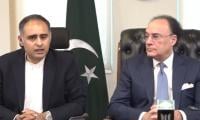
Members of the Sindh Assembly from both treasury and opposition benches came together at a pre-budget policy dialogue to call for a decisive shift in fiscal priorities, placing population stabilisation and human development at the centre of the Sindh Budget 2026–27.
The dialogue, titled “Investing in People: Pre-Budget Policy Dialogue with Sindh Assembly Members,” was convened by the Population Council with the support of UNFPA and served as a platform to translate Sindh’s progressive legislative framework on population into concrete budgetary allocations and measurable implementation.
Addressing the session as chief guest, Dr. Azra Fazal Pechuho, Sindh minister for health and population welfare, emphasised that population must be treated as a cross-sector development priority, closely linked to employment, food security, education, and climate resilience. “Population is not a vertical issue—it affects every sector and every development outcome. Unless we integrate it into our fiscal planning, we will not achieve sustainable progress,” she said, while highlighting that Sindh already has aligned population and health policies in place and must now focus on implementation and results.
She stressed the importance of male engagement in family planning, noting that the province is institutionalising counselling for men through health facilities and community outreach. “Family planning is a shared responsibility, and sustainable change requires informed decision-making by both partners,” she added, urging parliamentarians to incorporate population issues into their budget speeches and to prioritise achieving sustainable fertility levels for long-term economic stability.
Dr. Zeba A. Sathar (T.I.), Senior Country Advisor at the Population Council, in her welcome remarks framed rapid population growth as a broader issue of political economy and equity in public spending. “The budget is not just an accounting exercise—it is a statement of policy direction. We must ask whether our allocations reflect the realities of our most vulnerable populations,” she noted, highlighting that uneven investments have widened district-level disparities, particularly in the face of climate vulnerability and rural poverty. She underscored that Sindh’s integrated leadership of health and population sectors presents a unique opportunity to lead on delivery and demonstrate measurable outcomes.
Presenting the economic case, Dr. Hanid Mukhtar, senior economist and former World Bank official, underscored the need to correct fiscal misalignment in Pakistan’s development priorities. “This is not a question of resources but of priorities. Despite clear evidence of its economic returns, population planning remains one of the least funded sectors,” he stated, noting that investments in family planning yield high social and economic returns and are critical for poverty reduction and inclusive growth. He cautioned that without addressing population dynamics, gains in education, health, and economic development will remain constrained.
Providing the policy context, Dr. Jamil Ahmad Chaudhry, programme specialist for sexual and reproductive health at UNFPA, highlighted Pakistan’s commitments under global and national frameworks, including FP2030 and the CCI Action Plan, while drawing attention to the significant financing gap in population programming. “Pakistan has made strong policy commitments, but the challenge now is implementation—particularly ensuring last-mile access and reaching underserved populations,” he said, emphasising the need for greater domestic resource mobilisation and stronger accountability mechanisms. He also acknowledged Sindh’s leadership in advancing progressive population legislation, stressing that the focus must now shift to translating these gains into effective service delivery.
The plenary discussion, moderated by Ms. Tanzila Umi Habiba, Member Sindh Assembly, reflected strong cross-party consensus and that the key challenge lies not in policy formulation but in implementation, monitoring, and accountability. Parliamentarians called for aligning budgetary allocations with human development outcomes, strengthening governance mechanisms, and prioritising underserved districts. They emphasised the importance of investing in women’s economic empowerment, linking social protection programmes with health and family planning services, and ensuring that fiscal frameworks incentivise performance and equity. The dialogue concluded with a shared commitment among lawmakers to advocate for a pro-people, evidence-based budget that places population stabilisation at the core of Sindh’s development agenda and ensures that policy commitments are translated into tangible results for citizens.