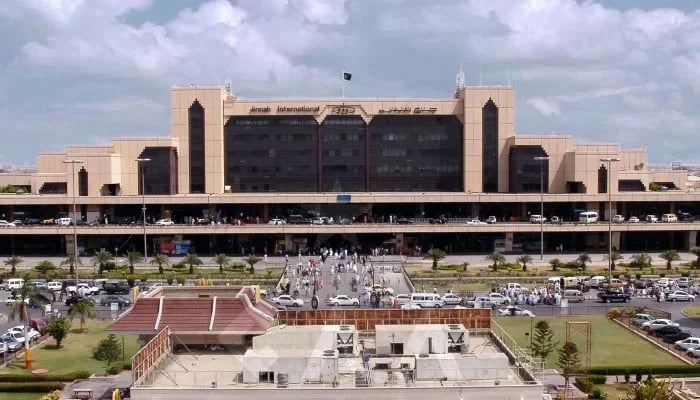
The Sindh health authorities have decided to ensure 24 hour ambulance availability at the apron area of Jinnah International Airport, Karachi, strengthen passenger surveillance systems and improve availability of personal protective equipment (PPEs) and emergency supplies as part of intensified preparedness measures against the emerging Ebola threat, officials said on Monday.
The decisions were taken during a high level coordination meeting held at the provincial health desk at the airport under the chairmanship of Sindh Special Secretary Health Fuad Ghaffar Soomro following the recent Ebola outbreak declared as a Public Health Emergency of International Concern (PHEIC).
Officials said the Sindh health department had enhanced Ebola surveillance, airport screening and rapid response mechanisms to prevent possible entry and spread of Ebola Virus Disease (EVD), one of the world’s deadliest infectious diseases with a high fatality rate.
The meeting was attended by senior officials of the Sindh health department, Border Health Services, Pakistan Civil Aviation Authority (PCAA), Federal Investigation Agency (FIA) and Airport Security Force (ASF), including Health Services Sindh Director General Dr Waqar Ahmed Memon and airport focal person Dr Syed Zafar Mehdi.
The participants reviewed risks associated with international travel and discussed strengthening passenger screening, surveillance systems, infection prevention and control measures, emergency isolation arrangements and coordination among all airport stakeholders.
Officials also discussed protection and facilitation measures for frontline operational staff, including ASF personnel, FIA immigration officials and airport workers directly involved in passenger handling and emergency response activities.
Soomro said timely surveillance, preparedness and coordinated preventive measures were essential to protect passengers, airport staff and the general public from any potential health emergency.
During the meeting, Dr Mehdi highlighted operational challenges at the airport and stressed the need for uninterrupted availability of PPEs, dedicated isolation arrangements, enhanced passenger monitoring systems and continuous coordination among departments operating at the airport.
Dr Memon emphasised the need for continuous training, simulation exercises and awareness sessions for all stakeholders involved in airport operations and disease surveillance activities. Following the coordination meeting, the Sindh Health Services Directorate General organised a one-day training workshop on Ebola preparedness and response at Jinnah International Airport on Monday.
The training covered Ebola surveillance, airport screening, infection prevention and control, reporting mechanisms, use of PPEs and emergency response protocols in line with the World Health Organisation guidelines. Officials said the workshop also focused on outbreak containment, contact tracing and safe handling of suspected Ebola cases.