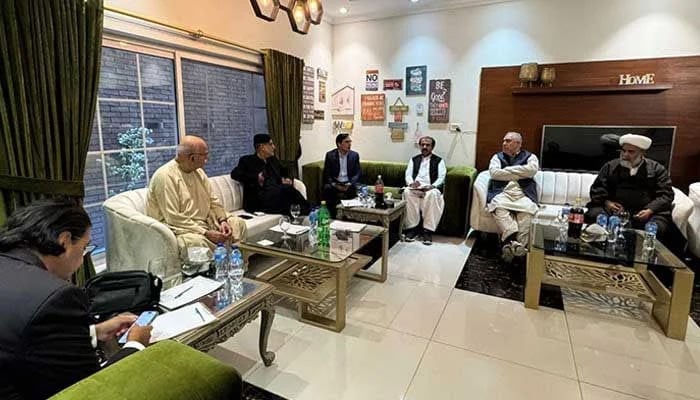
The reported decision by opposition parties to authorise TTAP leaders Mahmood Khan Achakzai and Allama Nasir Abbas to initiate talks with the government may prove to be one of the most politically mature developments the current opposition has made in recent times. In an environment poisoned by polarisation, distrust and relentless confrontation, even the willingness to sit across the table deserves recognition. Democratic systems survive not because rivals agree on everything, but because they remain willing to engage despite deep disagreement. Achakzai’s call for a peaceful movement to defend the constitution and Allama Nasir Abbas’s assertion that dialogue should not be interpreted as weakness both reflect an important political reality: negotiation is not surrender. If the opposition and the government are finally showing signs of understanding this principle, the country should welcome it. The ruling coalition, too, has repeatedly extended invitations for dialogue. Earlier this year, Rana Sanaullah emphasised that democracy progresses through negotiations rather than political paralysis. The government’s latest appeal in the Senate, urging the PTI to rejoin parliamentary committees and end its boycott, should similarly be viewed as an olive branch. Parliamentary committees are not ceremonial bodies; they are among the few institutional spaces where serious legislative oversight, negotiation and accountability can take place. By absenting itself from these forums, the PTI has only weakened its own political leverage.
This is perhaps the most difficult truth the PTI must confront. Despite retaining considerable public popularity, the party’s strategy of confrontation has produced few tangible political gains. It has failed to secure meaningful concessions regarding Imran Khan’s legal matters, prison conditions, medical treatment or Bushra Bibi’s health concerns. Street agitation, aggressive rhetoric and social media mobilisation may generate emotional energy among supporters, but they cannot substitute for structured political engagement. When political actors stop believing in democratic processes, instability inevitably follows. It is therefore encouraging that many within the PTI reportedly recognise the need for dialogue, even if the party’s own rhetoric has often made direct engagement politically difficult. The slogan of no talks with ‘mandate thieves’ may have energised supporters, but it also trapped the party within an uncompromising narrative that left little room for practical politics.
History has shown repeatedly that political isolation weakens opposition parties and strengthens non-democratic forces. Around the world, democratic erosion accelerates when opposition movements abandon institutional politics in favour of absolutist confrontation. Pakistan’s fragile democratic structure cannot afford such a trajectory. The opposition has a constitutional responsibility not merely to protest, but to participate. Most importantly, meaningful resistance to Pakistan’s hybrid political order cannot emerge through confrontation. Sustainable democratic progress requires political rivals to strengthen civilian politics collectively. That can only happen through dialogue, parliamentary participation and negotiated consensus. Talks should therefore proceed on all issues. But insisting that negotiations begin only after preconditions are met has historically led nowhere. Pakistan’s political leadership, across party lines, must finally recognise that dialogue is usually the very foundation of democratic survival.