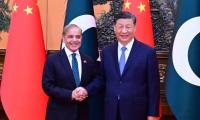
Islamabad : The Pakistan-China relations have evolved into a strong strategic partnership due to mutual trust, non-interference and shared geopolitical interests with economic and technological cooperation serving as key drivers of Pakistan’s future socio-economic transformation.
In a bid to reap the benefits of this partnership, Pakistan needs a policy shift by transforming dependence into interdependence and investing in strengthening governance, human capital and institutional professionalism.
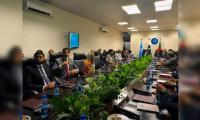
This summed up the key insights shared by panelists during a seminar held at the Institute of Policy Studies here to mark the platinum jubilee of Sino-Pak relations.
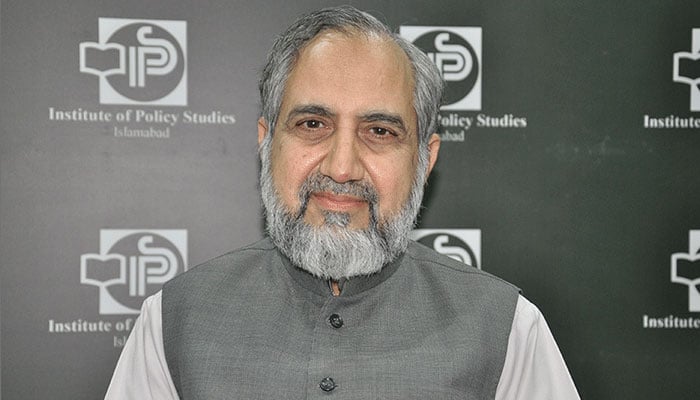
Ambassador Syed Abrar Hussain, vice-chairman IPS, said that Pakistan-China relations had evolved substantially since the establishment of bilateral ties in May 1951.
He emphasised that the Pakistan-China partnership had entered a new phase with continued cooperation under both phases of CPEC, demonstrating the growing engagement between the two countries.
Ambassador Masood Khalid noted that Pakistan was the first Muslim nation to recognise the People’s Republic of China. Emphasising that the bilateral relationship is based on mutual trust, shared interests and non-interference, he said that Pakistan-China friendship had unconditionally withstood multiple regional and global challenges over decades.
While noting that the two countries oppose regional hegemony and support peace, Ambassador Masood Khalid nullified attempts to portray Pakistan-China relations as a strategic alignment against any third country.
Highlighting the changing global order, he said China had emerged as a stabilising actor that advocated for cooperation, development and peace. He termed CPEC as the central pillar of Pakistan’s geoeconomic future and argued that it could help transform Pakistan into a prominent economy within the next decade.
Ambassador Naghmana Hashmi emphasised the need to transform the existing strategic cooperation into a long-term and future-oriented relationship.
She suggested reorienting CPEC towards industrialisation and special economic zones, expanding cooperation with China in AI and green technologies, utilising rare earth minerals, operationalising ML-1 for connectivity and leveraging Gwadar port’s geostrategic significance, especially in the context of current regional developments.
Highlighting key imperatives for Pakistan, the ambassador stressed considering trade deficits as a national security concern, improving mechanisms for project implementation, diversifying relations with nations without undermining ties with China, honing indigenous expertise and strengthening people-to-people exchanges.
Ambassador Moinul Haque described Pakistan-China friendship as a “historic reality and conscious choice” of the two nations. He said Pakistan’s economic and security future was closely linked to China and that Pakistan should capitalise on bilateral trade and economic opportunities with Beijing.
He noted that Pakistan could learn from China’s development model, which emphasises state-led reforms, openness to foreign investment, provincial empowerment, investments in education, healthcare and technology. Also, Chinese societal values of hard work, merit, and discipline also play a constructive role in the country’s rise. Defence and strategic affairs expert Dr. Syed Muhammad Ali highlighted China’s critical contribution to Pakistan’s national power and South Asian strategic stability.