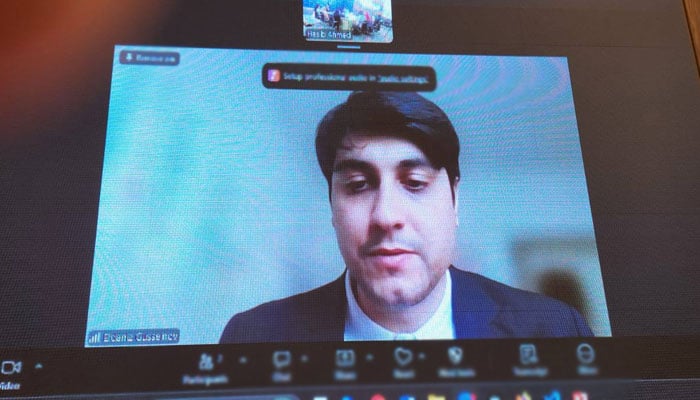
Islamabad : Central Asia’s precarious geopolitical positioning between conflicts in Southwest Asia and ongoing tensions involving Afghanistan and Pakistan has been highlighted by Dr Eldaniz Gusseinov, Head of Research at Nightingale International, a political foresight institute based in Almaty, Kazakhstan.
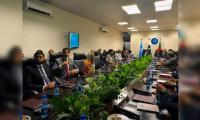
Dr Gusseinov was addressing a session under its Eminent Speaker Series on “CVE in Central Asia in 2026: trends, prospects and challenges” organised here by Institute of Regional Studies (IRS). The session was moderated by Aarish U Khan.
He underscored that contemporary threats are less about territorial spillovers and more about ideological diffusions, digital radicalisation and vulnerabilities within strained populations.
He noted the increasing use of encrypted platforms for extremist recruitment and emphasised that Central Asian states are pursuing pragmatic engagement with the Taliban through economic cooperation particularly led by Uzbekistan, Turkmenistan, Tajikistan, and Russia while maintaining legal ambiguity on formal recognition.
Dr Iftikhar Firdous, Executive Director, The Khorasan Diary, Islamabad, presented a sobering assessment of Afghanistan’s post-2021 trajectory, noting that initial expectations of a reformed “Taliban 2.0” did not materialise.
He pointed to a sharp rise in terrorism in Pakistan -- reportedly increasing by 400 percent -- and warned of intensifying cross-border insecurity, especially along key regions such as Kurram, Bajau, and Waziristan.