Conventional military thinking has historically treated deterrence as a function of material superiority. States deter adversaries through overwhelming force, advanced weaponry, economic leverage and the ability to inflict unacceptable damage. Much of modern Western strategic doctrine after the cold war was built around this assumption.
Iran does not fit neatly into this framework. Despite years of sanctions, diplomatic isolation, cyberattacks, assassinations of senior commanders and sustained military pressure, it has neither collapsed nor abandoned its regional posture. More strikingly, it has projected influence far beyond what its economy and conventional military strength would normally permit. This raises an important question: how does Iran deter adversaries that are materially stronger than itself?
The answer lies in recognising that Iran’s deterrence model extends beyond missiles and military hardware. It rests on a combination of strategic patience, psychological endurance, ideological legitimacy and regional depth. Iran’s strength lies not only in what it can destroy, but in its ability to shape the political and military cost of confrontation.
Unlike many modern states that prioritise economic normalisation and domestic stability above all else, Iran has cultivated a political culture centred on endurance under pressure. This mindset was deeply shaped by the Iran-Iraq War of the 1980s. The eight-year conflict, which brought immense devastation, became foundational to Iranian strategic thinking. For the Iranian leadership, survival itself emerged as a form of victory. The ability to absorb pressure without surrender evolved into a defining principle of statecraft.
As a result, Iran’s strategy focuses less on avoiding pain altogether and more on convincing adversaries that pressure alone will not force capitulation. A state that demonstrates the capacity to endure hardship over long periods gradually weakens the coercive value of sanctions, threats, and military intimidation.
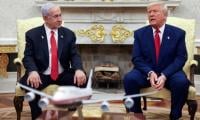
Iran also recognises the limits of conventional competition. It cannot rival the US or Israel in air power, naval dominance or military technology. Rather than matching its adversaries symmetrically, Tehran has chosen to raise the cost of confrontation indirectly.
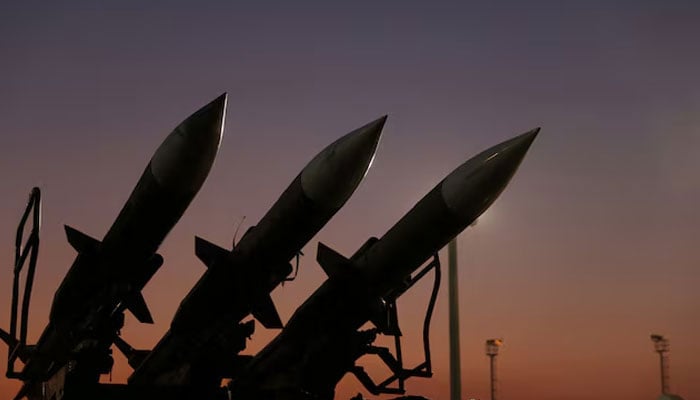
This approach includes missile development, drone capabilities, cyber warfare, and relationships with armed groups across Iraq, Lebanon, Syria and Yemen. Through these networks, Iran extends its influence without relying solely on direct military engagement.
Still, reducing these actors to mere ‘proxies’ oversimplifies Iran’s regional strategy. In practice, this network functions as a decentralised deterrence system. Its objective is not necessarily to win conventional wars outright, but to create overlapping fronts that complicate enemy calculations and stretch strategic resources.
In practical terms, this means that any strike on Iran could trigger wider regional escalation. Deterrence, therefore, is achieved less through military superiority and more through uncertainty, diffusion, and the risk of uncontrollable consequences.
Perception plays a central role in this strategy. Military capability alone rarely deters; perceived willingness to endure and retaliate matters just as much. Iran has therefore invested heavily in projecting an image of strategic patience combined with retaliatory resolve.
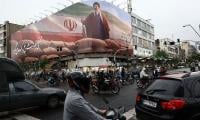
Public funerals, symbolic imagery, speeches and military messaging reinforce a narrative of sacrifice, continuity and resistance. Figures such as Qasem Soleimani were portrayed not simply as commanders, but as embodiments of national endurance and ideological commitment.
This messaging serves a dual purpose. Domestically, it reinforces cohesion during periods of external pressure. Internationally, it signals that Iran views confrontation as existential rather than temporary, thereby increasing the perceived difficulty of coercing the state into retreat.
The ideological dimension of this system is equally important, as it shapes how costs and benefits are interpreted. Traditional Western deterrence models often assume that sustained economic pain or military pressure will eventually force political compromise. Iran’s leadership, however, frequently frames resistance itself as a source of legitimacy.
Within this framework, external hostility can strengthen internal cohesion rather than weaken it. Pressure becomes evidence that confirms the state’s worldview and reinforces its political narrative. This does not mean ideology replaces rational calculation; Iran remains pragmatic in many areas of foreign policy. But ideology provides the psychological infrastructure necessary to sustain prolonged confrontation.
Whether one agrees with Iran’s policies or not, understanding this model is essential. Too often, outside powers interpret Iranian behaviour solely through the lens of aggression while overlooking the strategic logic that underpins it. The result has frequently been cycles of escalation, misreading, and strategic miscalculation.
At its core, Iran’s deterrence model conveys one central message: the cost of confrontation will outweigh the benefits not because Iran is the strongest actor in the region, but because it has built a system designed to absorb pressure, widen the scope of conflict and transform endurance itself into strategic power.
The writer is an Islamabad-based researcher with a special interest in India, Pakistan and regional affairs. He can be reached at: [email protected]