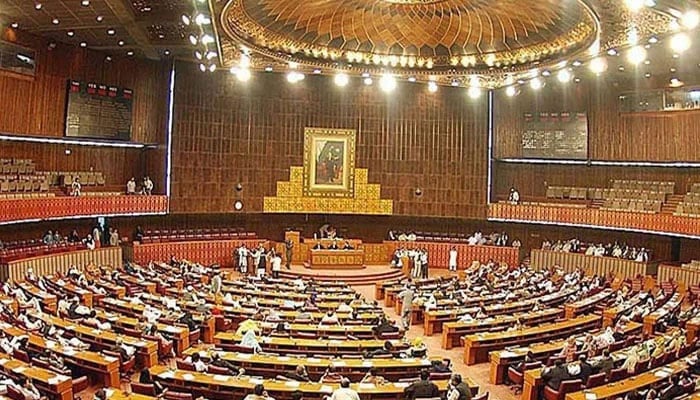
Pakistan’s constitutional debate has once again entered the national discourse. Conversations surrounding possible constitutional amendments, institutional restructuring and governance reforms are increasingly dominating legal and political circles. Yet the real issue before the country is not whether another constitutional amendment should be introduced, but whether the state is prepared to honestly confront the structural governance failures that continue to weaken democratic stability, economic progress and institutional performance.
The 1973 constitution guarantees parliamentary democracy, federalism, judicial independence and fundamental rights. However, governance has often been shaped by political crises, institutional confrontations and administrative imbalances, leading to amendments aimed at correcting extraordinary situations. Among these, the 18th Amendment holds historic importance. Yet experience over the last decade shows that some governance consequences of the post-18th Amendment structure require reconsideration.
This is not an argument against provincial autonomy but a recognition that effective governance requires balance between decentralisation and national coordination. The abolition of the Concurrent Legislative List under Article 142 has, in some sectors, created regulatory duplication, policy incoherence and fragmented governance in areas requiring coordinated national frameworks.
Pakistan’s experience over the past decade similarly indicates that absolute decentralisation in every sector may not always produce effective governance outcomes. Pakistan requires a governance model that preserves provincial autonomy while ensuring national coordination in sectors involving collective economic, technological and administrative interests.
Equally important is the question of local governments. Despite Article 140A mandating elected local governments with political, administrative and financial authority, local government systems continue to remain fragile, irregular and heavily dependent upon provincial governments – often treated as political inconveniences rather than constitutional necessities. Provincial reluctance to devolve administrative and financial powers has significantly weakened municipal governance. A serious constitutional discussion is therefore required on strengthening protections for local governments, ensuring timely local elections and guaranteeing fiscal autonomy for municipal institutions.
Another important governance issue concerns the creation of new administrative units. Pakistan’s population, urban expansion and administrative burdens have changed dramatically since 1973. Provinces such as Punjab and Balochistan face enormous governance challenges due to population size, geographical spread and uneven development patterns.
The debate on new provinces should not be viewed purely politically. Administrative efficiency and public accessibility are equally important constitutional concerns. Smaller, manageable units can improve governance, resource distribution and citizen engagement. Article 239(4) already provides a mechanism for altering provincial boundaries, making the issue one of political will rather than constitutional impossibility.
Pakistan’s judicial system also requires urgent reform. Delayed justice continues to weaken public trust and rule of law. Courts face massive backlogs, procedural delays and institutional inefficiencies. Civil, criminal and commercial disputes often drag on for years, highlighting the need for specialised constitutional courts and modernised adjudication systems.
At the same time, procedural reforms in civil and criminal justice are essential. The Code of Civil Procedure, 1908 and many criminal procedural mechanisms continue to operate within outdated frameworks that no longer correspond with modern governance realities. Judicial reform must therefore move beyond rhetoric and focus upon institutional efficiency, technological integration and timely disposal of cases.
Tax governance presents another serious challenge. Continuous litigation between taxpayers and revenue authorities has adversely affected economic confidence and investment climate. A modern economy cannot function effectively where fiscal disputes remain unresolved for years. Strengthening independent tax tribunals, alternate dispute resolution mechanisms and transparent adjudication systems has become an economic necessity.
Similarly, the National Finance Commission framework under Article 160 requires fresh thinking. While provincial fiscal rights remain essential for federalism, the federation must also possess sufficient financial capacity to discharge national responsibilities including defence, infrastructure development, debt servicing and economic coordination. Effective federalism requires fiscal balance rather than institutional competition.
Modern governance additionally demands constitutional adaptation to emerging technological realities. Cybersecurity, artificial intelligence, digital privacy, data protection and digital commerce are rapidly becoming central governance concerns worldwide. Pakistan’s systems must evolve to address these modern challenges through coordinated legislative and administrative frameworks.
Environmental governance represents another area demanding seriousness. Climate change, floods, water scarcity and environmental degradation now pose existential threats to Pakistan’s economic and social stability. Future governance models must integrate environmental sustainability into policymaking rather than treating it as a secondary administrative issue.
A modern state cannot function effectively through fragmented governance structures, overlapping jurisdictions and delayed justice systems. The future of constitutional democracy in Pakistan depends upon creating a governance model capable of combining democratic representation with administrative efficiency and provincial autonomy with national cohesion.
The real debate, therefore, is not whether Pakistan needs another constitutional amendment. The real debate is whether Pakistan is prepared to honestly reform structural governance weaknesses.
The writer is a practising advocate of the Supreme Court of Pakistan with 25 years of legal standing. He can be reached at: [email protected]