If the US, Russia and China are considered great powers, the transformation of the fractured global order tends to give rise to middle powers such as India, Brazil, South Africa, South Korea, Turkiye and Saudi Arabia.
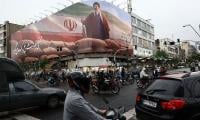
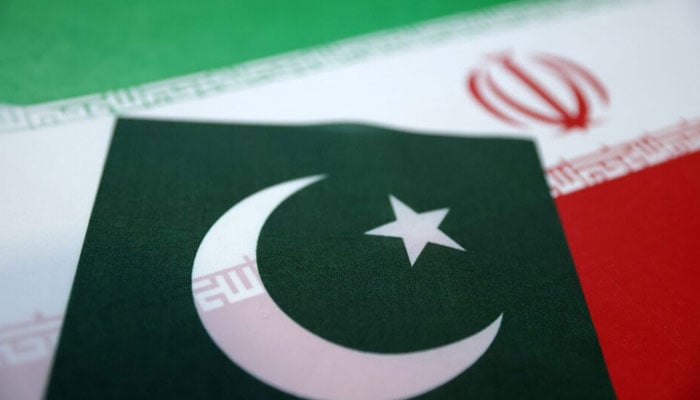
The ongoing conflict between Iran and the US also led to the emergence of Iran and Pakistan as middle powers. Having an intermediate position between superpowers and great powers, middle powers in recent years have demonstrated their clout in the global order through diplomatic, economic, strategic, and military means.
Middle powers also play a mediatory role in de-escalating armed conflicts and peace-building efforts. According to Britannica, “middle power, in international relations, is a state that holds a position in the international power spectrum that is in the ‘middle’ below that of a superpower, which wields vastly superior influence over all other states, or of a great power, but with sufficient ability to shape international events…. Middle powers favour multilateral foreign policy and the formation of coalitions rather than unilateral decision-making in foreign policy. The style of diplomacy used by middle powers has been labeled ‘niche diplomacy,’ mainly because middle powers have to follow limited foreign-policy objectives as a result of their power capabilities, which are lower than those of great powers or superpowers. However, middle powers do not challenge the status quo in the international system; they are not revisionist or transformatist states”.
From the above discussion, it is apparent that through diplomacy and multilateral foreign policy initiatives like mediation and facilitation, middle powers act as a buffer between super and great powers. It is because of the ongoing conflict between Iran and the US that the concept of middle powers gained ground. The roles of Turkiye, Saudi Arabia and Pakistan in de-escalating the Iran-US conflict reflect their influence and clout in global affairs.
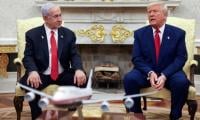
Despite facing relentless US-Israeli attacks in the six-week war, Iran also emerged as a middle power. US President Donald Trump may claim that the army, navy and air force of Iran have been destroyed, but the reality on the ground is different. Following the April ceasefire with the US, Iran possesses enough military capability to withstand another round of US-Israeli attacks. Iran’s ability to use its power and the Strait of Hormuz as a bargaining chip with the US is another piece of evidence that it has attained the status of a middle power.
The categorisation of some Gulf states, like Saudi Arabia and the UAE, as middle powers following the Iran-US war is also a case in point. According to a 2025 report by the Gulf Research Centre, “What sets the Gulf States apart is that their unconventional middle power role is not occurring in isolation but is deeply embedded in a broader systemic shift. As the international order fragments, marked by contested norms, weakened alliances and intensifying great power rivalry, these states have seized the moment to translate their middle power behaviour into strategic autonomy”. States like Qatar, Saudi Arabia and the UAE possess enough economic and diplomatic power to influence the policies of super and great powers in the world today.
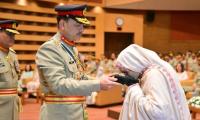
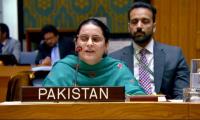
Pakistan’s emergence as a middle power despite its economic vulnerability proves that, despite its fault lines, Islamabad, given its military, nuclear, strategic and geopolitical position, is a middle power. In the Iran-US conflict, Pakistan’s pivotal role as a facilitator and mediator means that super and great powers take Islamabad seriously. By arranging direct talks between the US and Iran after 47 years, Pakistan proved its diplomatic edge over other middle powers.
The marginalisation of India in the Iran-US conflict and its failure to play any meaningful role in de-escalating the crisis in the Persian Gulf and West Asia mean New Delhi has lost its diplomatic clout. Despite claiming middle-power status as the world’s fifth-largest economy and fourth-largest military power, India lagged behind Pakistan and failed to play an effective diplomatic role in securing a ceasefire in the Iran-US war.
The role of middle powers in a multipolar world needs to be examined across three dimensions. First, the transformation of the world from bipolar to unipolar and multipolar in the last 81 years means the steady decline of the US as the world’s only superpower. Although Washington may try to prevent the dwindling of its status as the world’s only superpower, facts and realities are different.
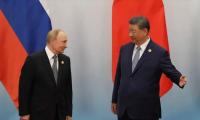
The surge of China as the world’s second-largest economy and the resurgence of Russia under President Vladimir Putin mean that America, despite spending around one trillion dollars on militarisation, is not controlling the world order.
The rise of Russia and China as competitors to the US has led to the emergence of middle powers in third-world countries. These powers, located in Asia, Africa and Latin America, act as balancers and seek to influence the global order. Second, middle powers also face limitations in projecting their power. The lack of unity among middle powers in addressing the existing power vacuum reflects their inability to influence the UN and other multilateral organisations. No middle power has a permanent seat in the UNSC, which means their role in global decision-making is not that effective. These middle powers may be relevant in the realm of diplomacy but are unable to project their power on par with super and great powers.
Finally, Pakistan’s unique position as a middle power is reflected in its geostrategic and geopolitical location. Situated in South and West Asia, in the vicinity of Central Asia, the Persian Gulf and the Middle East, Pakistan effectively utilised its position in the ongoing Iran-US conflict. Having cordial relations with the US and Iran enabled Pakistan to act as a mediator, leading to direct Iran-US talks in Islamabad. Even now, Pakistan, despite the Iran-US talks standoff, is playing a role in achieving a permanent ceasefire and a negotiated settlement.
An article in Asia Times titled ‘How Pakistan became the world’s most useful middle power’ by Saima Afzal, published on May 9, 2026 says: “Islamabad also secured broad international support for its mediation efforts, reinforcing perceptions that it remains one of the few states able to maintain credible working relations and trust between the US and Iran. In the increasingly polarised international environment, that diplomatic flexibility is becoming one of Pakistan’s most important strategic assets. Traditionally, a country’s status has been measured through indicators such as economic output, military expenditure, geography and technological capacity. Those factors remain important, but they no longer fully explain influence in the changing and increasingly multipolar international order.”
At its core, Pakistan’s strategic and geopolitical landscape, along with its nuclear and military power, helps Islamabad maintain its status as a middle power.
The writer is a meritorious professor of International Relations and a former dean of the Faculty of Social Sciences, University of Karachi. He can be reached at: