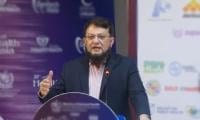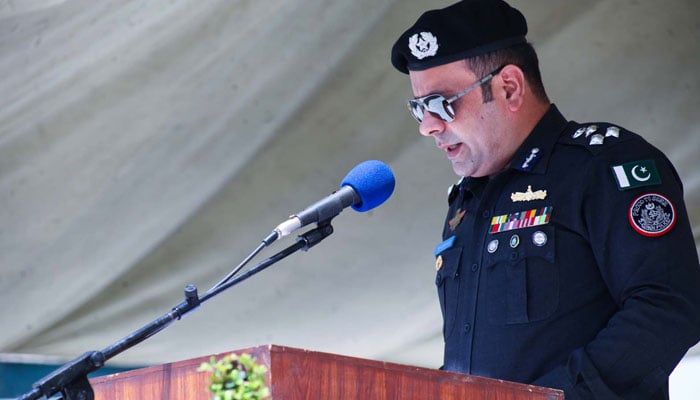
In a significant step toward the modernization and standardization of police training in Pakistan, Dr Maqsood Ahmed, DIG of the Security and Emergency Services Division, Karachi, has formally introduced a comprehensive “Security Training Handbook Volume-I” for institutional review, endorsement, and adoption by police training institutions across the country.
The handbook has been developed by Dr Maqsood Ahmed and his professional team as an advanced operational and instructional resource for police officers, tactical response units, cyber specialists, and security professionals.
The initiative aims to strengthen the professional capabilities of law enforcement agencies in addressing emerging security challenges, terrorism threats, cyber warfare, and modern crisis response scenarios.
The handbook provides a structured framework covering tactical radio communication, tactical motor driving, shoulder weapons handling, pistols deployment, improvised explosive device (IED) mitigation, non-lethal weapons, rings of security, and the protection of vital installations.
Special emphasis has also been placed on emergency response systems, disaster management, protective security details (PSD), VVIP protection protocols, and motorcade operations. The publication further addresses anti-terrorism strategies, cyber-terrorism, digital radicalization, institutional de-radicalization, cyber security threats, and future policing technologies expected to shape the security landscape up to 2030 and beyond.
The training modules have been specifically tailored to Pakistan’s operational environment and include local case studies, standard operating procedures, and relevant legal and ethical frameworks under Pakistani law. The handbook has also been benchmarked against internationally recognized policing doctrines and counter-terrorism training frameworks to align domestic policing standards with global best practices.
Dr Maqsood Ahmed said modern policing requires a shift from reactive security mechanisms toward proactive, technology-driven, and adaptive operational models. He emphasized that the handbook has been designed to serve as a standardized operational reference manual for specialized police and security units nationwide.
He also acknowledged the contributions of a diverse editorial board comprising senior bureaucrats, military veterans, police instructors, researchers, trainers, and creative teams who collectively worked for months to compile, review, and refine the publication.
The handbook has been submitted to the office of the IGP, Punjab, for institutional review and possible adoption across police training programmes. Senior policing circles have termed the initiative a landmark contribution toward professional capacity building and modernization of law enforcement training in Pakistan.