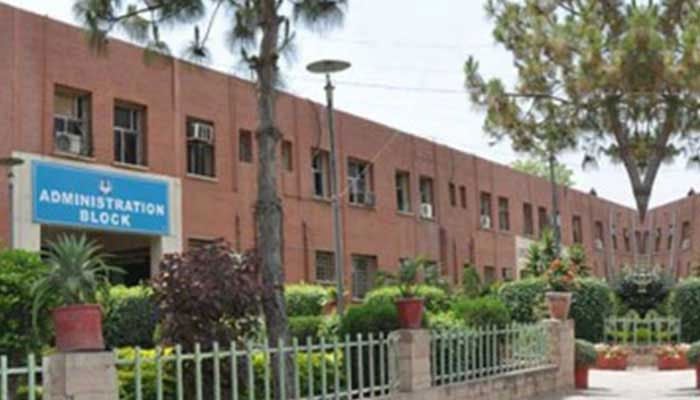
PESHAWAR: An allegedly controversial appointment and widening salary disparities at the Hayatabad Medical Complex (HMC) have triggered renewed debate of the unchecked administrative powers exercised by Boards of Governors (BoGs) under the Medical Teaching Institutions (MTI) system in Khyber Pakhtunkhwa.
In 2015, the first Pakistan Tehreek-e-Insaf government passed a law in the provincial assembly, granting extensive administrative and financial powers to 10 tertiary care hospitals in the province by bringing them under the control of BoGs.
Despite widespread opposition and prolonged protests by doctors and other healthcare providers at the time, the government granted MTI status to 10 hospitals, including Lady Reading Hospital, Khyber Teaching Hospital, Hayatabad Medical Complex, and Peshawar Institute of Cardiology in Peshawar, Khalifa Gul Nawaz Teaching Hospital, Mufti Mahmud Teaching Hospital, Qazi Hussain Ahmad Medical Complex, Mardan Medical Complex, and Ayub Teaching Hospital.
The government recently brought Saidu Teaching Hospital under the MTI law, despite opposition from doctors and health workers.
The system is now almost 11 years old, but serious debate persists regarding uniformity across MTIs, pay structures, perks and privileges, and, more importantly, the need for third-party audits of institutions consuming billions of rupees annually.
According to top officials, the government has made three attempts to conduct third-party audits of MTIs, but these efforts failed due to “strong resistance from powerful individuals.”
Doctors and healthcare providers have also complained about a lack of transparency, accountability, and merit in the selection of faculty members, managers, and other employees in MTIs.
The majority of senior doctors have either left or retired, while some still serving have reportedly been sidelined and are being dictated to by their juniors and trainees.
Khyber Pakhtunkhwa is perhaps the only province where managers with diplomas as their main qualification are paid more than professors and doctors who have served in these institutions for over two decades. It is widely debated that some MTI managers earn more than the chief secretary, administrative secretaries, and even provincial ministers.
To accommodate favoured individuals, unnecessary positions are allegedly created in hospitals, regardless of whether such posts exist within the MTI framework.
The latest controversy centres on the creation and subsequent appointment to a “Director Research” position at HMC - a post which officials in several MTIs say does not exist in most public-sector teaching hospitals under the provincial MTI framework.
Documents available with The News show that the post was advertised in January this year with a monthly salary package of Rs600,000 - significantly higher than the salaries of several senior medical faculty members in the same institution.
The advertisement, published on January 3, required candidates to possess “substantial professional experience in academic medicine, hospital-based research, or clinical governance within a teaching or tertiary care environment,” but did not specify the minimum years of experience required for such a senior-level position.
Officials familiar with the matter alleged that the position appeared to have been structured to favour a particular candidate.
They claimed that the broad eligibility criteria and unusually high salary package had raised concerns among senior doctors and faculty members.
“The medical community was surprised by the package and the structure of the post,” a senior professor at HMC told The News on condition of anonymity.
“I have served in this institution for more than a decade and currently hold the rank of professor, but my salary is around Rs290,000 per month. Naturally, questions are being raised when a newly created administrative post is offered nearly double that amount,” he maintained.
Officials from other MTIs said that research-related affairs in teaching hospitals and medical colleges are generally managed through existing academic offices, including the Associate Dean, and that they were unaware of any comparable “Director of Research” position.
Sources claimed that although the post was advertised for HMC, the selected candidate was later placed at Khyber Girls Medical College. According to officials, hospital authorities had internally questioned the operational need for the position.
When contacted, senior administrative officials of both the hospital and the college confirmed the existence of the Director Research post.
The controversy has also revived broader questions about the MTI governance model introduced in 2015, under which BoGs were granted extensive administrative and financial autonomy.
Health sector officials say the absence of a centralized policy framework for appointments, pay structures, and service rules has resulted in major disparities across institutions operating under the same provincial system.
Officials cited the example of the Director Finance position, claiming that the officer serving in the role at HMC was receiving nearly Rs800,000 per month, while officials holding similar positions in other MTIs, including Bacha Khan Medical Complex and other teaching institutions, were drawing salaries closer to Rs300,000.
Senior doctors and health officials argue that the lack of standardised oversight in publicly funded MTIs has enabled individual BoGs to exercise wide discretion in recruitment, compensation, and administrative matters.
“There is still no uniform policy governing salary structures and appointments across MTIs,” a senior health official said. “As a result, each institution operates with considerable autonomy in administrative and financial matters.”
The MTI system was introduced in Khyber Pakhtunkhwa with the stated objective of improving governance and institutional efficiency in public-sector teaching hospitals. However, critics say recurring controversies surrounding appointments and salary structures underscore the need for stronger oversight and uniform regulatory mechanisms.
When approached, BoG Chairman HMC Dr Noorul Iman declined to comment on the issue.
When contacted, HMC Communication Officer Abdul Waseem initially shared an official version, stating that all appointments were made on merit. However, he later called The News again and said he had been directed by higher authorities to refrain from commenting further.
The latest controversy has intensified calls within the medical community for the provincial government and the MTI Policy Board to formulate standardised rules for appointments, salary structures, and governance practices across all MTIs to ensure transparency, merit, and institutional accountability.
This correspondent also approached Dr Nausherwan Burki, chairman of the Policy Board responsible for overseeing BoGs and their decisions, for comment.
He was informed that attempts had been made to obtain comments from the HMC BoG chairman and hospital spokesperson, but both had declined to respond.
Despise waiting for three days and sending messages to Dr Burki on his cellphone, no response was received.
Dr Burki, who otherwise shares his views with The News on MTI-related matters, remained silent on this particular issue for reasons best known to him.