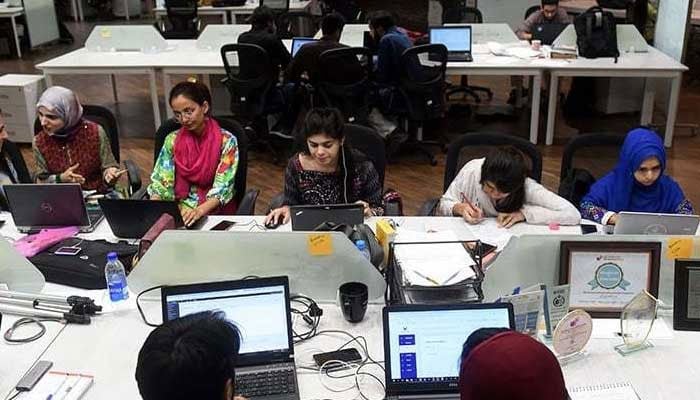
Mohammad Ali. 31 years old. Pakistani founder. Brilliant app idea. Needs Rs50 million.
No money. No assets. No track record. No bank will touch him.
Fifteen years ago, Pakistan had virtually zero institutional venture capital. Zero. Today — 53 funds. Karachi alone: 23. An entire ecosystem. Built from scratch. In one generation.
Here’s what a VC does: it raises a pool of money from wealthy individuals, institutions and pension funds — and bets it on young companies that banks won’t touch.
Any one of the homegrown Pakistani VCs — Zayn VC, Sarmayacar, i2i Ventures, Lakson Investments, Fatima Gobi Ventures — can write Mohammad Ali a Rs50 million cheque. And then there are the internationals. Indus Valley Capital — diaspora-led, US-based. Alter Global — San Francisco. Karandaaz — backed by UK Aid and the Gates Foundation. All of them. Looking at Pakistan. Writing cheques for Mohammad Ali.
Imagine: Fifteen years ago, Mohammad Ali had no options. Today, he has 53.
For decades, the only way a Pakistani entrepreneur could get capital was through bank loans or family money. VCs change that entirely. They fund the idea, absorb the risk, and ask for nothing back if the startup fails. That’s a fundamentally different relationship between capital and ambition — and it’s still very new in Pakistan.
In 2021, Ali Ladhubhai and Omair Ansari of Karachi founded ABHI, an app that employees download, connect it to their employer’s payroll, and withdraw earned salary on demand — before payday. By 2026, ABHI had raised $57.8 million, expanded into the UAE and Saudi Arabia, and acquired a microfinance bank. ABHI also earned a World Economic Forum Technology Pioneer designation. ABHI has over 1 million users and is valued at around $90 million. Potential IPO by 2028.
Bazaar is a B2B (business-to-business) platform — meaning its “customers” are small shopkeepers and businesses. Shopkeepers use it to order inventory for their stores digitally instead of calling a distributor. Think of it as an app for shop owners, not shoppers. Bazaar raised $108 million from Tiger Global and Dragoneer.
Haball is also a B2B payments infrastructure platform — meaning it works behind the scenes connecting large corporations with their distributors and suppliers automating invoicing, payments and supply chain financing. Haball processes $3 billion in transactions.
Plain fact: ABHI is an app in your pocket. Bazaar is the app behind your neighbourhood kiryana store. Haball is the invisible financial plumbing connecting Pakistan’s entire supply chain. Three very different products — one common thread: Pakistani founders, Pakistani problems, global capital.
All three success stories are from Karachi. Yes, Pakistan’s startup revolution is currently a Karachi story. Lahore is catching up but the capital, the founders, and the exits are concentrated in one city — Karachi.
Three startups. All from Karachi. All founded after 2019. All backed by global capital.
Here is how fast this has moved. In 2015, Pakistan had almost no institutional venture capital. Today — 53 funds. $4.77 billion in cumulative funding. Tiger Global. Dragoneer. The Gates Foundation. The Qatar Investment Authority. All here. All betting on Pakistan. An entire venture capital ecosystem — built in 10 years. That is not progress. That is a revolution.
Remember Mohammad Ali? 31 years old. No money. No assets. No track record. Fifteen
years ago, no options. Today — 53 funds. Mohammad Ali’s time has come. The only question is whether Pakistan will get out of his way.